A Basket..
This programme area encompasses a huge swathe of activities that Keystone is directly involved in at the village level – it not only involves the resources that are available in and around the village but also the people who are a part of that system.
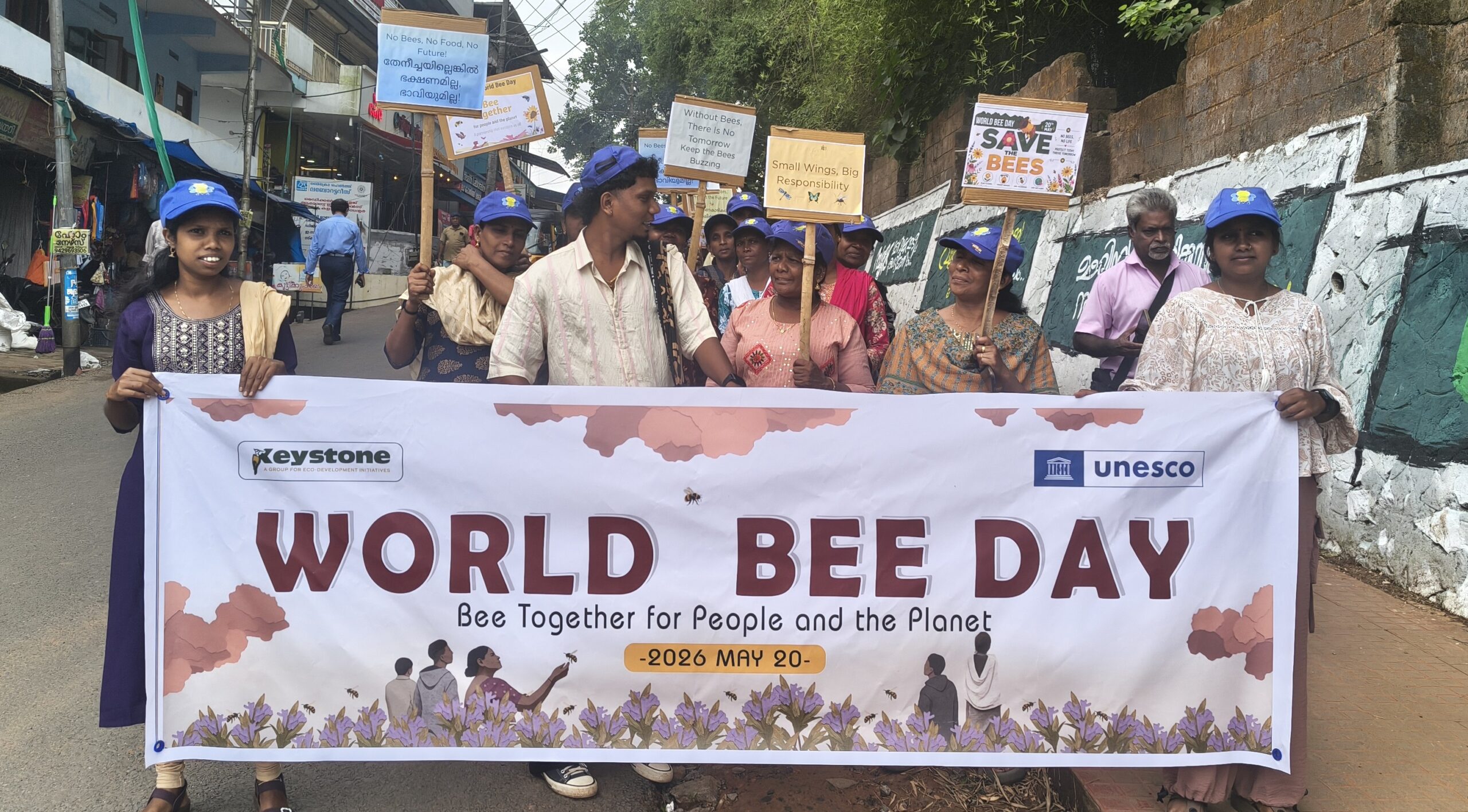
- Apiculture – Honey hunting and Beekeeping – exploring the role and linkage of honeybees and traditional communities in rural development and culture. Understanding the role of bees as biodiversity indicators and pollination agents of wild and cultivated plants.
- Biodiversity – NTFPs, Conservation & Community – ecological monitoring of NTFPs, harvesting systems and technology, trade and value addition aspects, information and documentation of NTFPs collected and the role of forest communities in conservation.
- Water Resources – study communities & water management systems in hill areas and their livelihood systems. Implement small drinking water projects for indigenous communities. Research on issues of access, control, use, up-land and low-land water sharing mechanisms and advocate changes in hill water policies.
- Land Resources – revive traditional agriculture systems with indigenous communities which have a direct contribution to food security and improvement of household nutrition. Implement soil and moisture conservation measures; establish seed banks of threatened hill food species;understand the present trend of growing cash crops against food crops and accordingly design and implement interventions.
Water Resources
Our previous initiative on the Nilgiri Hill Water Resources had brought forth quite a few dimensions of water usage in the hills. The results have emboldened us to work towards understanding water systems better and we are now working in the Sigur area, working on the water management systems and implementation practices.
Land Development & Traditional Agriculture
Before the advent of the British, the indigenous people of the Nilgiris, especially the Irulas, who came up the slopes in search of wage labour, used to grow mixed crops on the hill slopes, practicing the technique of slash & burn. Even the Badagas, who were tillers of land, used to grow the same varieties in the plateau area. However, the advent of tea, a monoculture crop, changed the face of the land. Water retention capacity is reduced and vast tracts of primary forested land were destroyed, limiting food security.
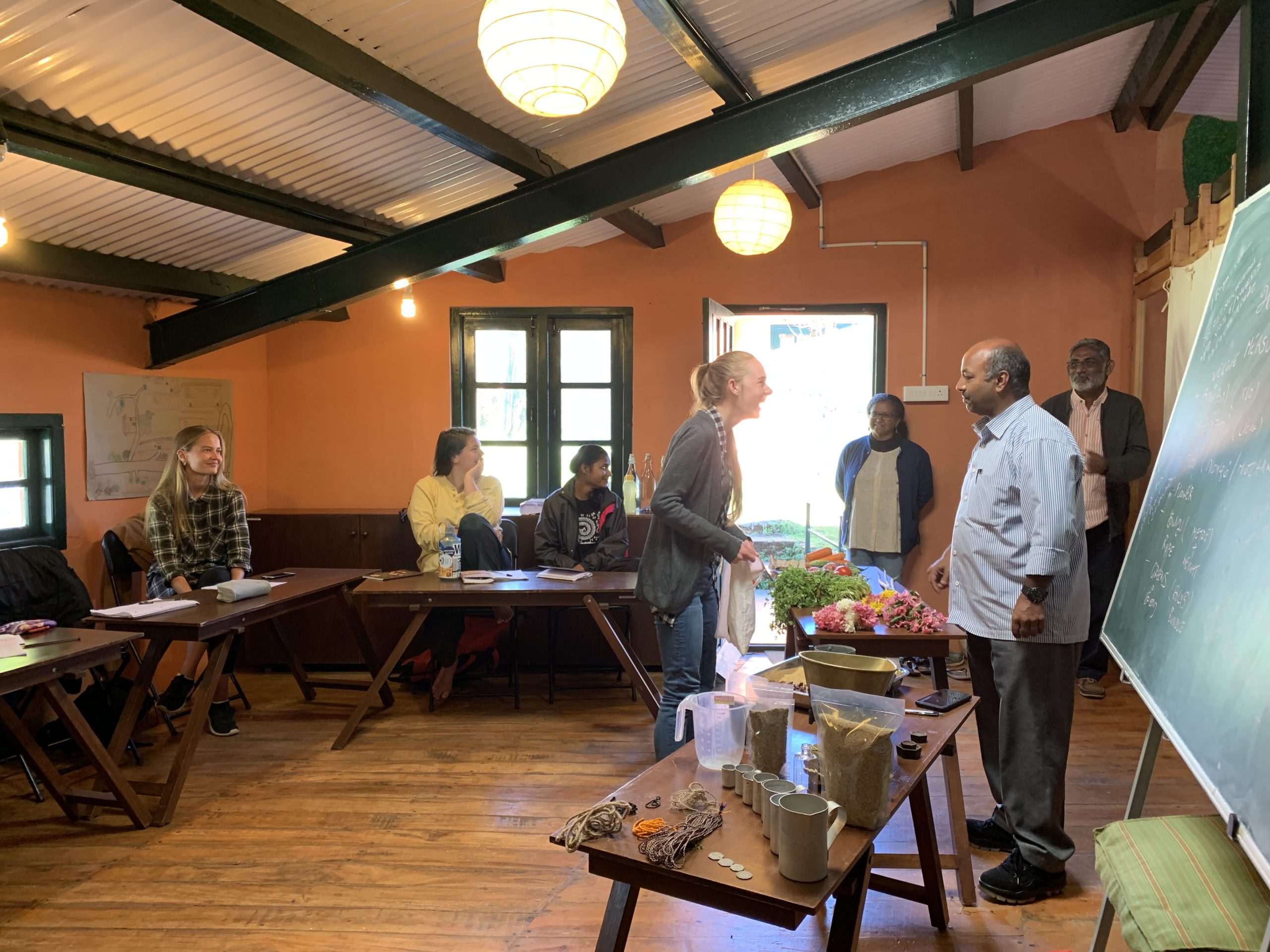
What started as an experiment, initially, on 5 acres of land, has today developed into a 180 acre operation. The lands of these indigenous people, is mostly steep, marginal and lying fallow. The idea of growing traditional millets and crops came up from the people. Keystone provided support for land clearing and getting seeds from adjacent hills. Ragi (finger millet), Tenai (Italian millet), Samai (little millet), Varaghu, Maize (corn), Lablab, Amaranthus, mustard, lentils, pumpkins, beans and chillies comprise this traditionally diverse land use. This has been grown regularly now and has created five – six months of food security for each household. The programme has been developed to:
- Grow food crops, supplemented with cash crops
- Develop nurseries of coffee and high value spices in the villages
- Undertake soil and moisture conservation activities on steep lands
- Develop seed banks in the villages and seed diversity reserve in the resource centres
- Document traditional knowledge regarding millet cultivation (more…)
Apiculture
Traditional methods of honey collection involve honeyhunting or making suitable nesting areas from local materials. Traditional honeyhunters are highly skilled and their activity has evolved over a long period to suit local resources and local bees.
Throughout history and in all regions, beekeeping has been a specialized occupation of certain communities or families, remaining an enigma to the rest of the population. This stands true even today. Today, modern beekeeping is based on a scientific knowledge of the structure, life history, habits and habitats of honeybees and it began with the invention of the artificial hive in 1789.
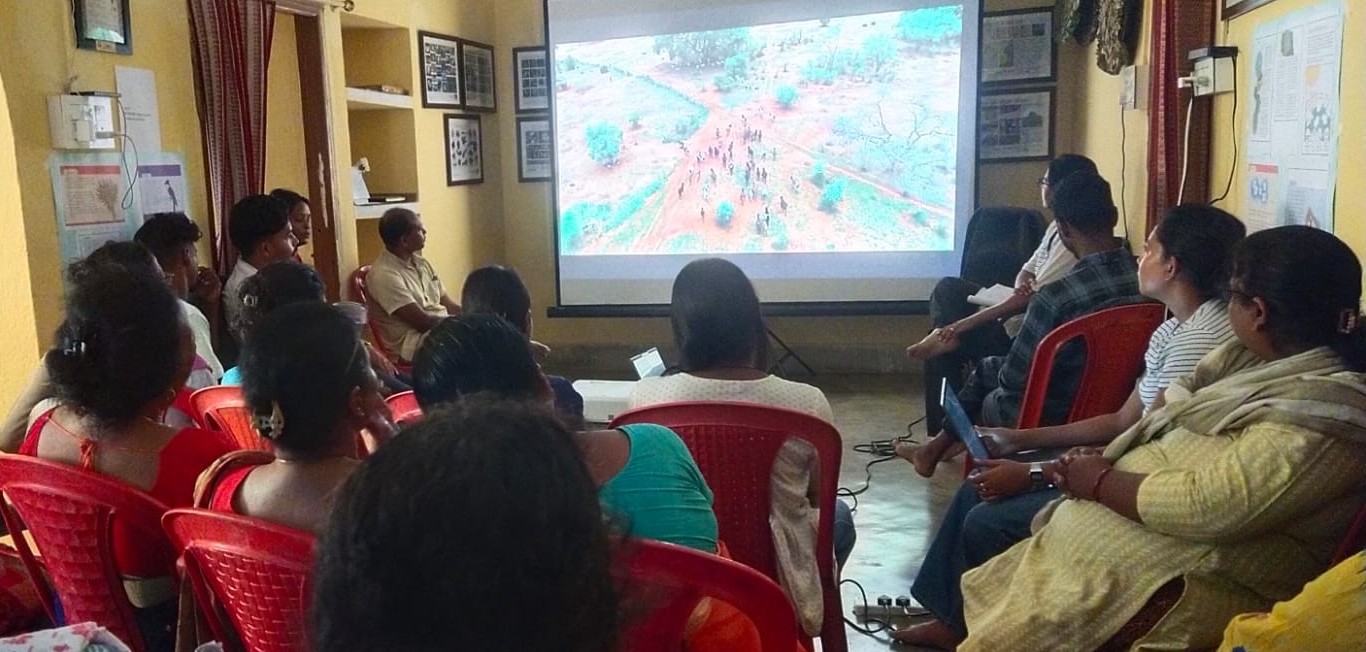
Keystone started its journey with bees & honey, in 1993. Team members travelled to all hill areas of Tamil Nadu meeting different indigenous communities.This journey, to not only get a small insight into the traditional activity of honey gathering from the wild Giant Rock Bee (Apis dorsata) but also to identify pockets of beekeeping with the Indian Hive Bee (Apis cerana) took the team to 16 different hill regions and meeting 11 different communities, each unique in their own way. The experience and learnings from the year long survey were immense – issues of resource alienations, conservation, landuse change, use of chemical inputs, etc. had affected bee populations and threatened a traditional livelihood. The survey brought the team to Kotagiri, which became the base of the work.
(Note: Details of the survey findings are available in the publication – `Honeyhunters & Beekeepers of Tamil Nadu – A Survey Document’).
Beekeeping
Apis cerana, the Indian Hive Bee, faces a host of threats today. Efforts to revive the bee from the Thai Sac Brood Virus (the larvae is killed at the brood stage). Beekeeping is not a traditional activity who usually collect honey from the wild. Bee boxes have been designed with different materials and dimensions to suit the ecology of the bee. Continuous experiments with technology and management techniques provides an impetus. Beekeeping has been initiated with indigenous communities.
Over the years, the following activities/action research has been undertaken: Training, technical & material support in tribal villages Village based apiaries & resource centres Floral mapping to document nectar & pollen sources, seasonally Research on Apis cerana ecology and behaviour – foraging strategy; stimulating feeding and colony growth studies; preferred habitat in feral colonies Disease monitoring studies for the Thai Sac Brood Virus An information base and a resource centre in Kotagiri, called `Jenugoodu’ (Nest of Honey) A workshop, ‘Srishti’ (creation) with necessary tools and equipment to manufacture bee hives and accessories The work has faced several set backs during the last seven years, due to disease attacks. However, consistent experimentation, innovation and efforts to keep colonies alive has kept the activity afloat.
Honeyhunting
Traditional honey gathering is done by indigenous people of the Nilgiris. Work has been undertaken with the Kurumba and Irula communities to: Document their practices Provide training in better extraction methods Map the resources (bee populations) and monitor regularly Provide parameters for quality of honey and bees wax Provide a marketing support for the produce
This has resulted in an informal network of 200 honey gatherers and a successful micro enterprise. Work in this field is ongoing.
Production Centre Development
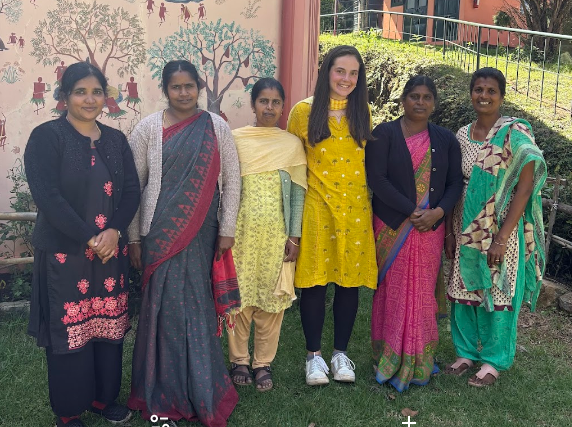
The centres or village units are the limbs of the foundation, for here implementation and research go hand in hand. Each centre is locationally unique as they are to be found in different ecotypes reflecting our aspirations in those regions. Currently we have five centres including Semanarai, Banglapadigai, Kurumbadi, Pillur, Sigur and Dhimbham.
- For working towards self reliance
- To add value and income
- To reduce exploitation of an informal market
Keystone strives to combine ecologically sensitive development with rural enterprise to provide skill up gradation, training and income at the village level. Natural resources like honey and bees wax have seen this transformation from the processing centre at the office to the village value addition unit. Today each of these small units is running with some element of independence – Keystone only provides the necessary marketing support building up viable economic units at the grassroots. With time, Keystone would like to gradually hand over as much responsibility of processing and packaging to the target group. Today the tribal communities have formed their own groups and are managing their operation successfully with technical and supervisory role by Keystone. The process of building a micro enterprise which is village owned, run and can negotiate with Keystone on prices and orders is the key element to growth.