By Ramajeyam, Biodiversity Conservation
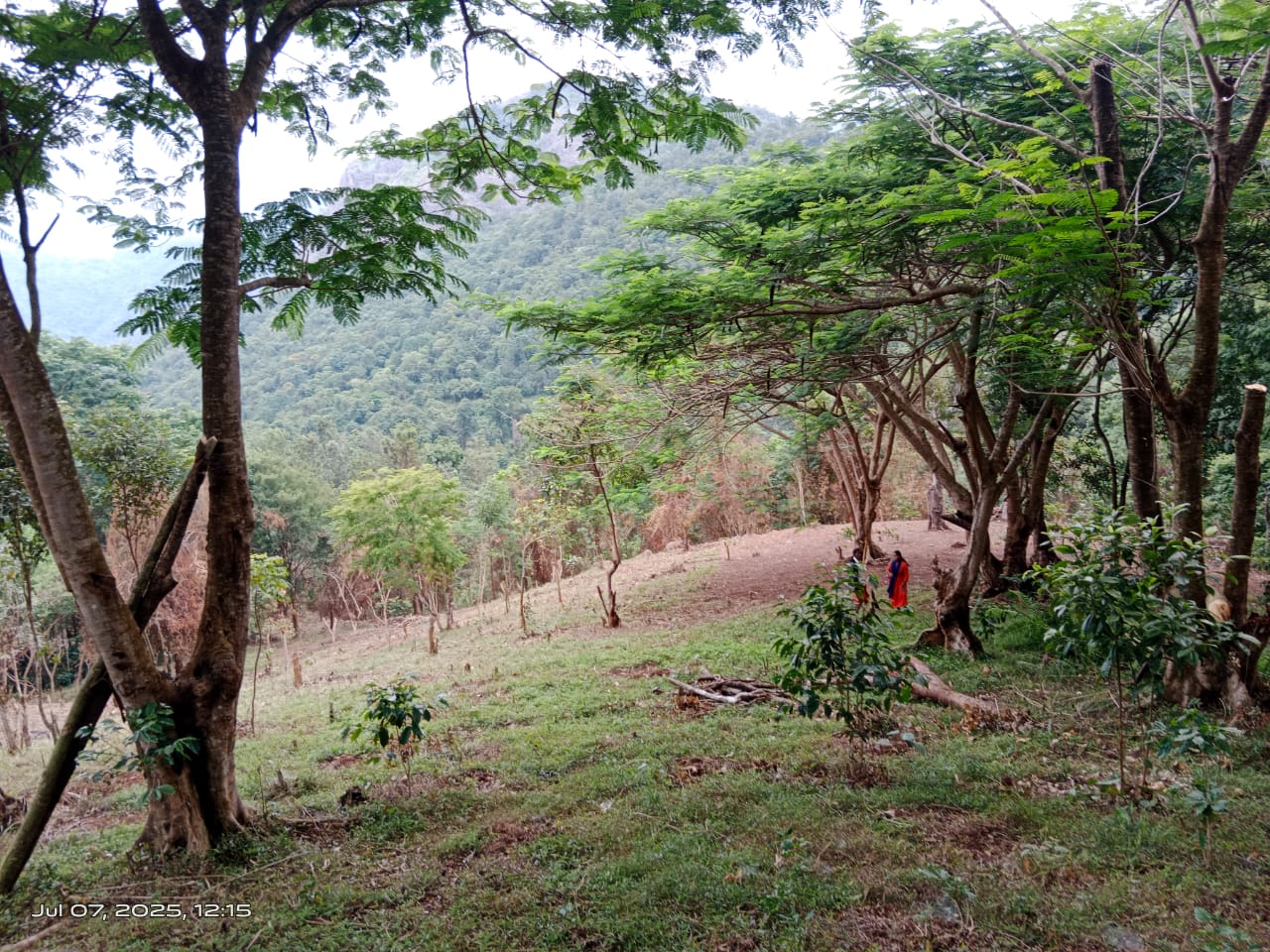
Nestled in a mid-elevation landscape, the Samaigudal community belongs to the Irula tribal community, whose lives have long been intertwined with the rhythms of the forest. Spanning 90 acres, this landscape is both a home and a livelihood space for the local farmers.
A Landscape in Transition
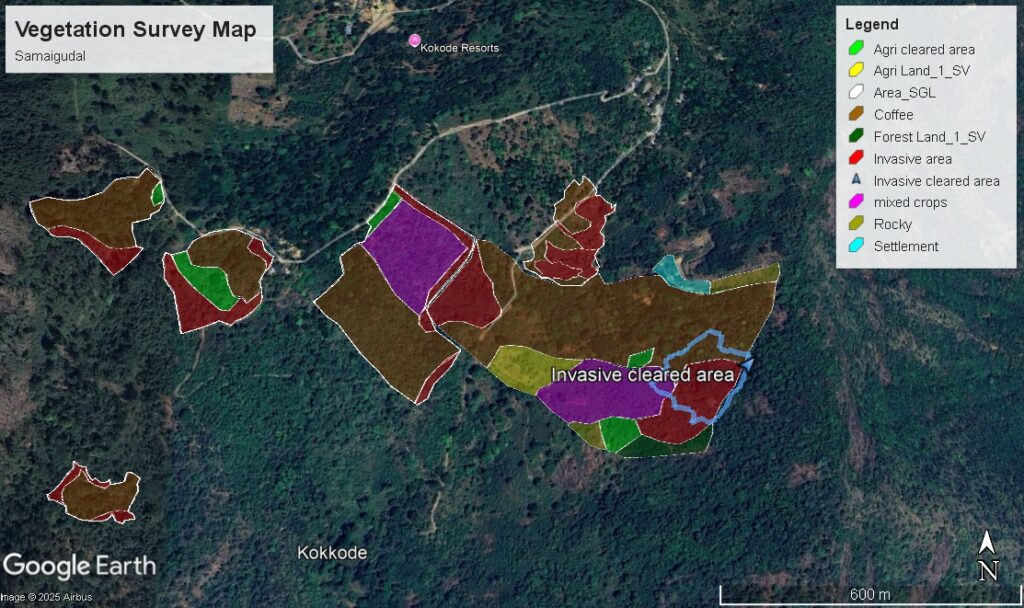
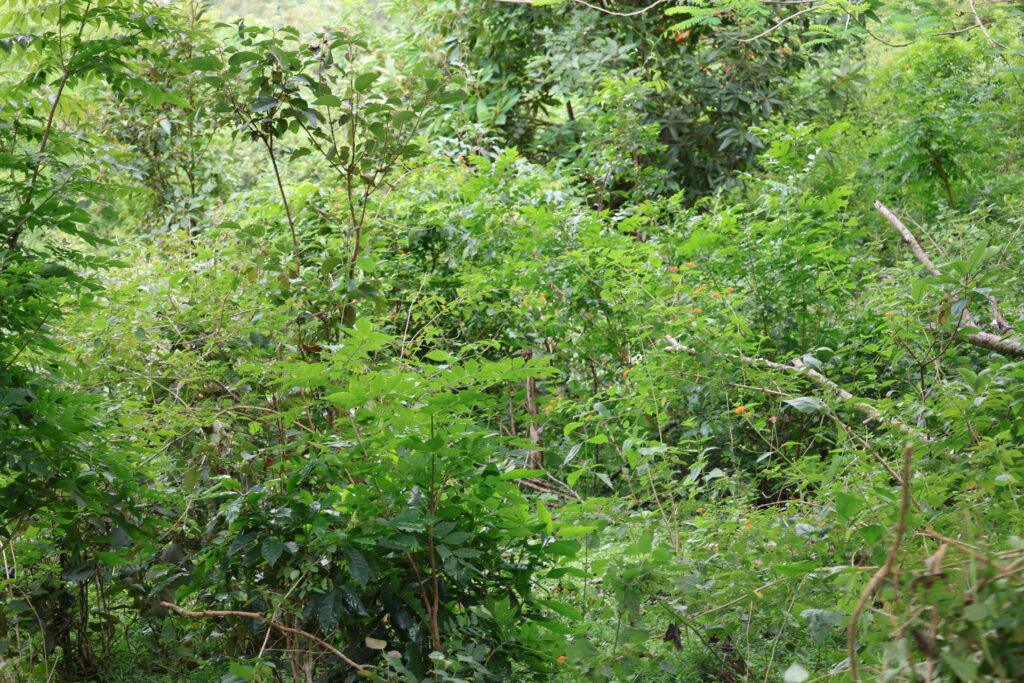
Over time, approximately 65% of the land has been converted into coffee plantations, while the remaining area has been used for mixed cropping. However, large portions of the land have become overrun with invasive plant species, which have been impacting both productivity and native biodiversity.
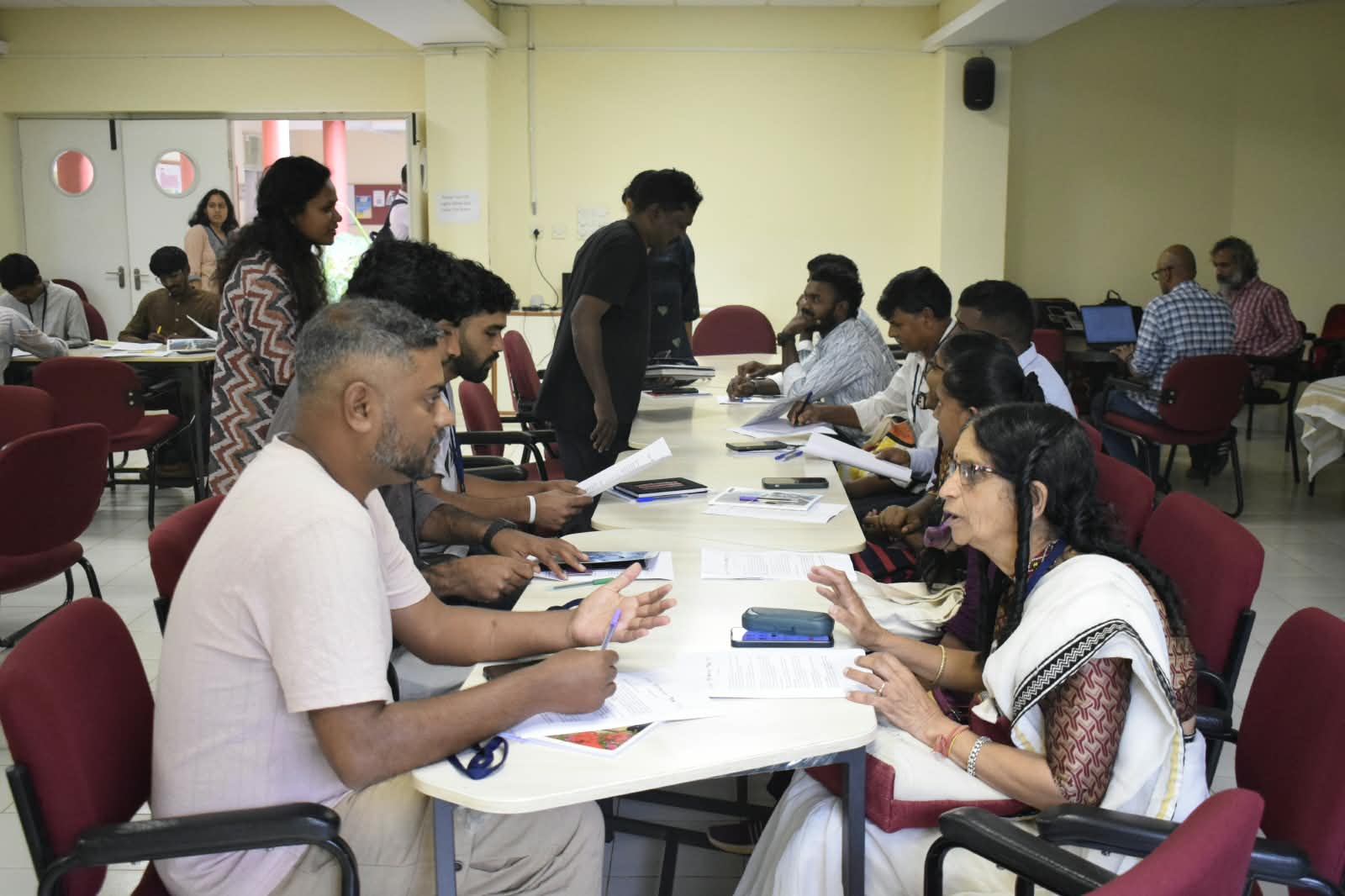
Recognizing the need for ecological recovery and sustainable use, the community came together to initiate a restoration project. The journey began with community meetings in Kokkodu and Samaigudal, where farmers gathered to discuss the restoration goals. Key topics included:
- Mapping of village boundaries
- Conducting a vegetation survey on individual plots
- Identifying restoration opportunities and mapped in already in the site’s native trees, plants
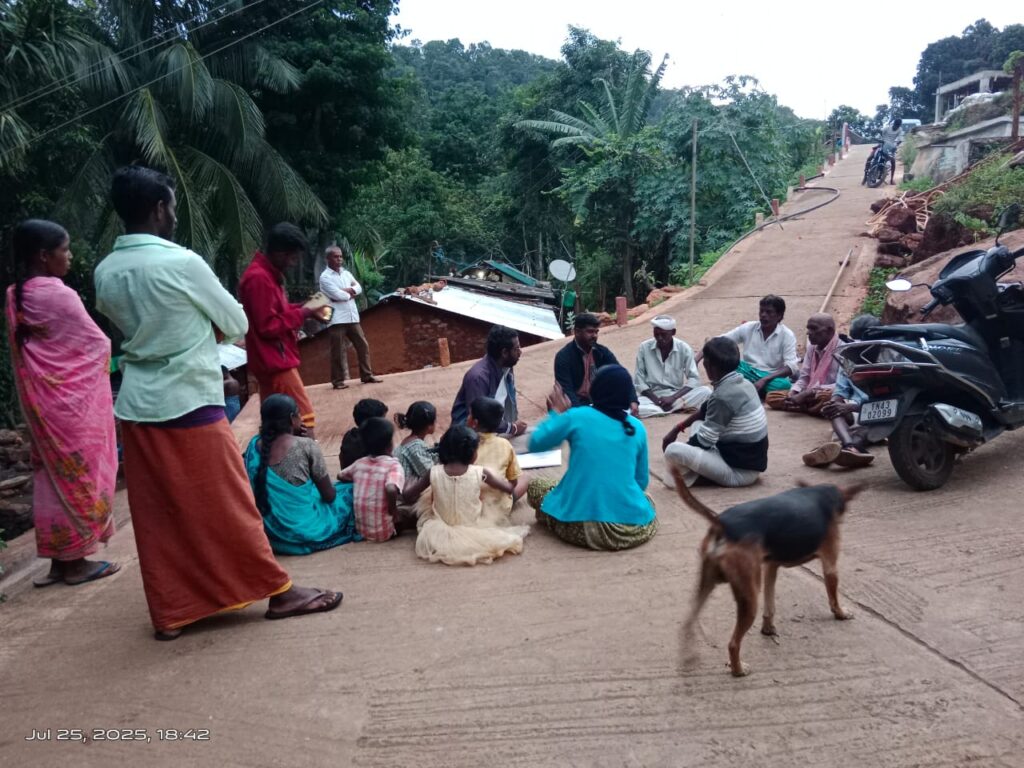
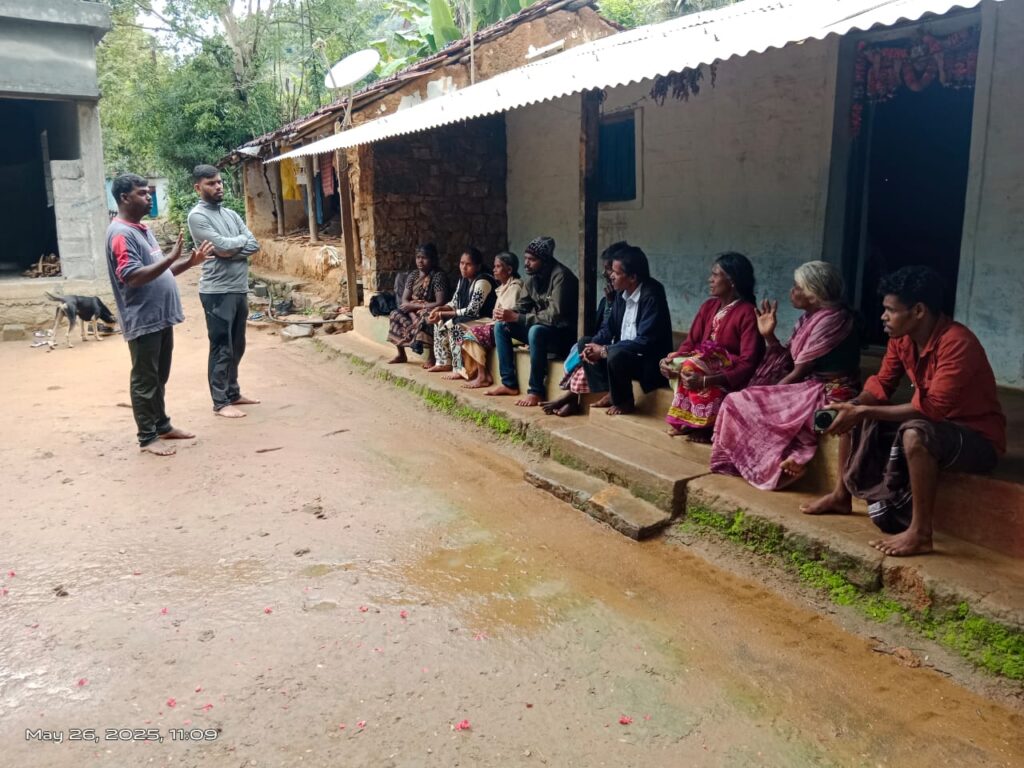
Community meetings Samaikudal and Kokodu
Tackling Invasives, Planting Hope
During the survey, the team discovered that these lands are part of an important wildlife interaction zone, regularly visited by Indian Gaur, Leopards, Tigers, Elephants, and Wild Boars. This emphasized the importance of planning carefully and respectfully.
Separate maps were prepared to identify areas heavily infested with invasive species, like:
- Parthenium hysterophorus
- Lantana camara
- Caesalpinia decapetala
- Solanum mauritianum Scop
- Pterolobium hexapetalum
These areas were prioritized for clearing and replanting. We held another round of community meetings to listen to the concerns and suggestions of the farmers. Together, we created a list of native species — with input from the villagers about the trees, shrubs, herbs, and climbers they wished to see on their land.
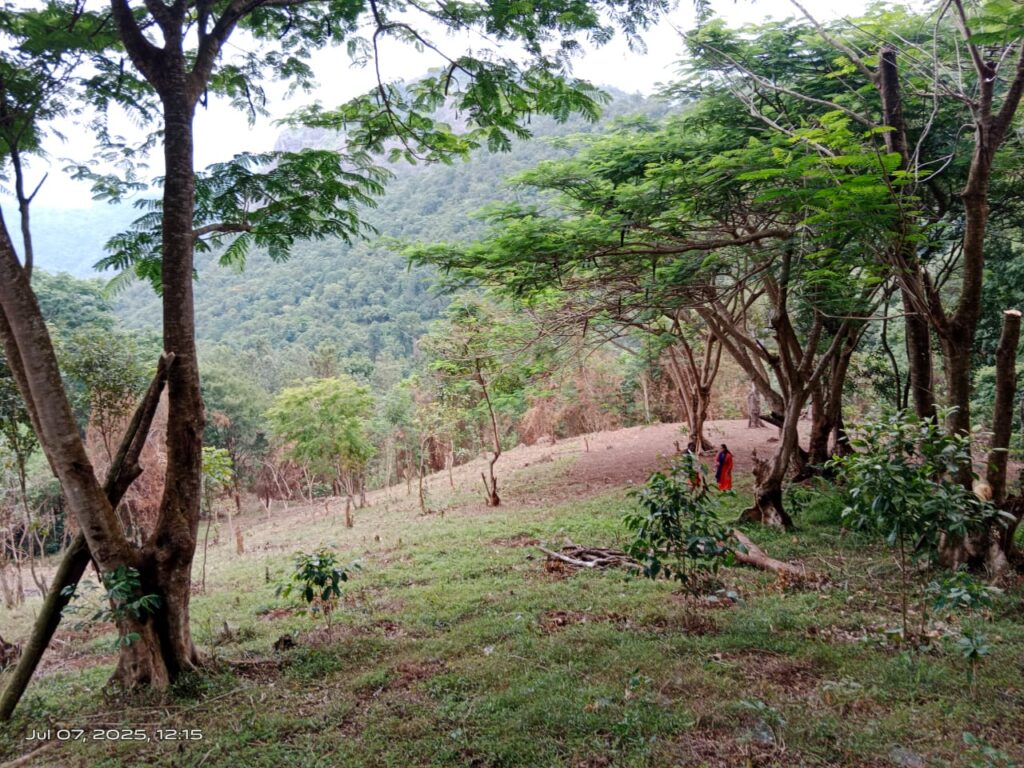
The work on the ground soon began. As of now:
- 11 acres have been identified for restoration initial site of the invasive covered area
- 4 acres have been completely cleared
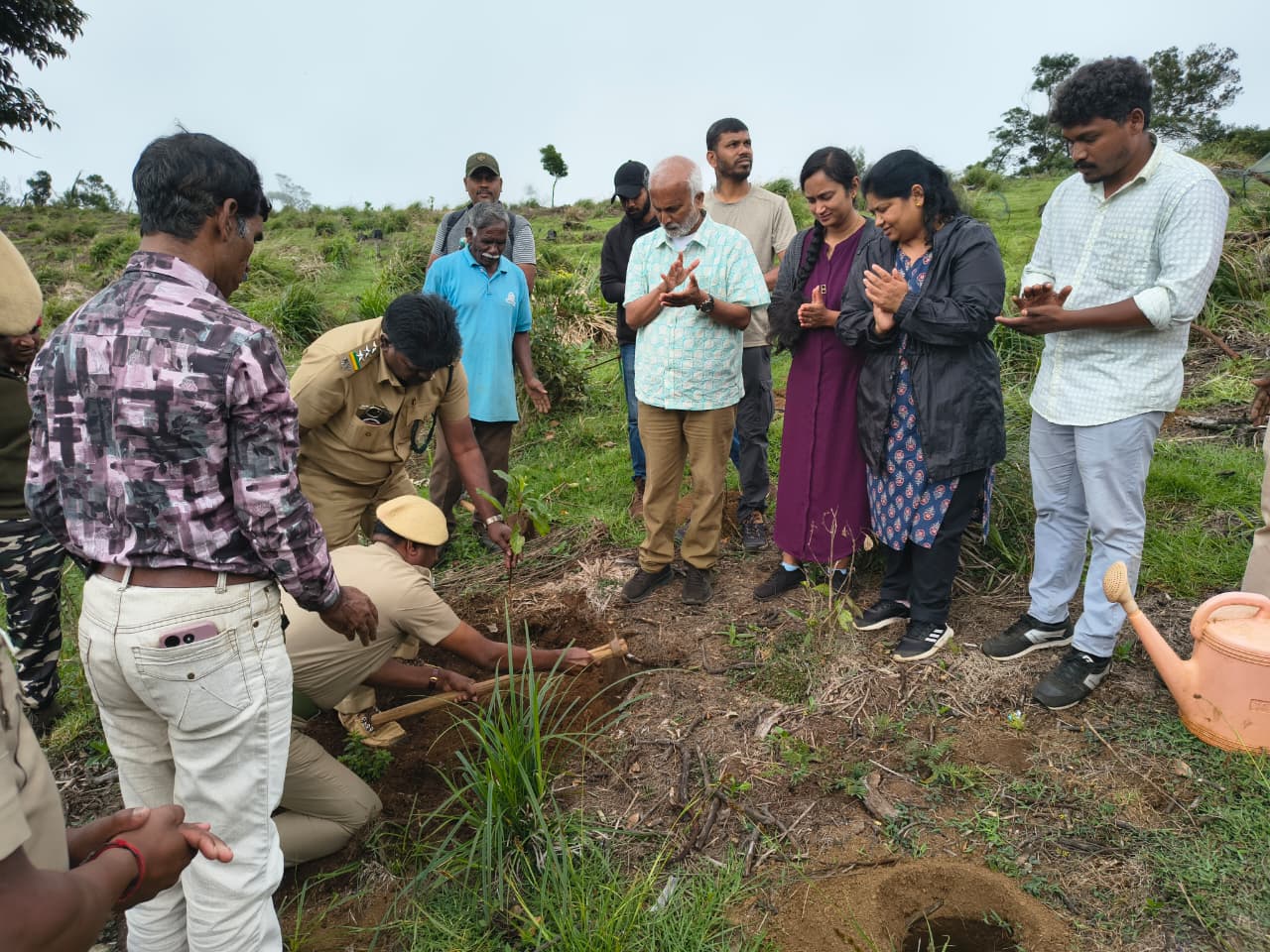
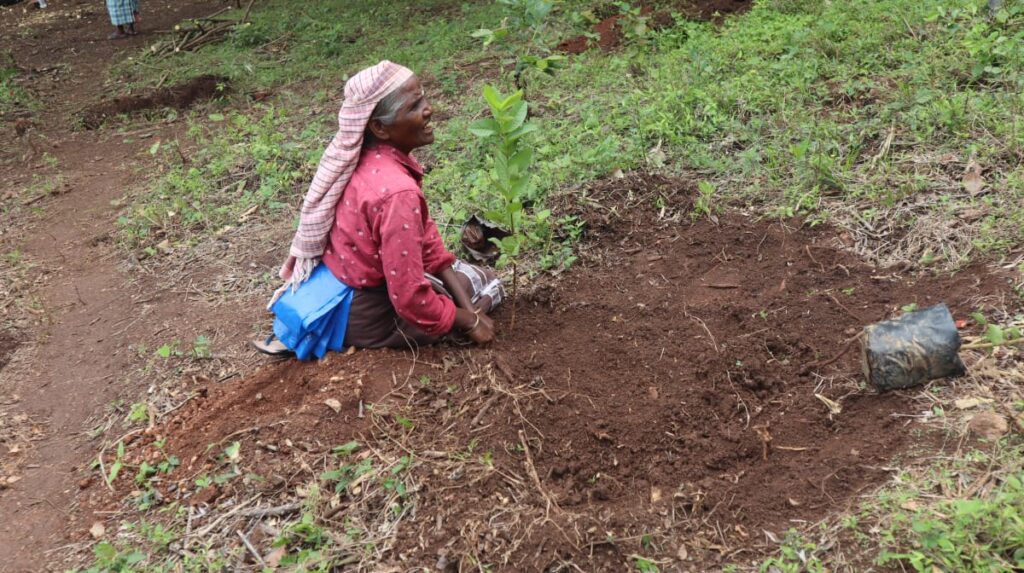
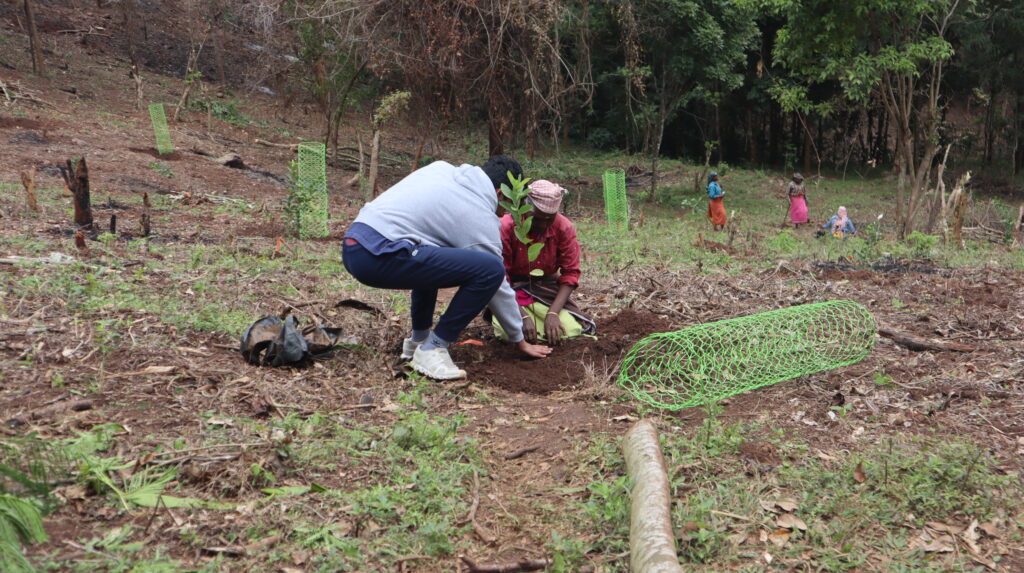
- 70 cents have been replanted in 15 varieties of 170 plants.
Before starting the work, the Irula community performed a traditional pooja honouring their cultural practices and inviting blessings for the land.
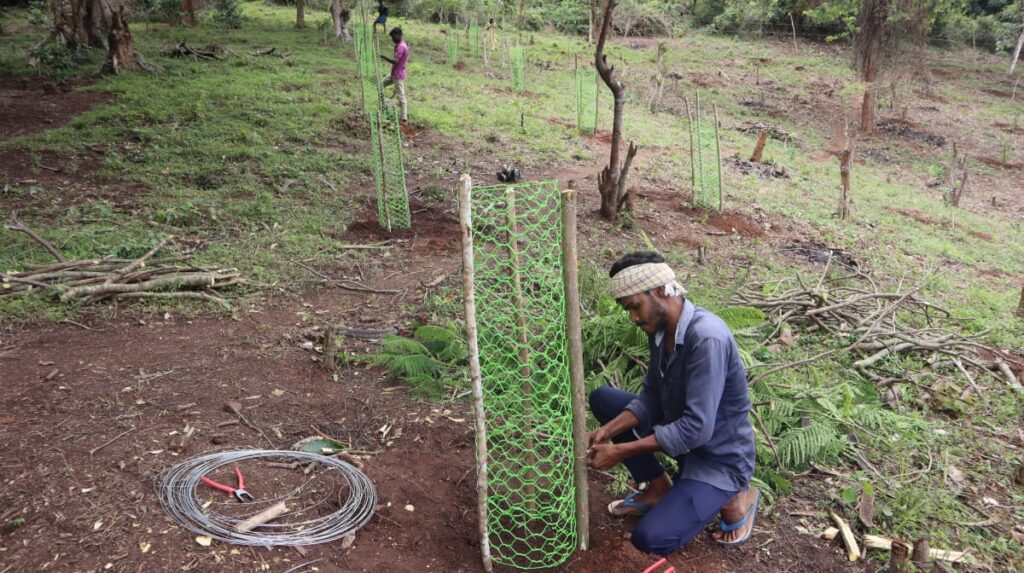
To protect the area from wildlife and ensure success, solar fencing and uprooting work is currently ongoing in the cleared zones. Importantly, all the restoration work — from clearing to planting and fencing — is being carried out by local people from Samaigudal, Kokkodu, Bangalapadikai, and Vakkanamaram villages, who are engaged on a daily wage basis, ensuring local livelihoods are supported through this effort.
What’s Being Planted?
In the replanting work, we have planted 46 varieties of plants from Arulagam Nursery. Fruit trees and native trees are included in the list below, with several of their Irula names also included:
- Lemon (Citrus limon)
- Orange (Citrus sinensis)
- Mathulai (Punica granatum)
- Athi (Ficus racemosa)
- Sewakkai (Phyllanthus emblica)
- Murunga (Moringa oleifera)
- Kakkai Tree (likely Ficus benghalensis or Ficus religiosa)
- Jathikaai (Myristica fragrans – Nutmeg)
- Koyya (Psidium guajava – Guava)
- Amla (Phyllanthus emblica)
- Naval (Syzygium cumini)
Medicinal & Cultural Value Trees
- Neem (Azadirachta indica)
- Vengai (Pterocarpus marsupium – Indian Kino Tree)
- Eetti (Albizia amara
A Community-Centered Future
This project is not just about ecological restoration — it is about community empowerment, cultural revival, and living in harmony with nature. As the land begins to breathe again, it carries with it the care, labour, and hopes of the people who call it home.
An important piece of the restoration puzzle is the native plant nursery established at the Samaigudal site. This nursery is run by the local community, where:
- Seeds and saplings are being collected from local sites
- Native species of trees, shrubs, herbs, and climbers are being propagated
- The nursery supports planting efforts across the restoration site
This local nursery ensures that the plants used are native and climate-adapted, helping to restore ecological balance while providing resources for long-term replanting. We are continuing the clearing of invasive species and replanting the native species, respectively.