By Reshma-Climate Change
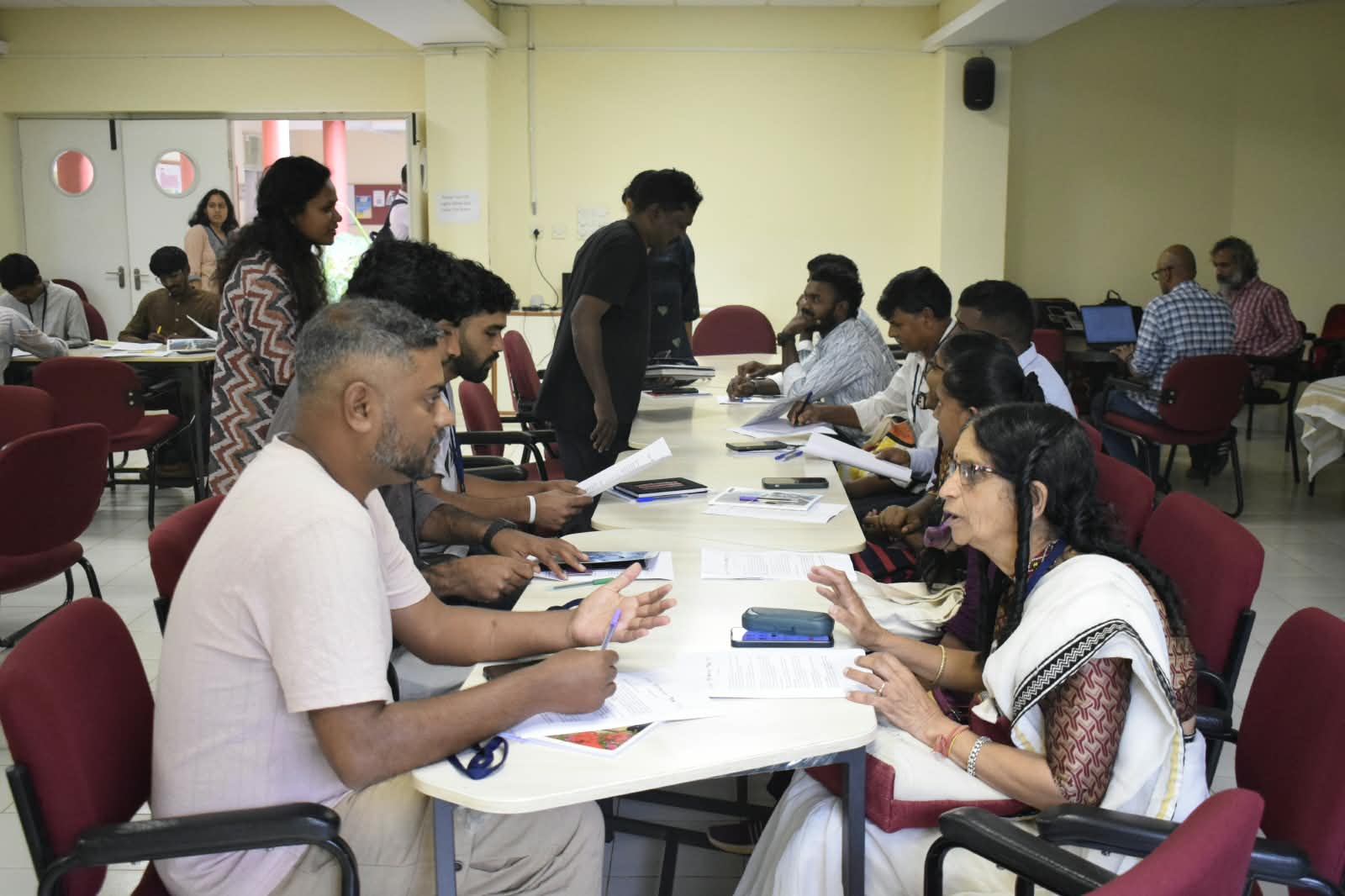
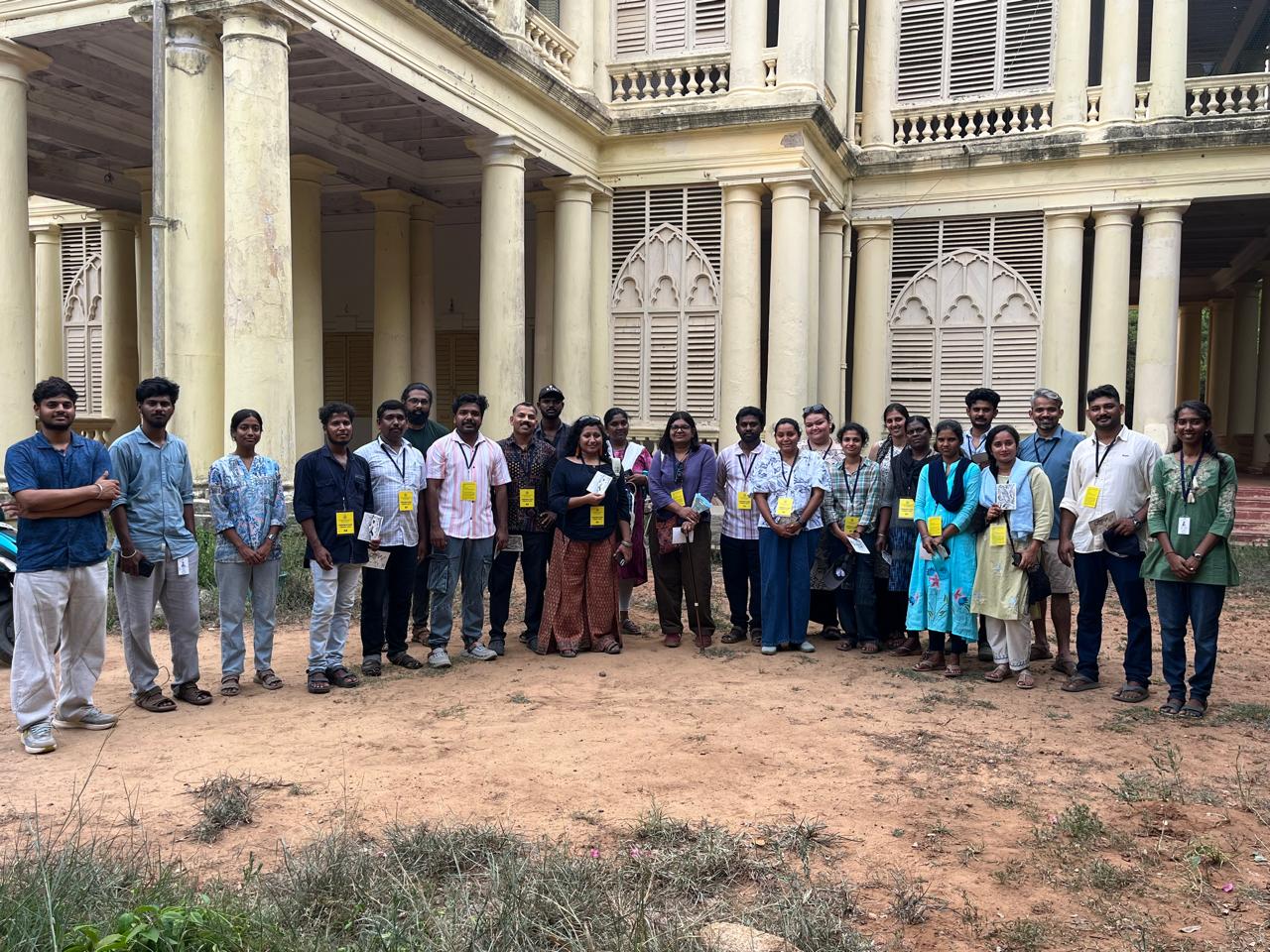
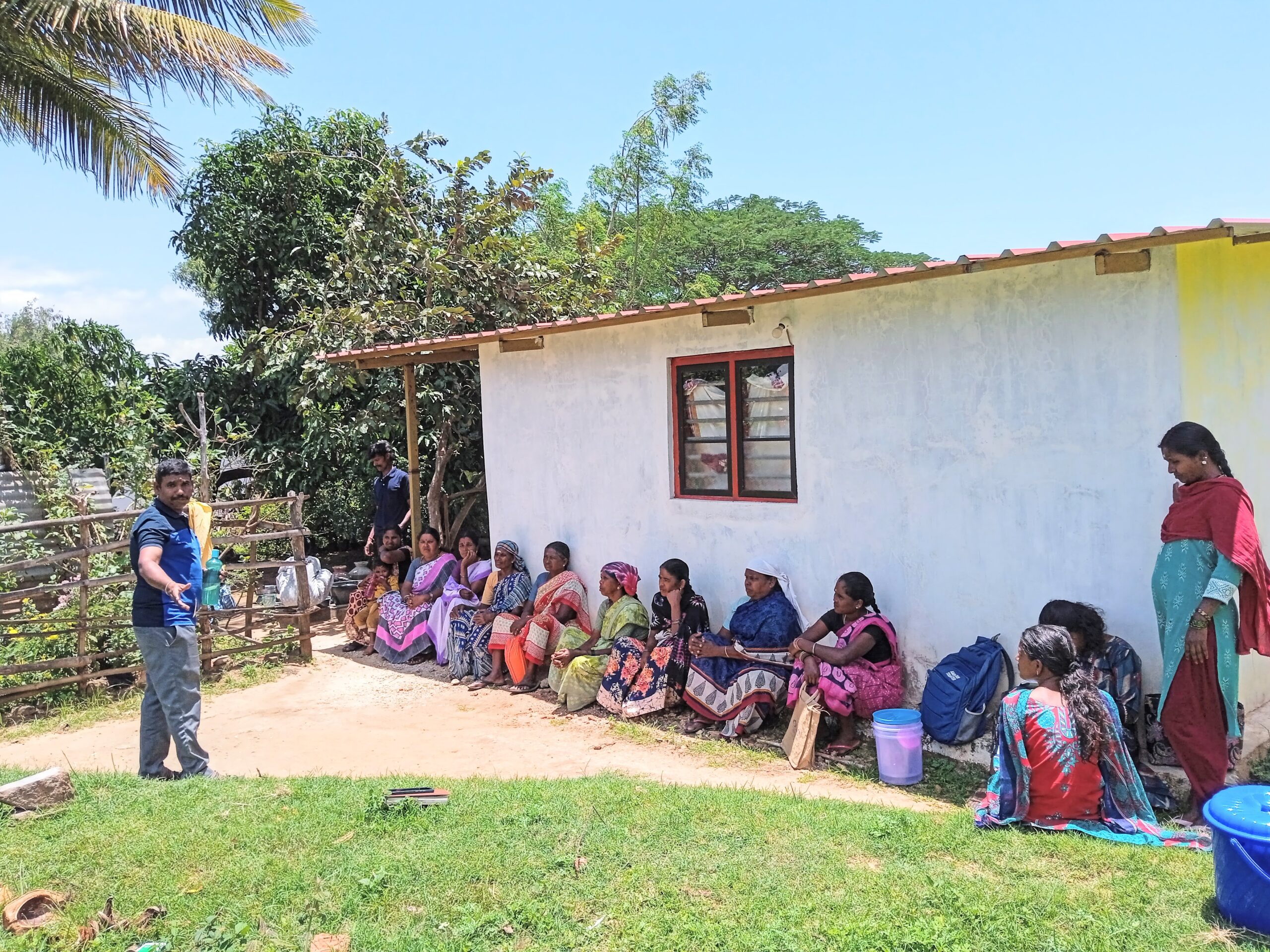
August turned out to be a month rich in cross-learning and exchange of ideas. This was between educators of two mountain ecosystems, as well as between educators and women farmers who practice Analog forestry. Ashish and Shrey are our two educators from Himachal leading work on climate-smart schools. They visited the Keystone campus for a 4-day immersion programme in Nilgiris. They spent time engaging with educators here in Kotagiri, visiting schools, and sharing learning from their own context. This space of interaction between people from different landscapes allowed for a deeper understanding of each other’s work and to enrich perspectives.
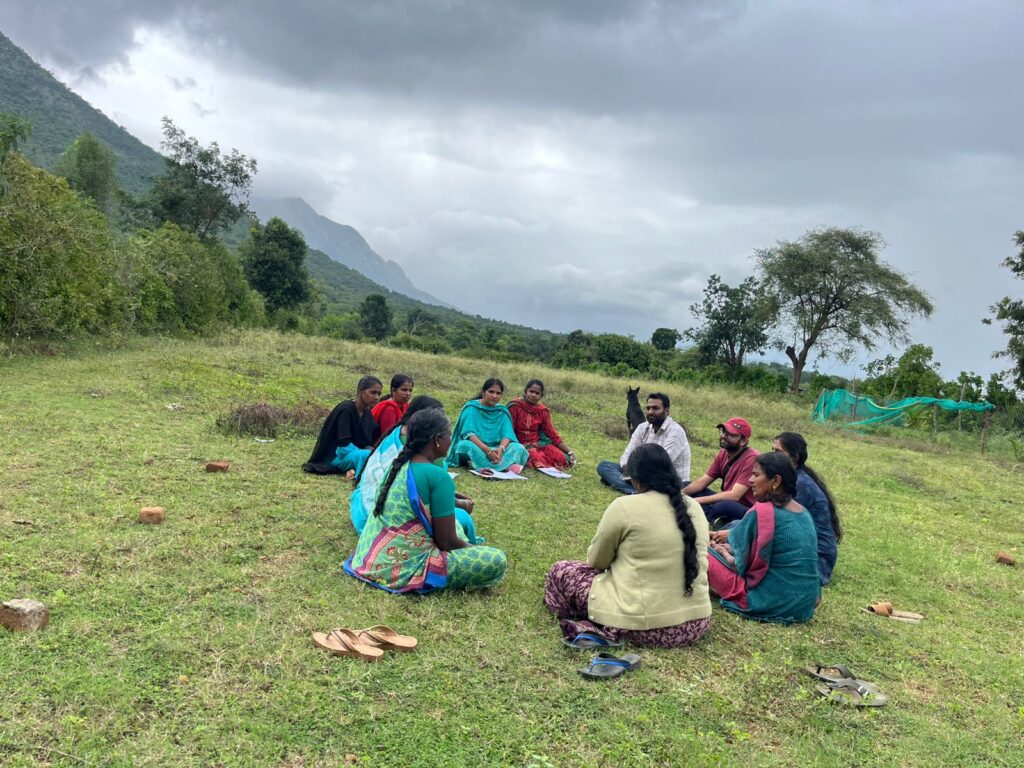
One of the highlights was a session with Shery on Fungi. We could see his deep interest in fungi as he introduced us to the fascinating world of fungi. It encouraged everyone to view fungi through a new and curious lens. The session began indoors, but soon extended to an engaging “fungi walk” around the Keystone campus. Together, we spotted around 6–7 varieties of fungi, making the walk the most memorable part of the session. As one educator reflected, “It was really a new learning experience to know more about fungi. Previously, we hadn’t observed them closely, but this session encouraged us to keep an eye on them, which are in fact indicators of soil health.” The conversations sparked curiosity not only about fungi but also about the methods for harvesting them—whether with a knife or by uprooting—so that they continue to regenerate.
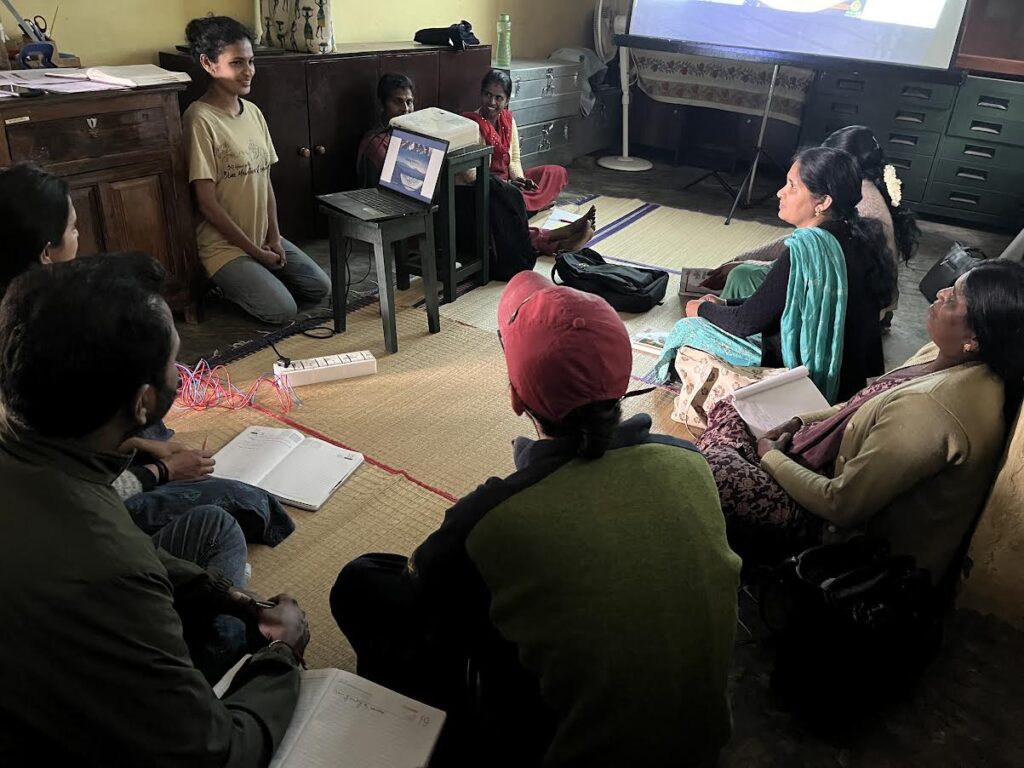
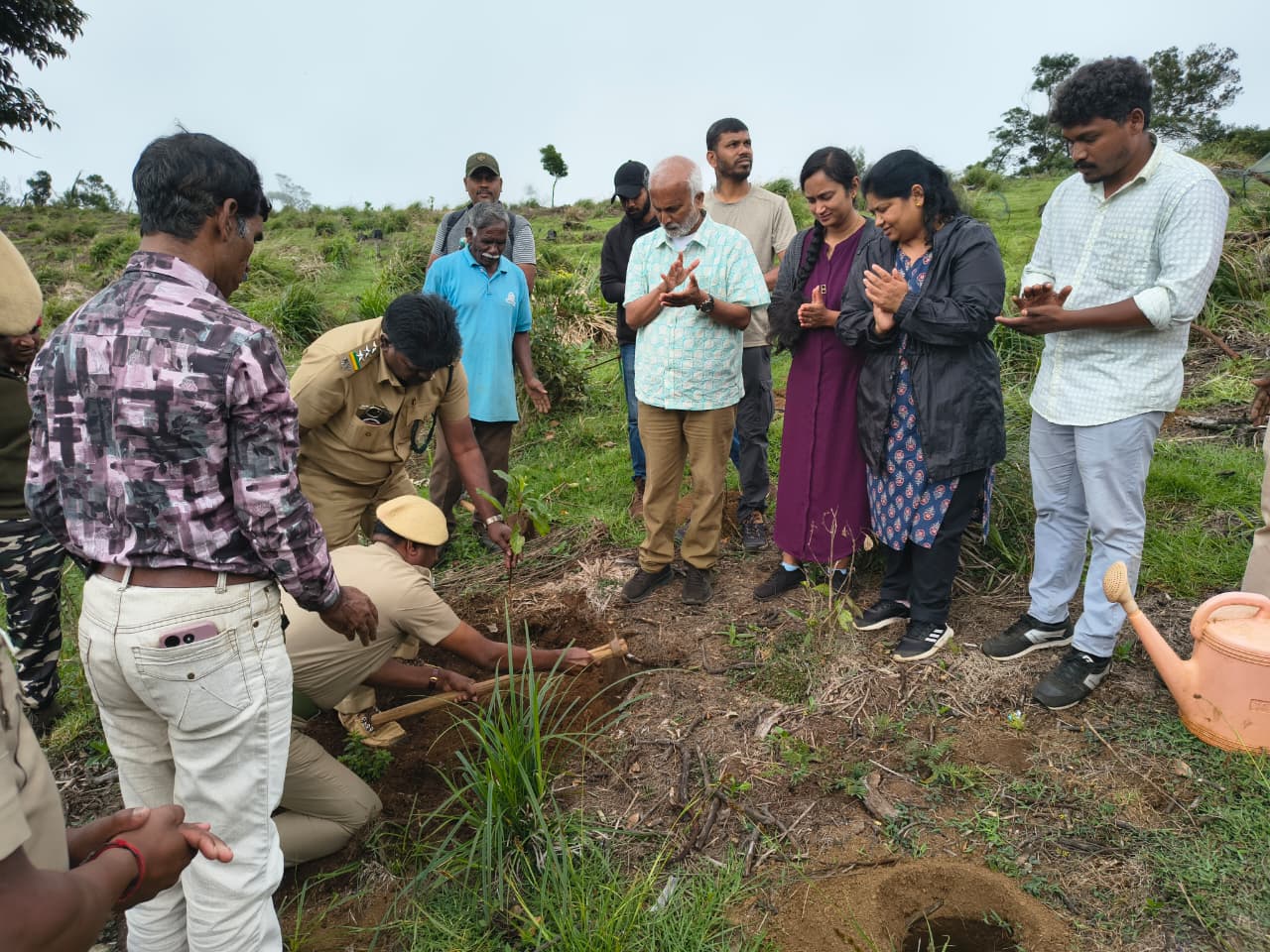
These interactions and exchanges continued. Climate educators from Nilgiris and Himachal visited Sigur to meet and learn from women farmers practicing Analog Forestry (AF). The conversation explored some of the methods that could be adapted in a School kitchen garden. Many educators were excited at the idea of using kitchen gardens as spaces for experimentation, allowing students to practically learn about soil, water, and other ecological factors that influence yield. A new and thought-provoking discussion emerged around the possibility of cultivating fungi outdoors in kitchen gardens.
One educator expressed, “We really got interested in the methods they use for testing soil quality, especially checking pH and moisture levels. We would like to try the same tests in our kitchen gardens, engaging students in learning more about soil.” Adding further richness to the discussions, Promoters from Chokanahalli village shared their experiences of managing kitchen gardens and demonstrated their practices on an AF plot. They showcased different practices to be followed in sowing different seed varieties.
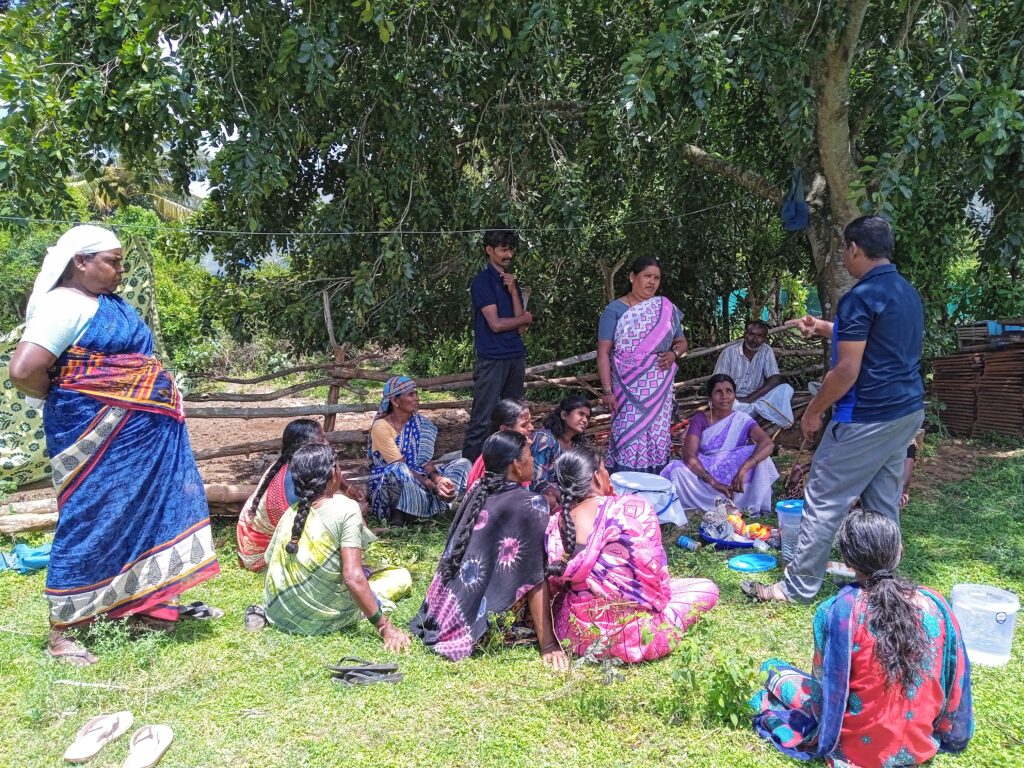
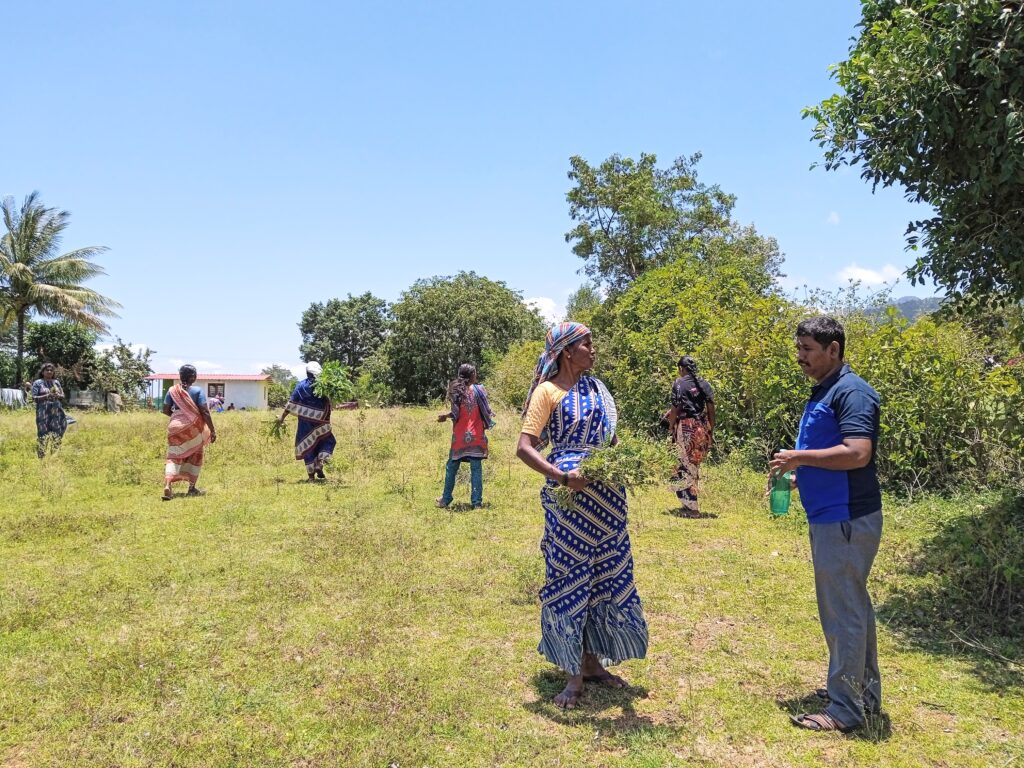
Also in this month, 15 women promoters from Sigur had the opportunity to interact with Chandran from the Community Well-being Programme, an expert in bio-input preparation. His session highlighted the importance of organic farming and explored practical ways to integrate various methods into AF plots to improve both soil health and crop yield. He began by sharing the history of chemical fertilizers and their harmful impact on soil ecosystems, before moving into the preparation of four types of bioinputs: Panchakaviyam, Mennamilam, Themora Karesal, and Poochi Virati. These bioinputs were prepared hands-on by the women promoters, guided by Chandran, with discussions around their specific uses and benefits for different parts of the plant. As one promoter shared, “The training was interesting, and we were able to learn while doing. We will definitely try these preparations in our own plots.”
Overall, August brought us closer through learning, dialogue, and exchanges of practice within and across the programme. From fungi walks to kitchen garden experiments, from AF discussions to the making of bioinputs, every session opened up new perspectives and ideas that educators and promoters are excited to carry forward into their own work.