By Rabiullah MD, Community Wellbeing
Introduction and Community Background
Masspara village, located in Badapaktari Panchayat, Jharkand, is a small rural settlement nestled in the hills. Before 2025, the villagers faced a significant challenge: access to clean and reliable water. Most households relied on a nearby spring well for their daily water needs. However, the well was located at a lower elevation, forcing women and children towalk long distances every day, carry heavy pots of water, and climb back uphill.
This daily task consumed several hours, often delaying children’s schooling and limiting women’s time for household and livelihood activities. During summer, the spring well’s flow reduced, and the effort required to fetch water increased even further. Villagers knew that a sustainable solution was necessary, not just for convenience, but also to improve health, hygiene, and overall quality of life.
The Intervention – Solar Water Pumping System
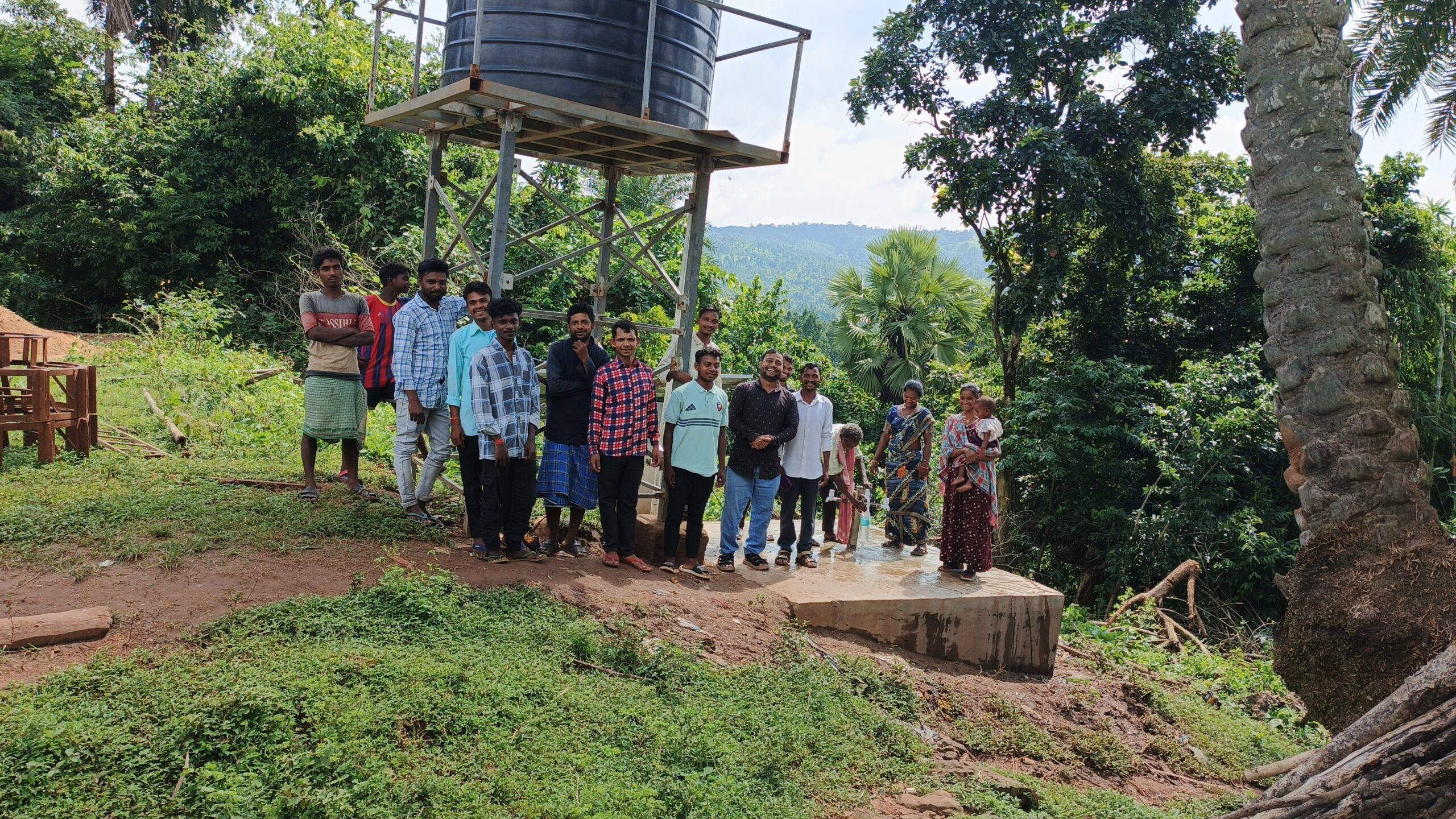
In response to this long-standing problem, a 2 HP solar-powered water pumping system was installed in Masspara in 2025. The project aimed to provide a domestic water supply directly to households using renewable energy, reducing the physical burden and ensuring sustainability.
Along with the solar pump, a 5,000-litre storage tank was installed at a higher elevation. The system works as follows:
- Water from the spring well is pumped into the elevated storage tank using solar energy.
- From the tank, tap connections were installed in the village, providing direct water access to households.
- The solar pump operates during the day, ensuring the tank is replenished regularly.
The system benefits 47 households directly, providing enough water to meet daily domestic needs such as drinking, cooking, bathing, and washing clothes.
Life Before the System
Before the solar installation, fetching water was not just a daily chore—it was a physical and time-consuming burden. Women like Sita Devi, a resident of Masspara, had to wake up early each day to go to the spring well. Carrying two heavy pots of water on their heads, they climbed the hill back home, often making two to three trips a day.
Children, especially girls, were also involved in water collection, which interrupted their schooling and playtime. During the monsoon or harsh winters, reaching the spring well became more dangerous, yet the community had no alternative source of water.
Sita Devi recalls:
“I spent almost three hours every day fetching water. There was no time left for cooking, cleaning, or helping my children with their studies. During summer, when the spring flow reduced, we had to wait in long queues, and sometimes we had to go without water.”
The struggle for water affected everyone’s daily routine, health, and opportunities for personal development.

Transformation After Solar Installation
With the installation of the solar water pumping system, life in Masspara changed dramatically. Households now have direct tap connections, eliminating the need to climb hills multiple times a day.
Sita Devi shares her experience:
“Now I can get water right at my doorstep. I save hours every day, which I can spend cooking, cleaning, and helping my children with school. Our lives have become much easier.”
The system has also strengthened community management:
- Villagers monitor the storage tank and ensure it is clean and protected.
- The community collectively maintains the system, preventing theft or damage.
- The solar pump is simple to operate, and villagers have been trained to handle minor issues themselves.
Beyond convenience, the system has improved health and hygiene. With readily available water, families can maintain cleanliness in their homes, and children can wash their hands regularly. Women report reduced fatigue and stress, and children now have more time to study and play.
Sustainability, Lessons Learned, and Future Outlook
The solar installation in Masspara serves as a model for sustainable rural water supply. The project demonstrates how renewable energy and community ownership can provide reliable, long-term solutions for domestic water needs.
Key lessons from this intervention include:
- Community participation is essential: Villagers take responsibility for the system’s upkeep.
- Renewable energy ensures sustainability: Solar power eliminates recurring electricity costs.
- Direct access transforms lives: Time saved translates into improved education, livelihoods, and well-being.
Looking ahead, the Masspara community plans to:
- Continue monitoring and maintaining the system collectively.
- Explore expansion possibilities to cover more households in nearby areas.
- Share experiences with other villages to promote replicable, sustainable water solutions.
The story of Masspara village is a powerful example of how technology, combined with community effort, can transform rural lives by creating convenience, improving health, and empowering residents to take charge of their resources.