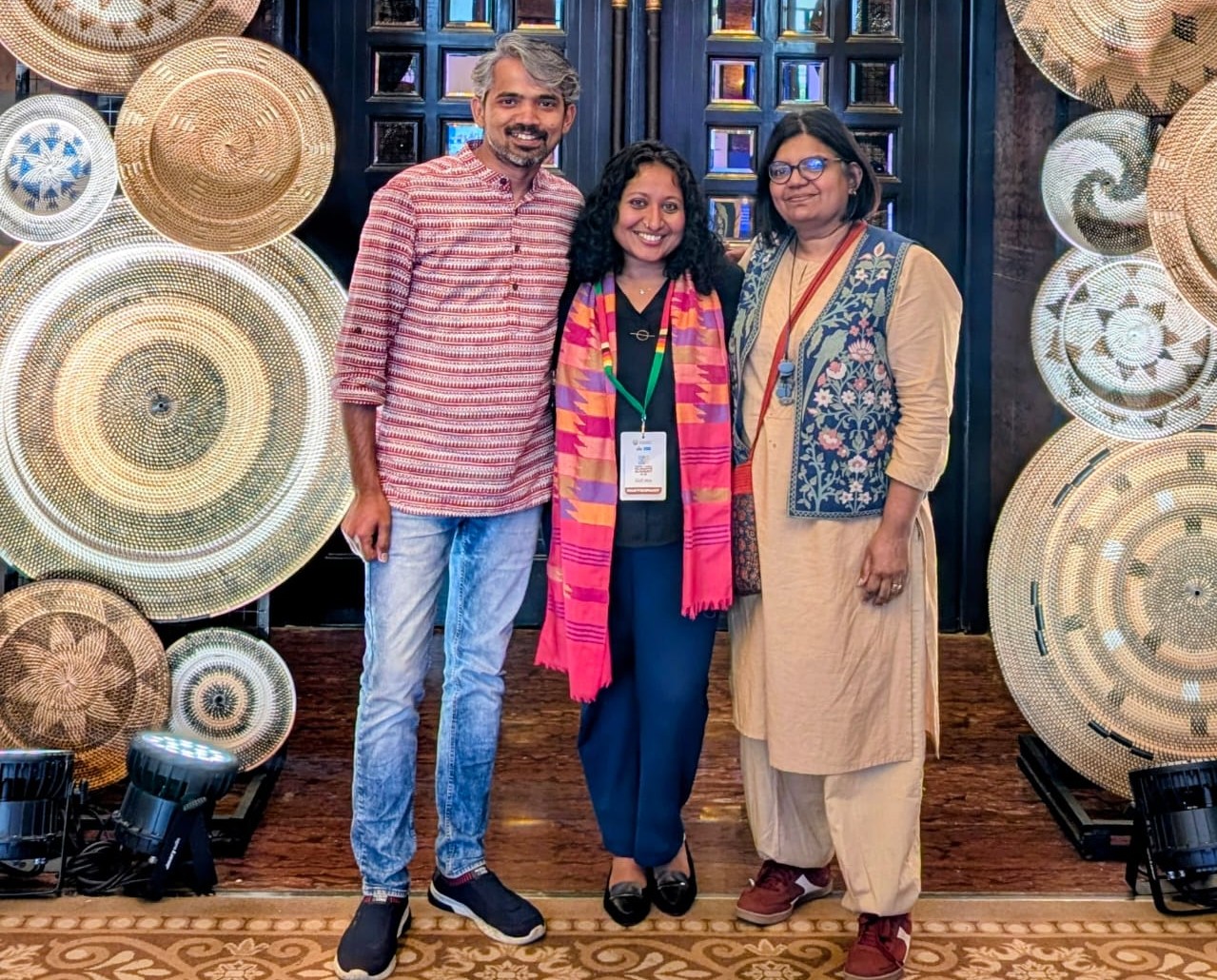
By Bhavya George and Reshma R, Climate Change
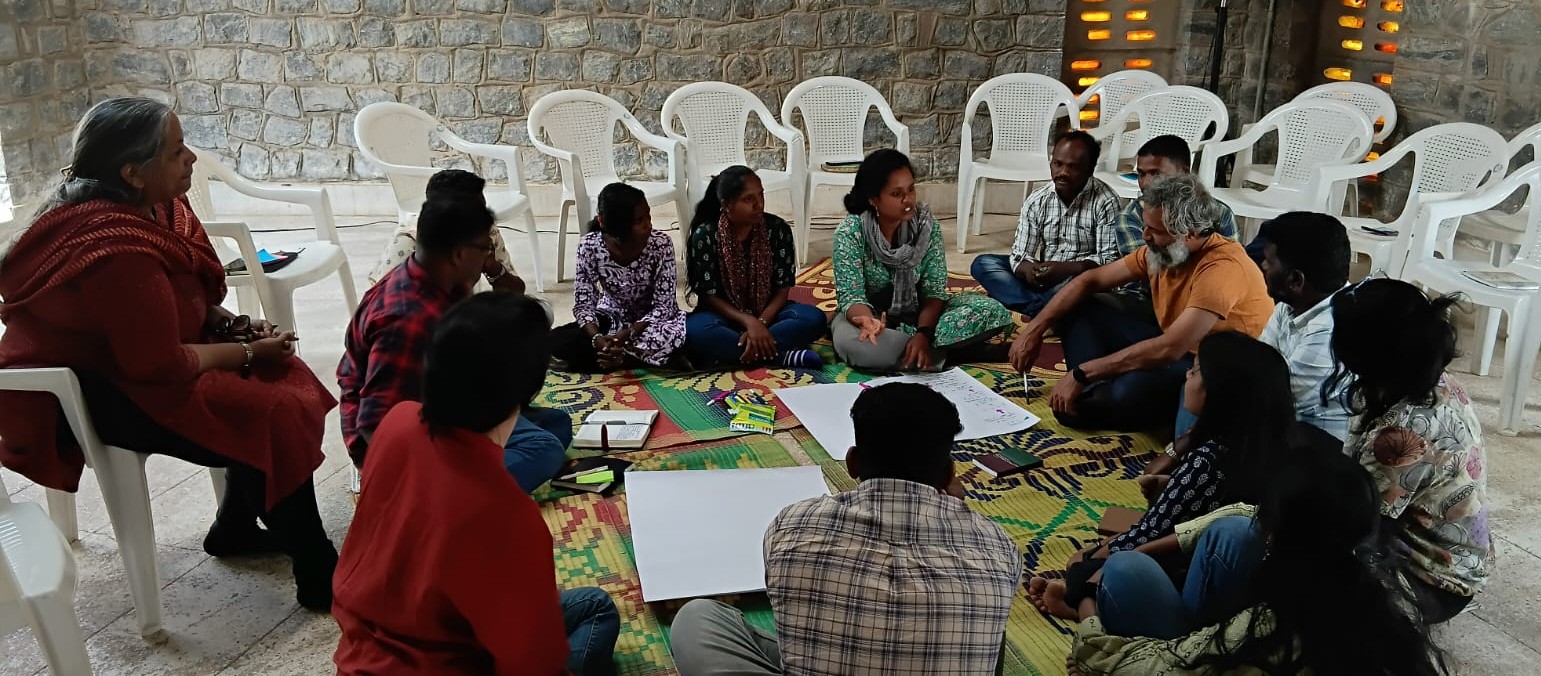
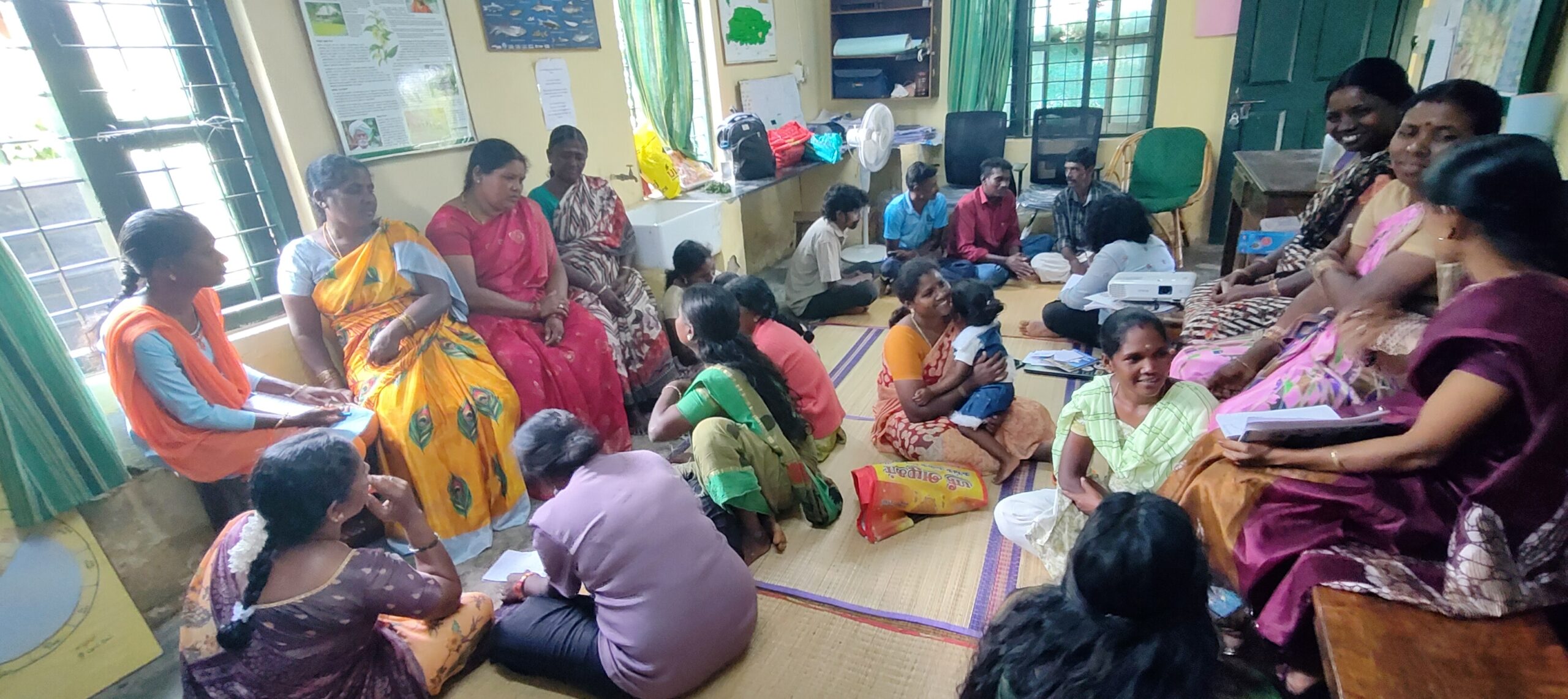
In Sigur, on October 16th, 25 analog forestry practitioners (21 women and 4 men) came together to discuss and deepen their understanding on agroecology through the Analog Forestry (AF) approach. With both old and newcomers, the workshop prioritized peer learning, hands-on activities, and connecting ecological concepts to their everyday experience.
Participants reflected on their motivations for cultivation, despite ongoing challenges such as climate variability and degraded resources. It was quite a powerful sharing circle. Overwhelmingly, the joy of seeing their land with crops and thriving stood out as a common thread. One woman farmer, with 30 years of experience, movingly described her perseverance: “Even if it is hard for me, I will try to do some cultivation in a smaller area, and that makes me happy.”
Bridging the gap between global climate concepts and local lived reality, Bhavya facilitated a participatory role play using prompt cards. Reshma, Sathya and Prema engaged in it with confidence. This exercise helped women connect the dots between observed changes in weather, crop yield, and household food security. By relating climate change to their own experience, women practitioners grounded the science in their everyday context.
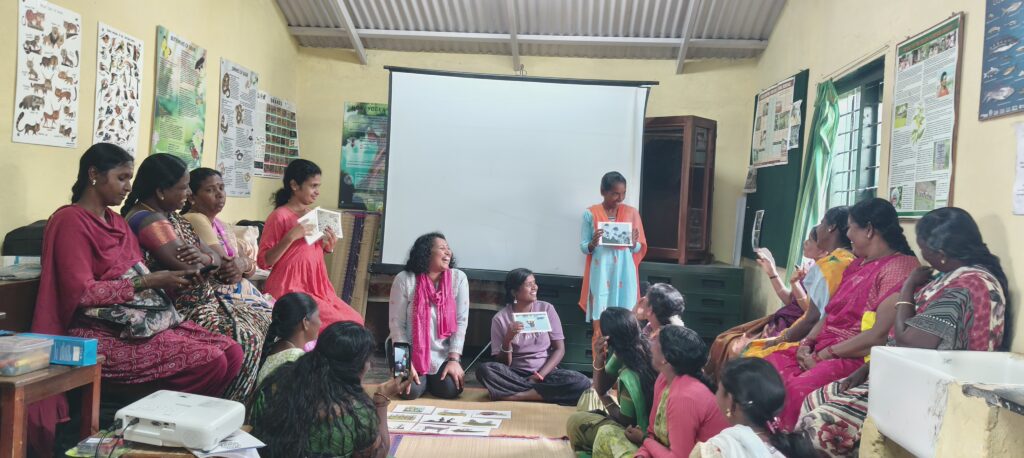
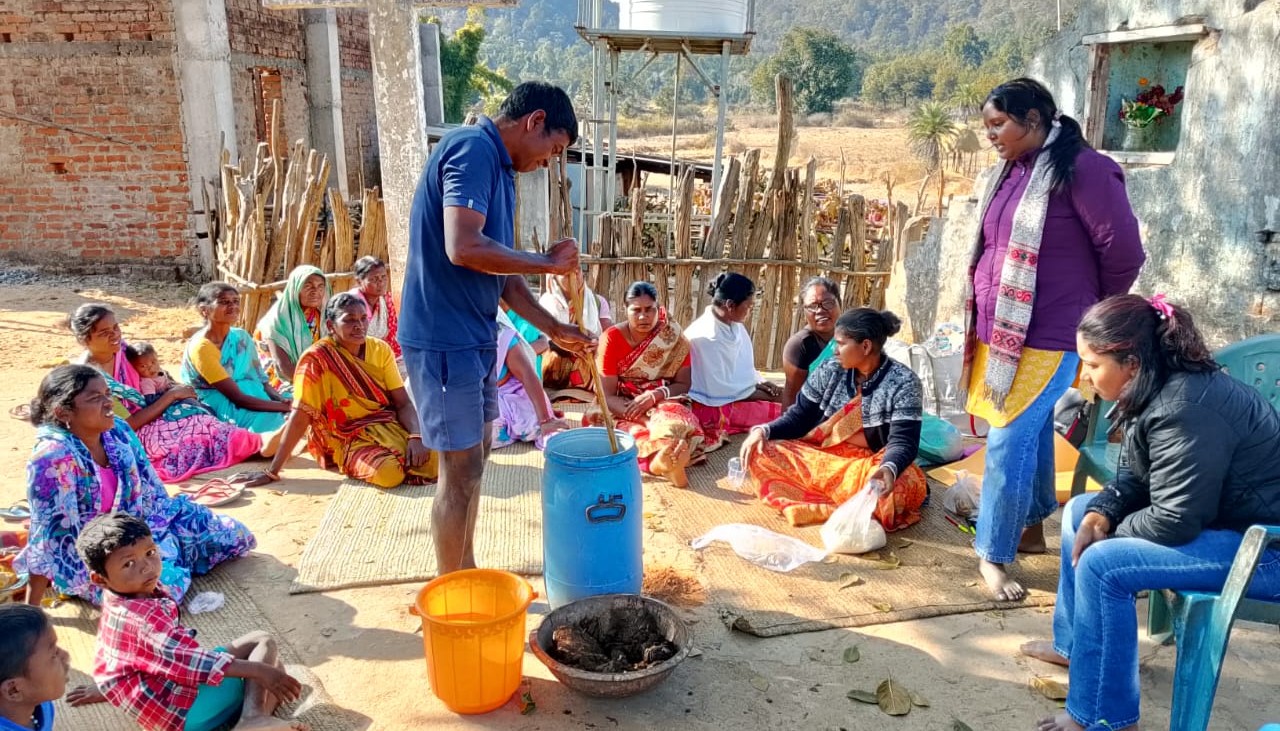
Collaboration and collective problem-solving were central throughout. In group activities, participants discussed traditional land management practices linked to analog forestry’s 12 principles. Techniques such as mulching, using cow dung to enrich soil, and minimizing chemical inputs were highlighted. Discussions also addressed wildlife conflict, with practical solutions like tins-and-string sound devices and traditional night guarding using tree houses.
A hands-on session had each practitioner design their ideal AF plot with the assigned plants, trees, tubers, grass and vines. This fostered creativity and deeper ecological observation, reinforcing the importance of recognising the unique biophysical qualities of each piece of land.
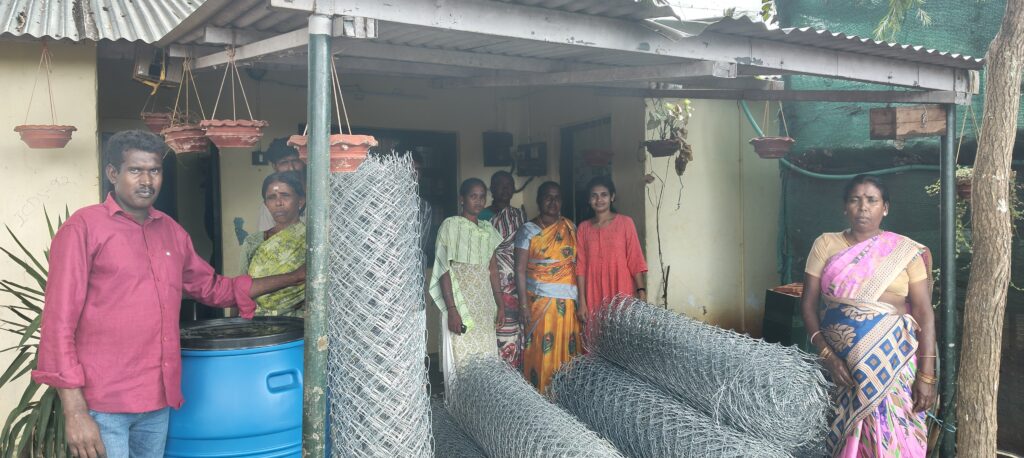
The lively and supportive atmosphere was evident as the workshop concluded with the distribution of drums for preparing bioinputs (connecting to previous trainings) and chain link for fencing support.
This workshop underscores analog forestry’s transformative potential as a gender-just climate solution. By building women’s ecological expertise and supporting their leadership in their land. Such participatory training ensures that women are central agents of resilience, innovation, and well-being in Sigur and beyond.