
Hatnada and Sardabera, Seraikela-Kharsawan District Jharkhand
18th and 19th November 2025
By Rohan Mukerjee, Biodiversity Conservation
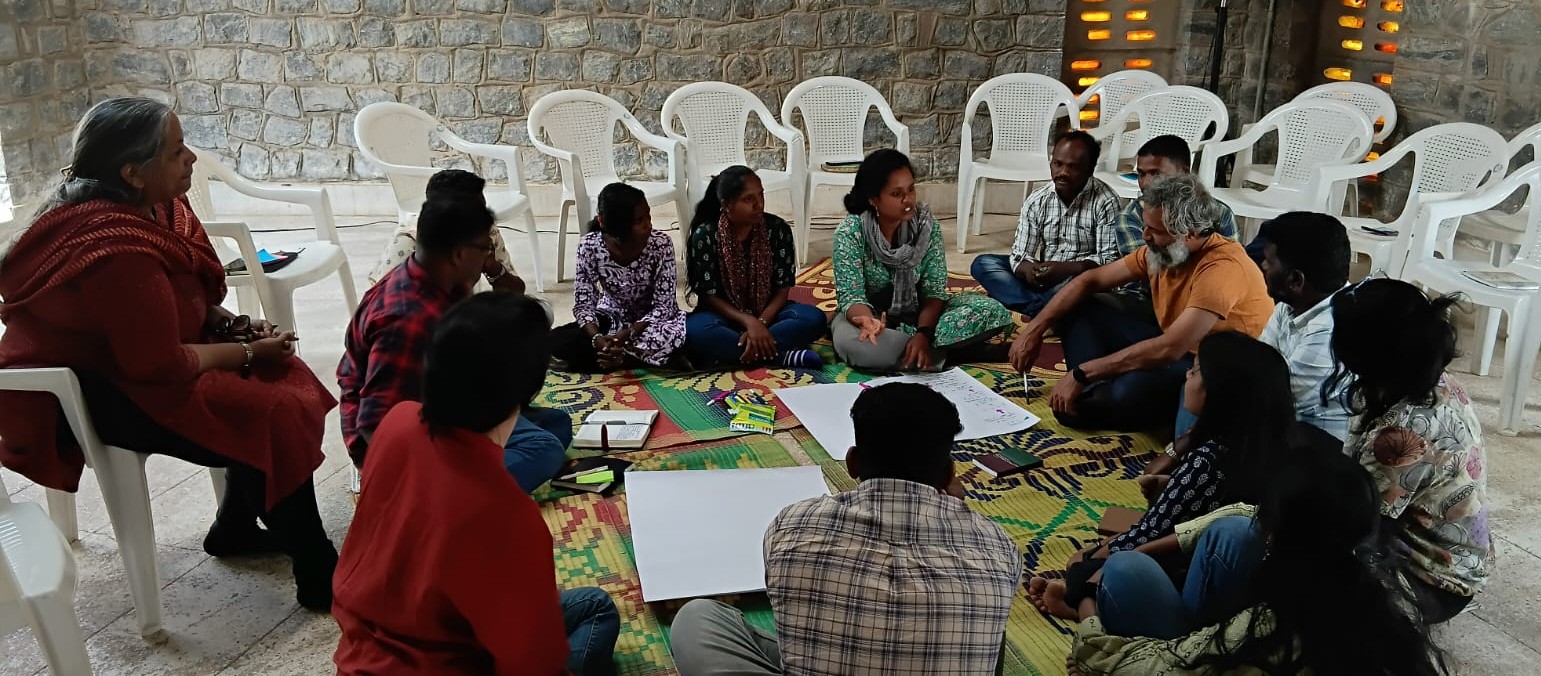
In November, with the weather pleasantly cool, Keystone Foundation’s Eastern India team facilitated a training session on beekeeping and nursery management in the forest villages of Hatnada and Sardabera in Seraikela-Kharsawan District of Jharkhand.
Beekeeping Session
Day One
The sessions were led by Shiny Rahel and Justin Raj from the Nilgiris team, with valuable contributions from two seasoned beekeepers from Khunti District – Basudeo Oreya and Aananda Tuti. In addition to the Keystone team, there were a total of 21 participants, including CRPs and community representatives from the villages of Seraikela-Kharsawan who attended the training.
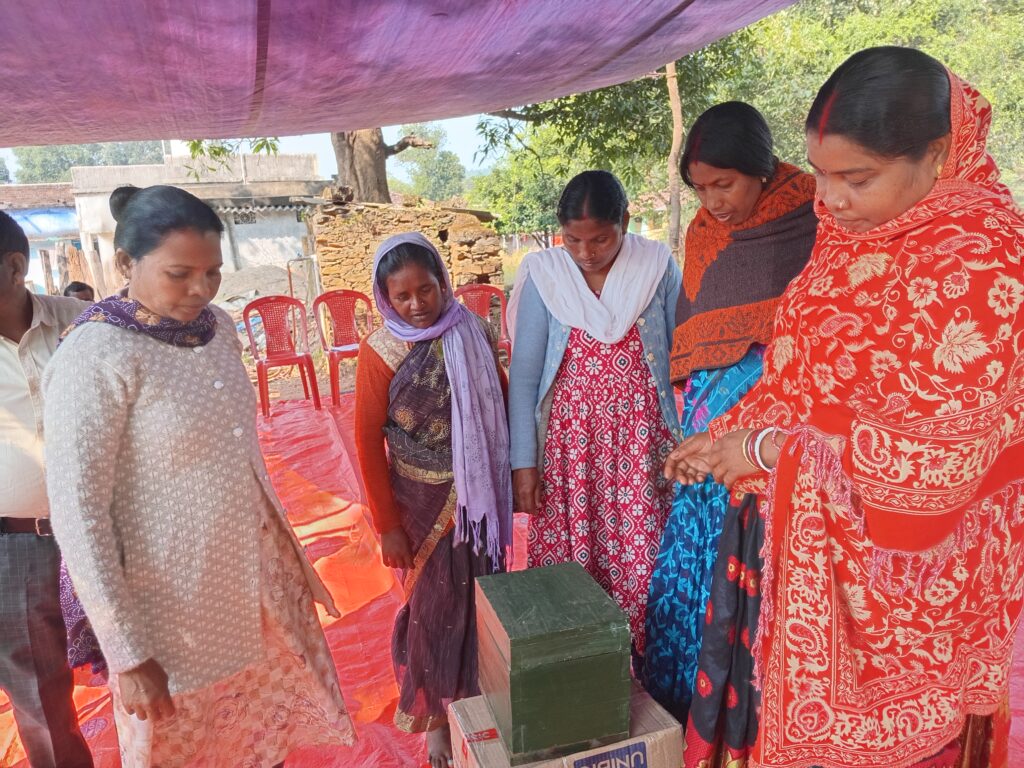
Four young men from Reyarda village, previously trained by the Agriculture Department on bee-keeping also attended the training and brought along one of the Apis mellifera bee boxes they had received. Although they had received training for rearing native bees (Apis Cerana) they were supplied with Apis mellifera boxes with brood. Unfortunately, most of the colonies were not doing well and the bees had fled from most of the boxes. With guidance from local bee-keepers like Aanada and Basudeo, Keystone Foundation aims to revive and promote sustainable beekeeping using the native Apis Cerana species.
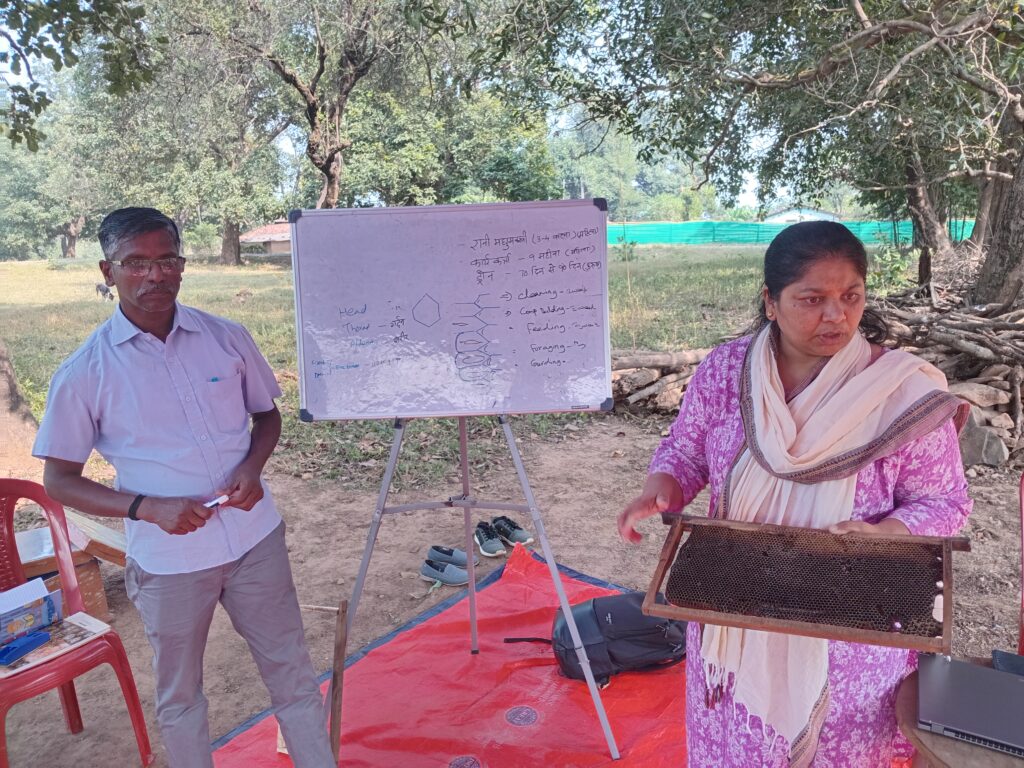
Day One of Justin’s training provided an overview of the ecology of beekeeping- the types of bees, anatomy of a bee, composition of a bee colony, roles of different members of the bee colony, collection of nectar and pollen, and the process of honey production
Day Two
Day Two focused on the structure of a beehive and of bee boxes.
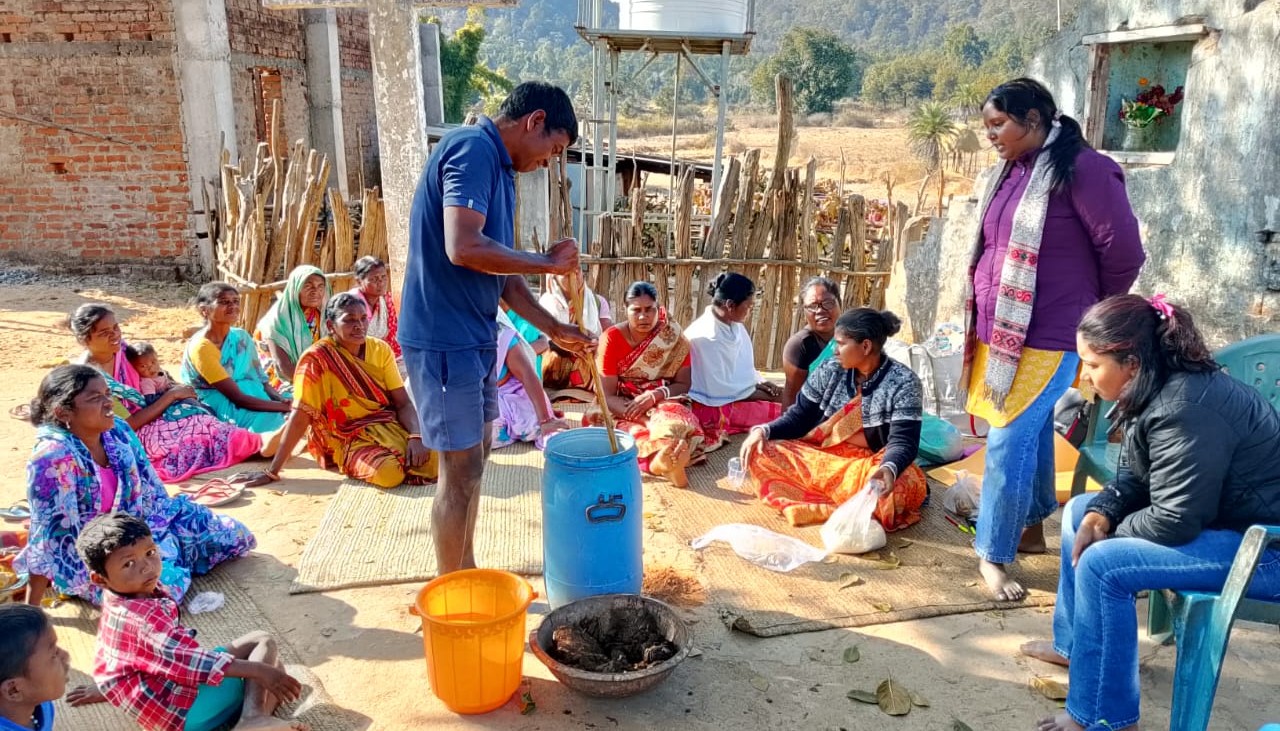
Anand Tuti shared insights from 17 years of beekeeping, mostly with Apis cerana. He spoke about beginning his journey through a training program and continuing to learn through many years of practice. Though he and his partner, Basudeo, primarily work as tractor mechanics, beekeeping has become both an interest and an additional source of income. The two shared several cost-effective and adaptive methods. One example was how they placed frames in a bucket, rotated it using a rope tied to the handle, and extracted honey using centrifugal force.
Justin, Shiny, Anand, and Basudeo guided participants through the challenges of beekeeping, like pests and diseases, and outlined strategies to deal with them. They also explained how to capture wild broods, how to maintain, expand, and split colonies in their bee boxes.
Nursery Management
Alongside the beekeeping sessions, Shiny conducted hands-on training in nursery management at the newly established nursery in Sardabera, which is located on land donated by Sibeshwar Sardar. The sessions included seed collection and management, bed preparation, effective layouts for the nurseries, water management, and ecological restoration. Shiny also discussed how nurseries can help meet people’s needs.
The event concluded with CRPs and community members pledging to pilot bee-keeping ventures in their respective areas in collaboration with community representatives and women’s groups. Aanad and Basudeo reaffirmed their commitment to support the initiatives with their technical expertise as well as help them access necessary resources. Community representatives and CRPs responsible for the recently established nurseries shared their excitement to implement the ideas they had learned and work towards establishing flourishing nurseries and supporting ecological restoration efforts in their areas, as well as ensuring the provision of a variety of organically reared saplings to local communities.