Ramachandran K G and Ayoob A, Community Wellbeing
Exploring traditional food systems, their connection to climate change, and local governance practices.
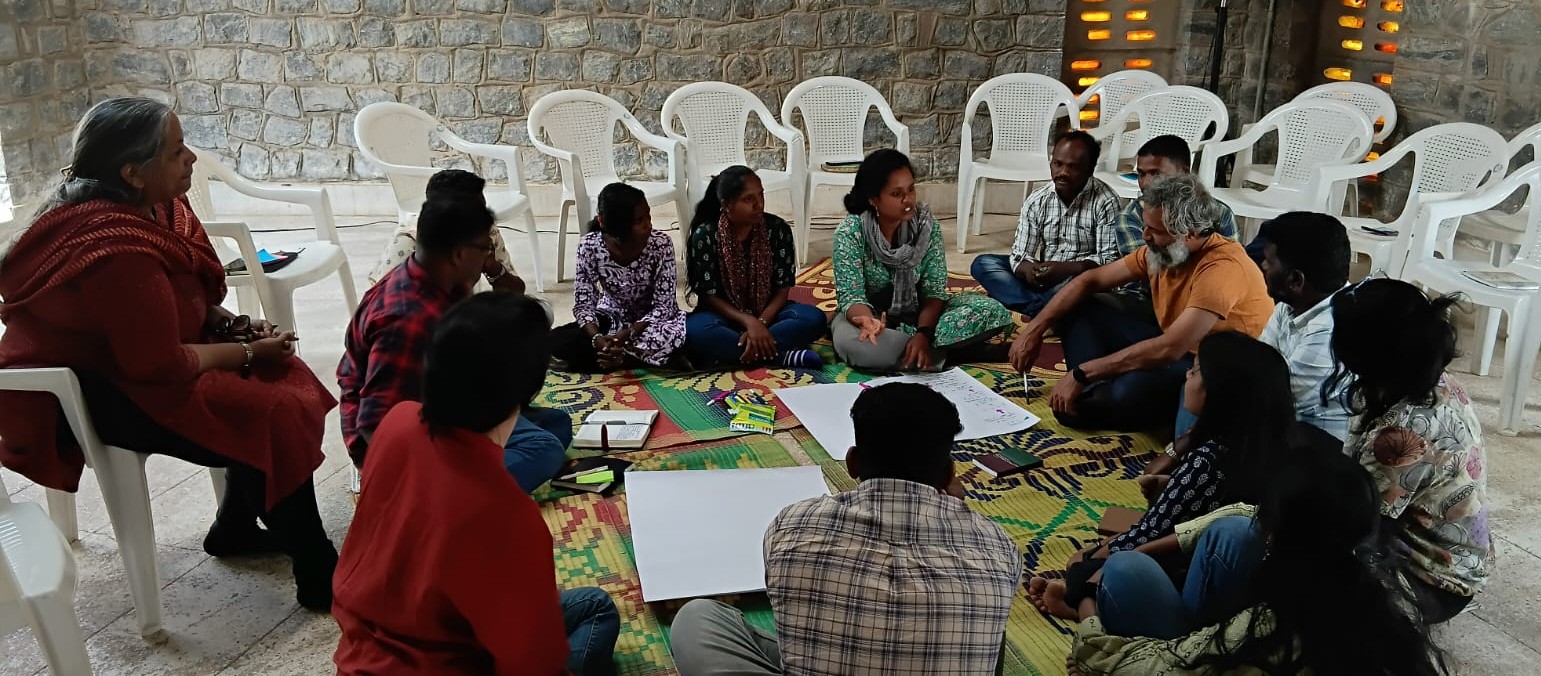
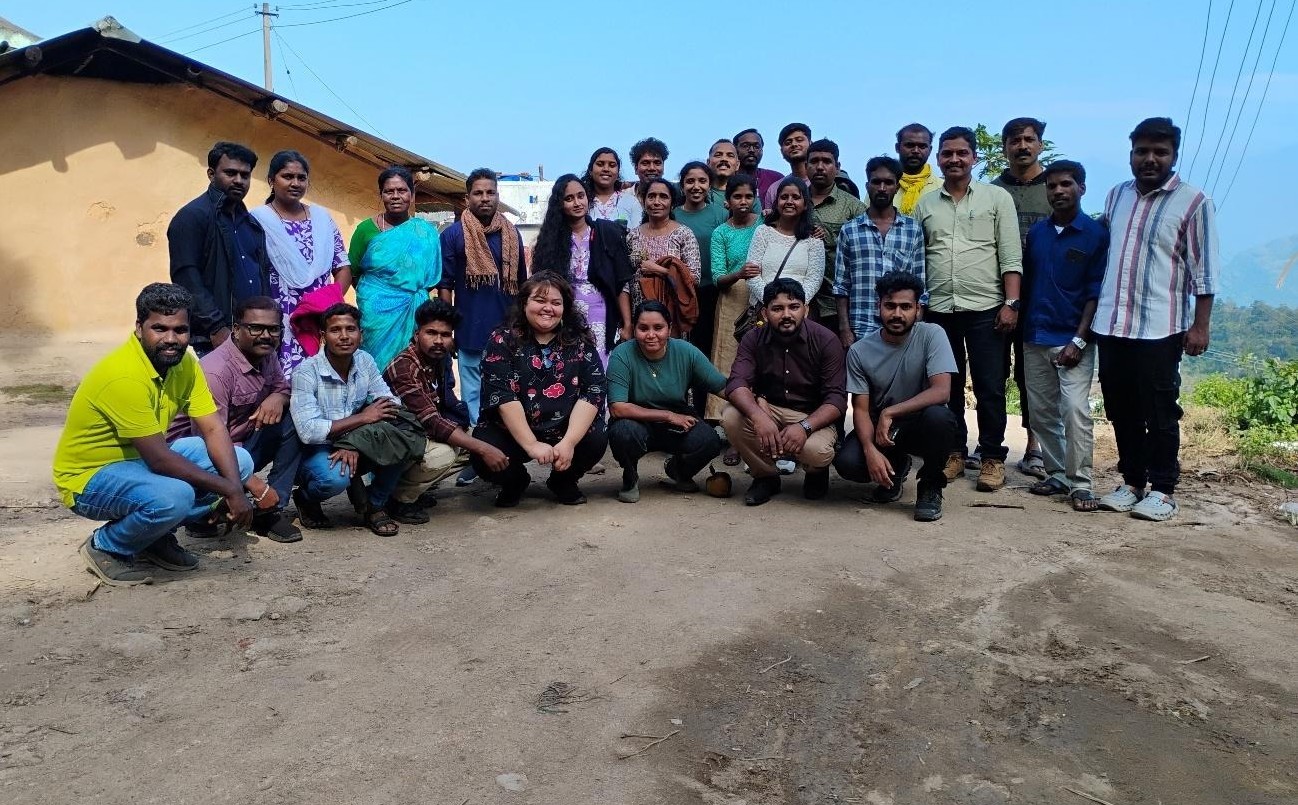
In the early morning of December 23rd, the Community Wellbeing teams from Kotagiri, Wayanad, Pillur, and Sigur met at Chinnar National Park in Kerala. The air was cold, and we huddled around a dying fire to keep warm. Despite the early hour, the conversation soon became animated with talk of politics with the energy quickly picking up. Once everyone had arrived, we set off towards Marayur.
As we drove through the region, we passed sandalwood plantations, which were meticulously fenced, labelled, and guarded. Our first stop was a meeting with the Marayur Sandalwood Forest Department. Here officials gave us a short presentation on their initiatives.
CHILLA: A Weekly Tribal Farmers’ Market:
CHILLA is a weekly open-air market started in 2014 by the Marayur Sandalwood Forest Department to ensure fair prices for organic produce from tribal villages. Held every Thursday, it brings together farmers from 36 villages (Kudi) in the region.
The market allows farmers to sell seasonal produce directly to consumers, reducing dependence on middlemen. Millets, vegetables, fruits, honey, and spices are grown using traditional, eco-friendly methods and sold through auction with a preset minimum price higher than average market rates. Beyond income, CHILLA provides a dignified space for tribal families to sell their produce, and strengthen bargaining power. It has also become a space for conversations around sustainable food systems, nutrition, and responsible consumption.
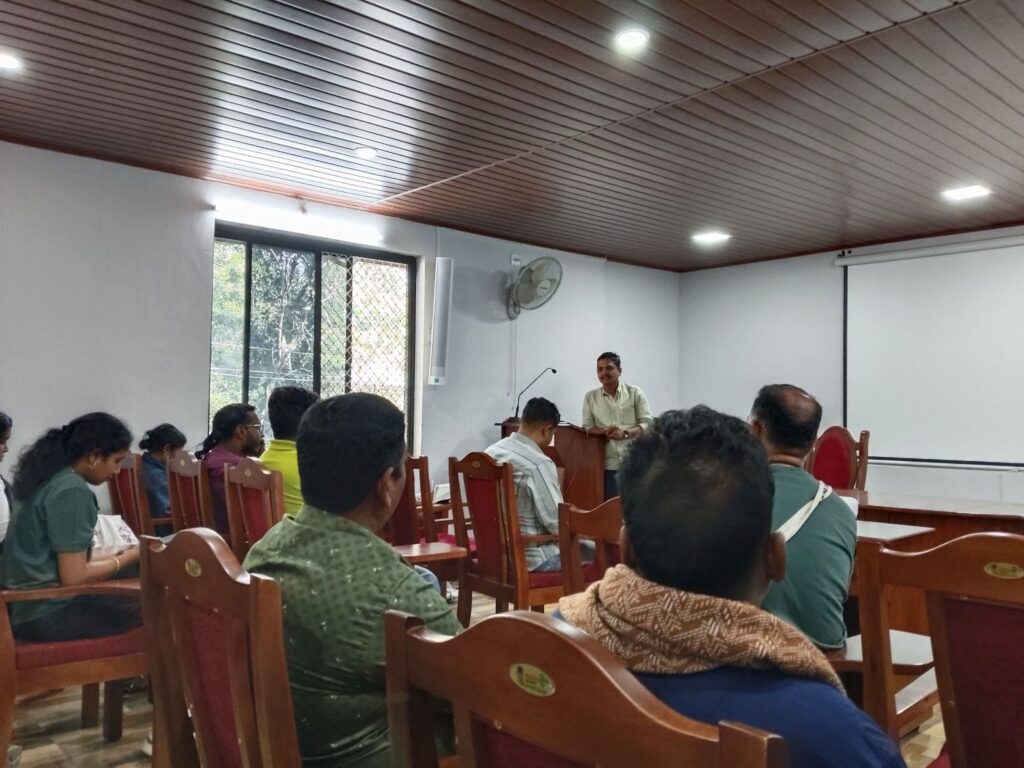
Photo credit: Ujjainee Sharma
Marayur Sandalwood Depot:
After the presentation by the DFO, we were taken to the Marayur Sandalwood Depot where the perfume of sandalwood filled the air. Workers sat on the ground carefully weighing and preparing different grades of the wood. In one room, a huge pile of shavings, worth thousands of rupees lay in a corner. We were also told that the famous Mysore Sandal soap, sources its sandalwood from Marayur, prompting us to suggest that the name be changed to Marayur Sandal soap. A watchful security guard accompanied us throughout, keeping a close eye on us.
The Marayur Sandalwood Depot plays a crucial role in the collection, storage, and management of sandalwood. In the face of climate change marked by shifting rainfall, rising temperatures, and drought, the depot ensures sustainable forest management through regulated harvesting and prevention of illegal felling. By protecting sandalwood trees, the depot helps preserve biodiversity and strengthen ecosystem resilience. Its conservation and monitoring efforts contribute to climate adaptation while supporting communities dependent on forest resources.
Kammalam Kudi: Muthuvan Farming Traditions:
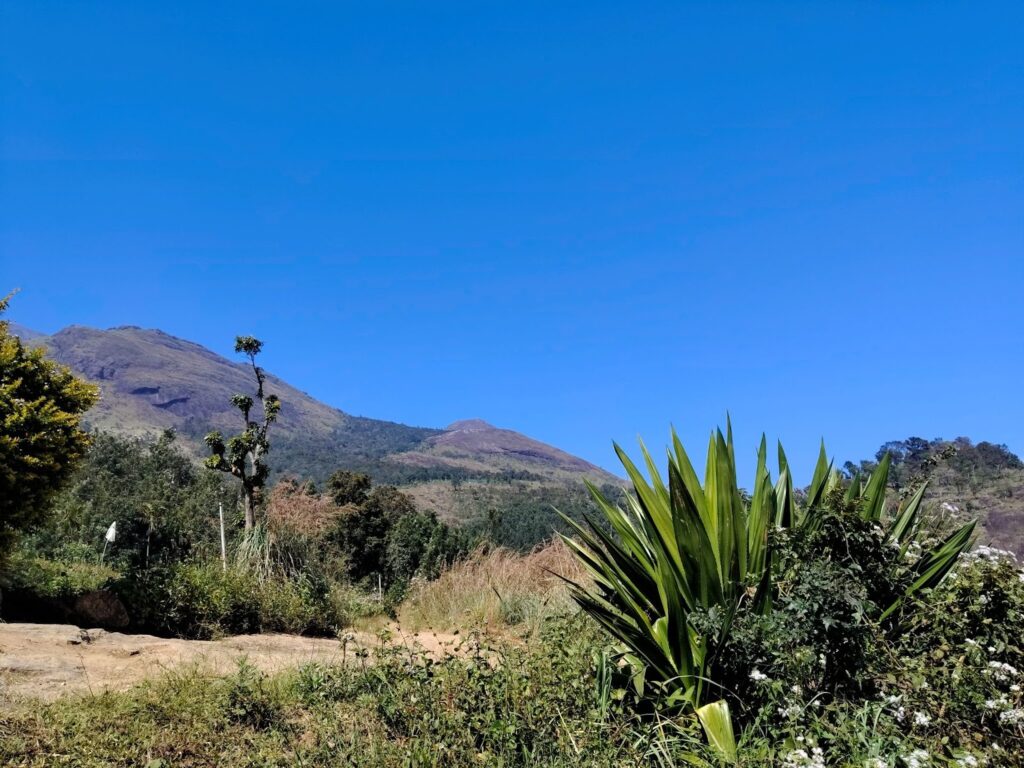
From there, we travelled to Kammalam Kudi, a remote village of 43 Muthuvan families. The village sits high on a hill, and we climbed up in the afternoon heat, struggling as villagers passed us with ease, insisting the village was “only five minutes away.” When we finally reached the top, the view made the climb worthwhile.
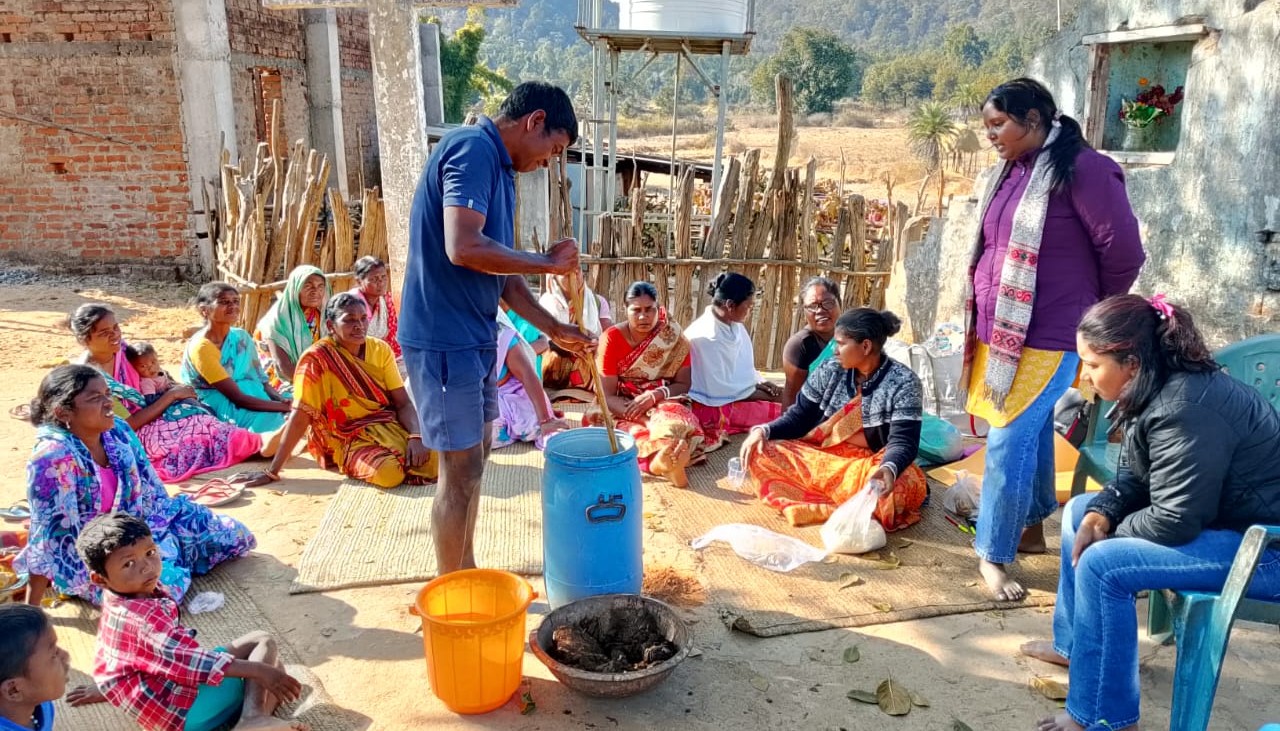
Agriculture is the main livelihood here.. Crops include Chinese potato, coffee, pepper, amla, tubers, lemongrass, and wild vegetables, grown through shifting cultivation and kitchen gardens. Despite the altitude, the community uses an efficient gravity-based irrigation system that draws water from nearby hills, without pumps. Farming is entirely organic, with no chemical fertilizers or pesticides. The village is especially known for its high-quality Chinese potato, much of which is sold at the CHILLA market.
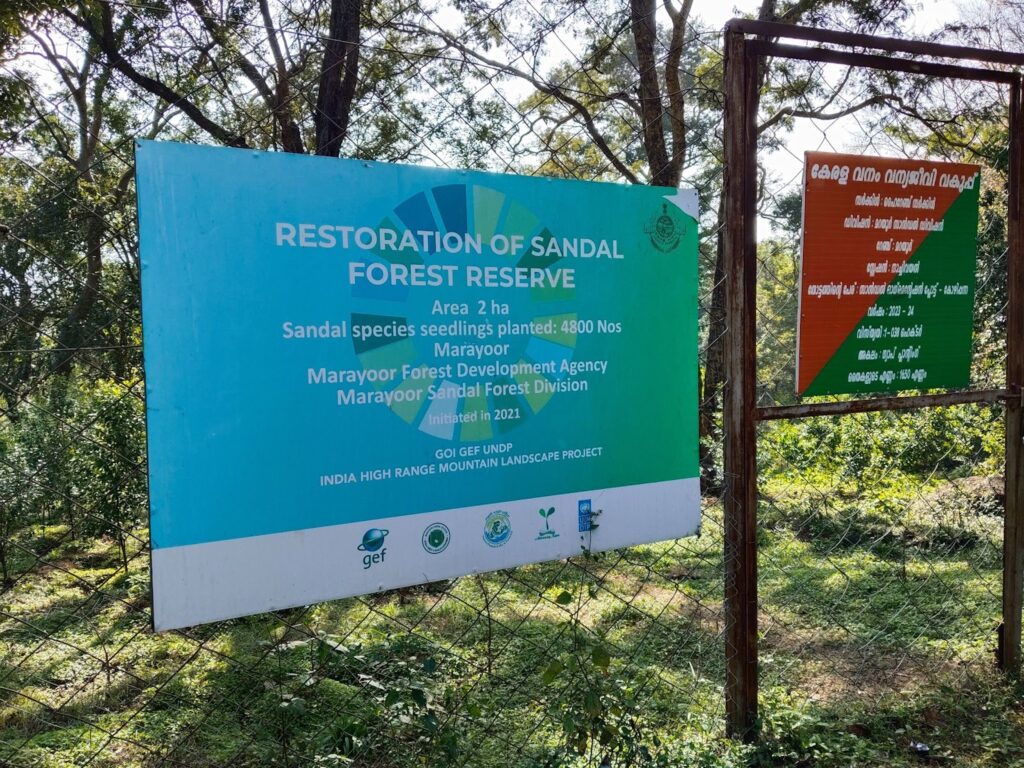
Photo credit: Ujjainee Sharma
Jaggery, Waste, and Local Governance:
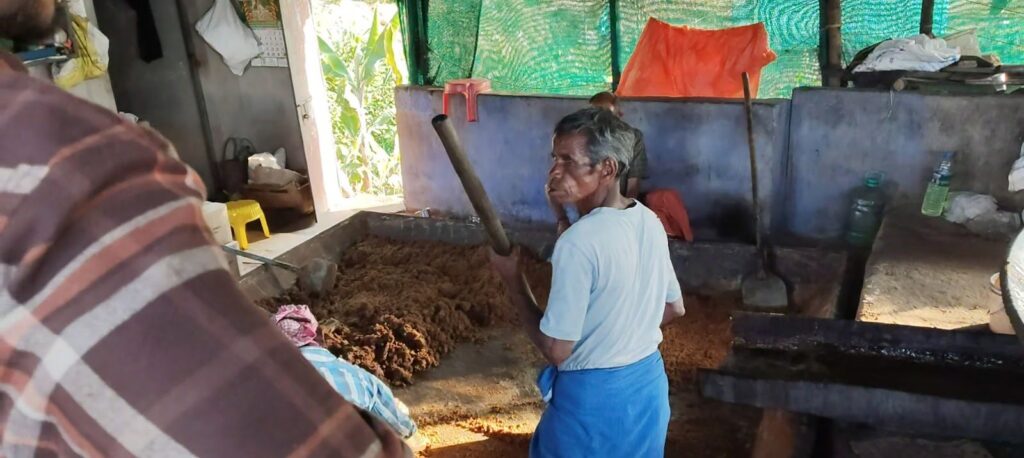
Our final stop was a Marayur jaggery unit, where men stirred thick jaggery in a large steel pan. that was about 10 feet wide! The unit also sold interesting products like jaggery mixed with cardamom for hot milk, and instant jaggery coffee mixes.
Kanthalloor Panchayat has complemented these food systems with strong waste management practices. Household-level segregation and composting turn organic waste into manure, while plastics are collected separately. These efforts support farming, improve sanitation, and keep the area clean.
Conclusion:
In the course of 24 hours, we managed to pack in so many activities that many of us felt like we had been travelling for weeks. Sriram and Ayoob worked tirelessly to organise the entire trip, coordinating with the forest departments and managing a packed itinerary. Along the way, we also found time to simply enjoy the place, taking in the sights, scenic mountain views and waterfalls.
What stood out most was how closely local communities and tribal groups work with government institutions. Traditional livelihoods here are not only sustainable but continue to generate meaningful income. The Kerala Forest Department was extremely supportive throughout the visit, patiently answering questions and helping us understand the systems they work with.
The visit to Marayur and Kanthalloor highlighted how traditional food systems, community-led markets all grassroots efforts collaborating with local governance can come together to build resilience in the face of climate change. Our visit demonstrated examples of how when indigenous knowledge is valued, sustainable agriculture is supported, and local institutions are strengthened, communities can protect livelihoods, culture, and the environment, while quietly leading the way toward more climate-resilient futures.