Monisha Ravi, Community Wellbeing
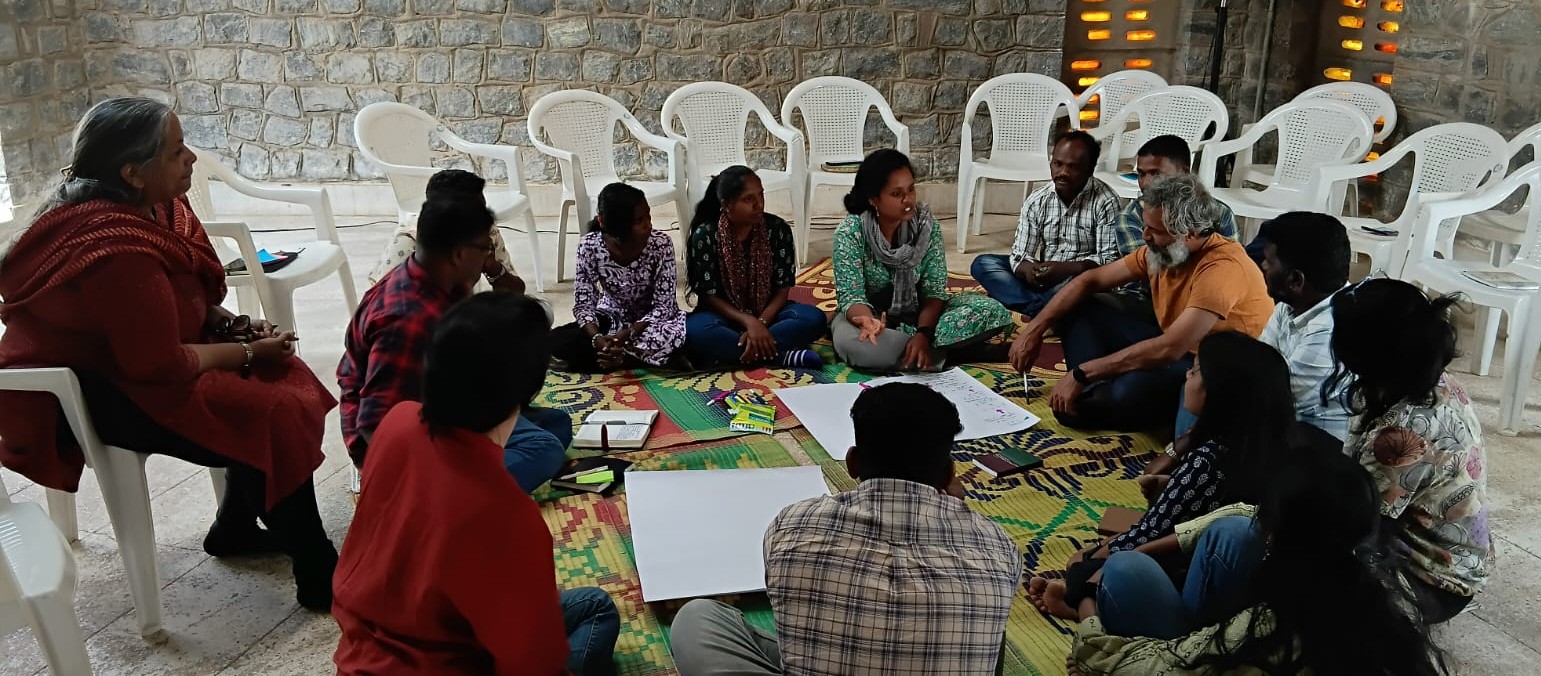
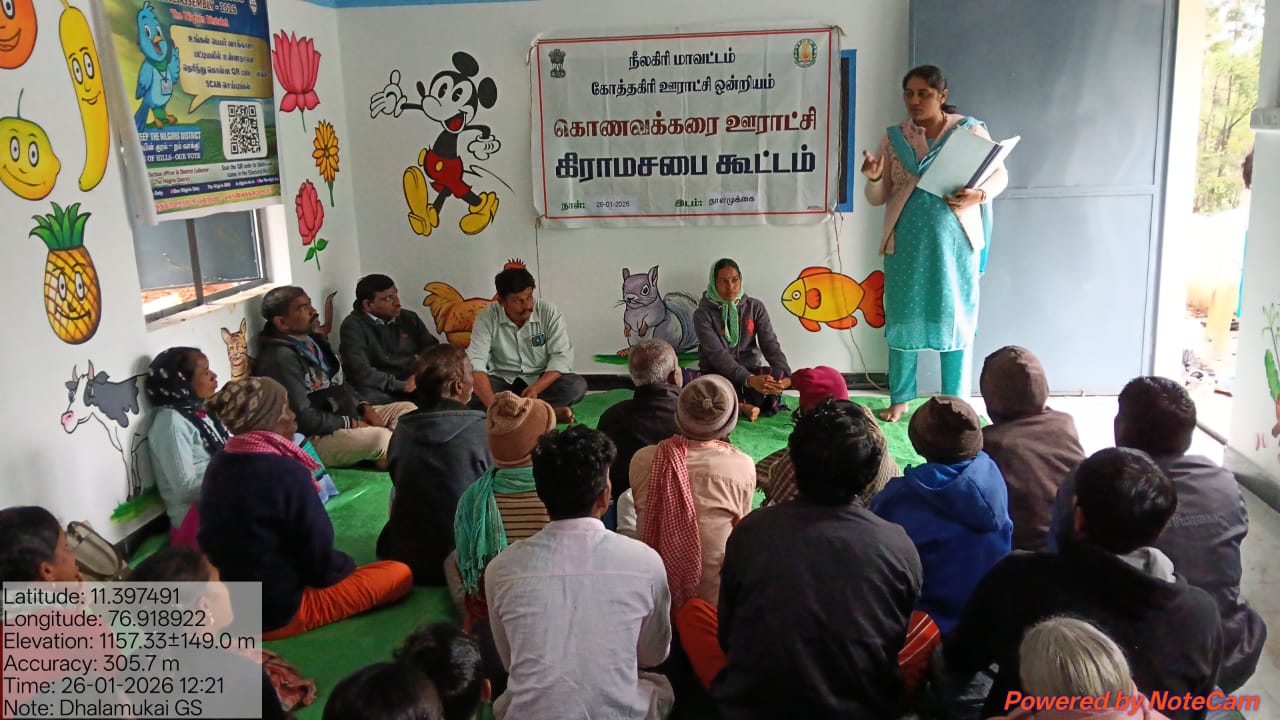
The Konnavakkarai Panchayat Gram Sabha meeting occurred on 26 January 2026 at Dhalamokai village, bringing together community members to collectively discuss local development priorities and community rights. The meeting served as an important democratic space for dialogue, representation, and decision-making, particularly highlighting the role of women in local governance.
The Gram Sabha saw active participation from members of the Attadi and Kozhthorai Gram Sabhas, the Dhalamokai Gram Sabha President, members of the Forest Rights Committee, and the Panchayat Secretary, Ms. Nandhini. Keystone Foundation participated in the meeting, supporting community engagement and advocacy around development rights and well-being.
Development Rights and Community Priorities:
The discussions raised several key development issues. Community members collectively highlighted the need for improved basic infrastructure, including:
- Installation and repair of street lights
- Provision of Electricity Board (EB) poles
- Establishment of a new bus stop at the Kozhthorai–Semmanarai junction
- Road development works, emphasizing on extension of road width and length
These demands reflected the community’s shared concerns around safety, mobility, access to essential services, and overall quality of life. The Gram Sabha functioned as a platform where these needs were articulated directly to local governance bodies, reinforcing the importance of participatory planning.
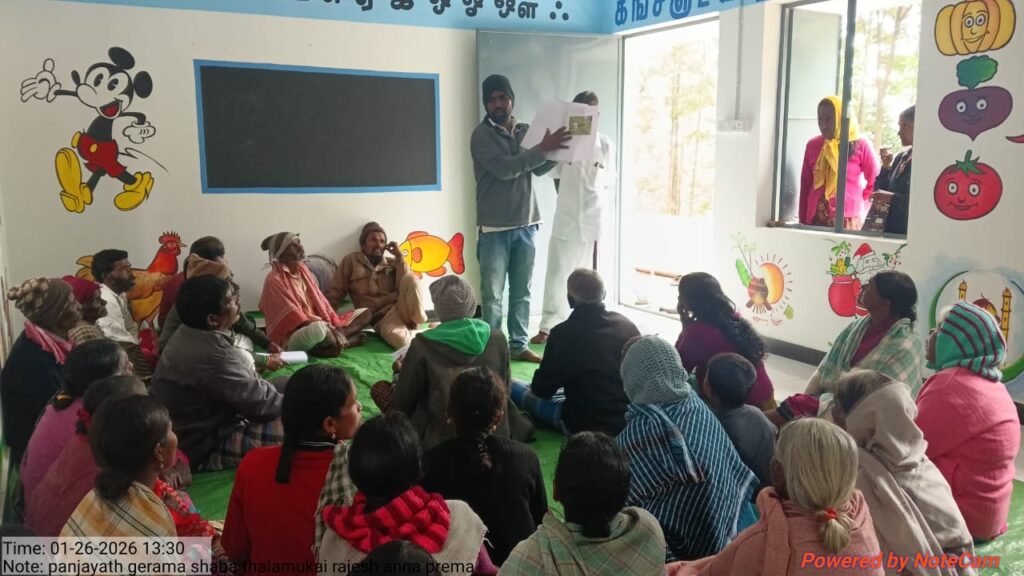
Importance of Women’s Participation in Decision-Making:
Women’s participation was a notable and significant aspect of the meeting. Women actively voiced concerns related to infrastructure, health, transport, and daily challenges faced by their families and communities. Their engagement highlighted how women’s lived experiences offer crucial insights into local development needs.
Meaningful participation of women in Gram Sabha meetings strengthens democratic decision-making and ensures that development priorities reflect household-level realities such as access to health services, nutrition, water, roads, and safe public spaces. When women are involved in discussions and decisions, governance becomes more inclusive, equitable, and responsive, particularly for Indigenous and forest-dependent communities.
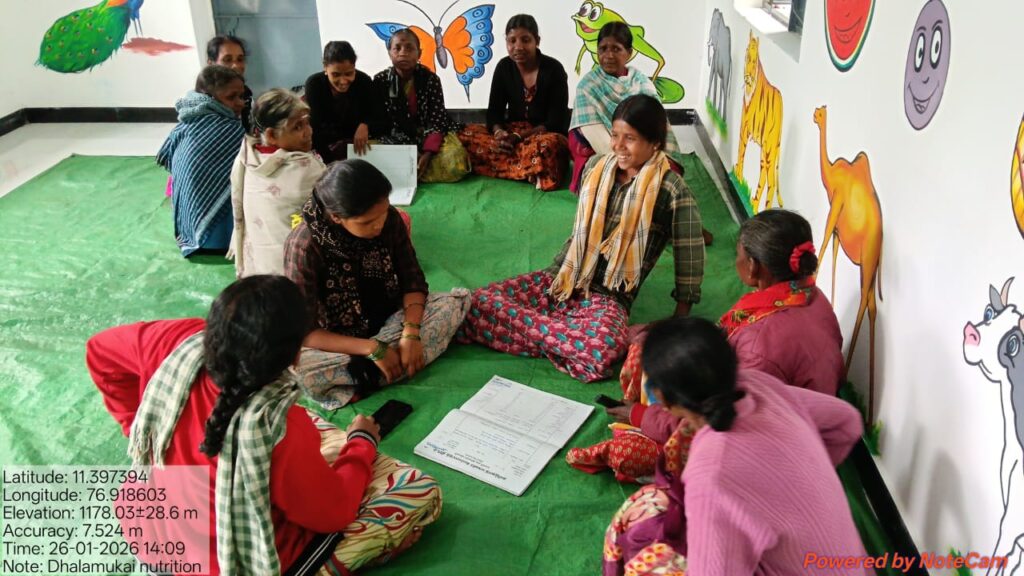
Nutrition and Anemia Awareness for Indigenous Communities:
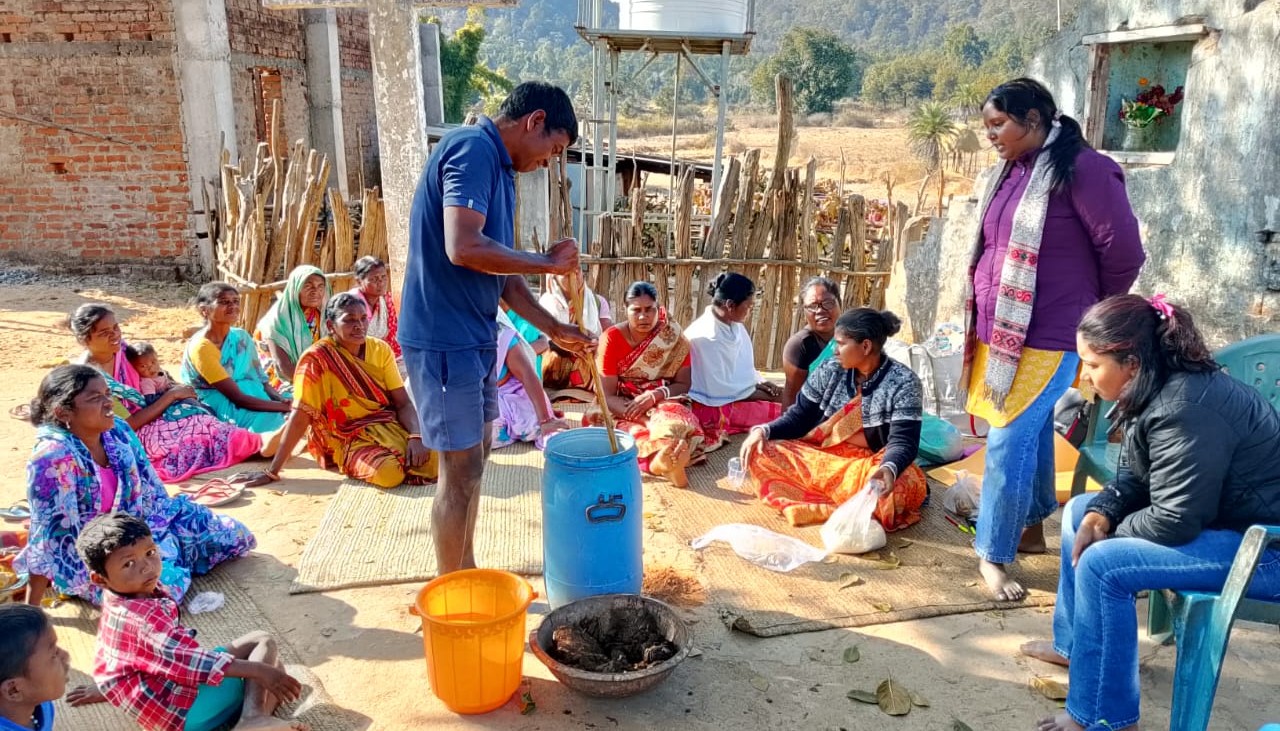
As part of the Gram Sabha activities, Community Health Worker Prema conducted a nutrition awareness session and carried out the Disaster Management Survey. The nutrition session focused on the importance of balanced diets, locally available nutritious foods, and addressing anemia—an issue that disproportionately affects women and children in indigenous communities.
Anemia awareness is especially crucial, as it impacts women’s health, energy levels, maternal outcomes, and children’s growth and development. Promoting nutrition education within community spaces like the Gram Sabha helps bridge gaps in health information, reinforces traditional food knowledge, and supports preventive healthcare practices.
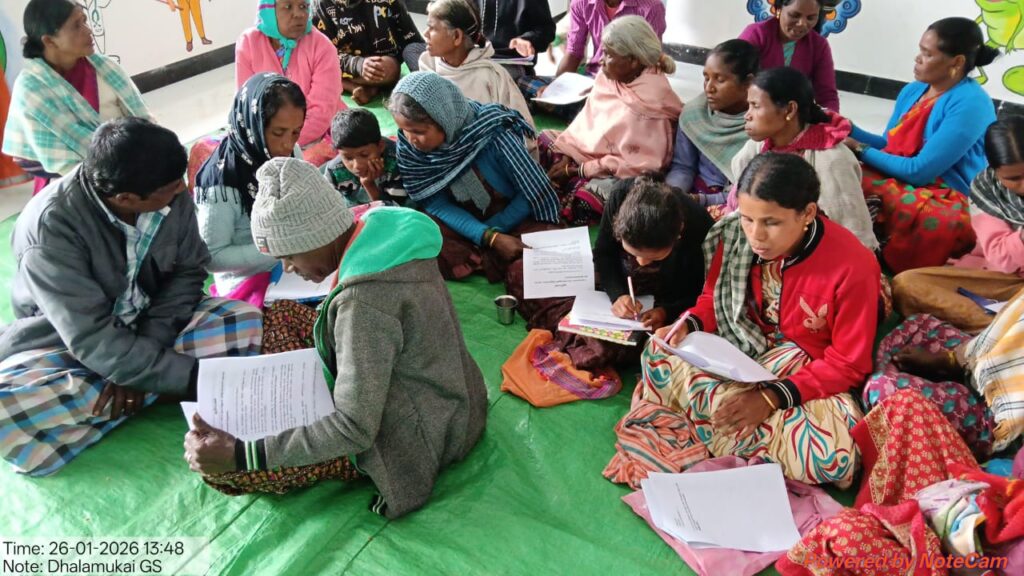
Conclusion:
The Konnavakkarai Panchayat Gram Sabha meeting demonstrated the power of collective dialogue in advancing development rights and community well-being. The active involvement of women, community representatives, and organizations like Keystone Foundation underscored the importance of inclusive governance. Integrating discussions on infrastructure, women’s leadership, nutrition, and health within the Gram Sabha strengthens community resilience. It also ensures that development initiatives are rooted in the real needs and voices of Indigenous communities.