
By Rohan Mukerjee –Organisational Development
On August 13, 2025, the Keystone Foundation inaugurated its Agroecology and Climate Change Resource Center in Kanke, Ranchi. Keystone Foundation has been working in Central and India for several years through various networks and alongside local partners. In 2022, Keystone launched its Eastern India initiative, with central themes of promoting Agroecology approaches and addressing the impacts of Climate Change. Now, this center will serve as a platform to share knowledge, skills, and learnings in the sphere of Agroecology and Climate, as well as build networks and collaborations to address these issues jointly.
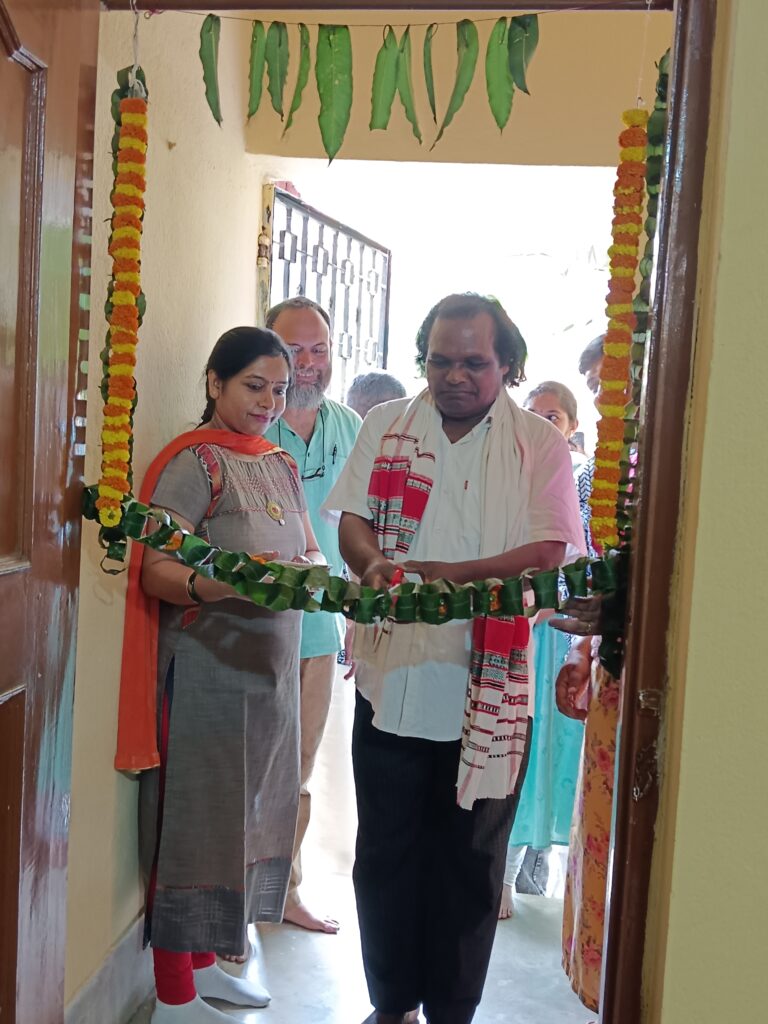
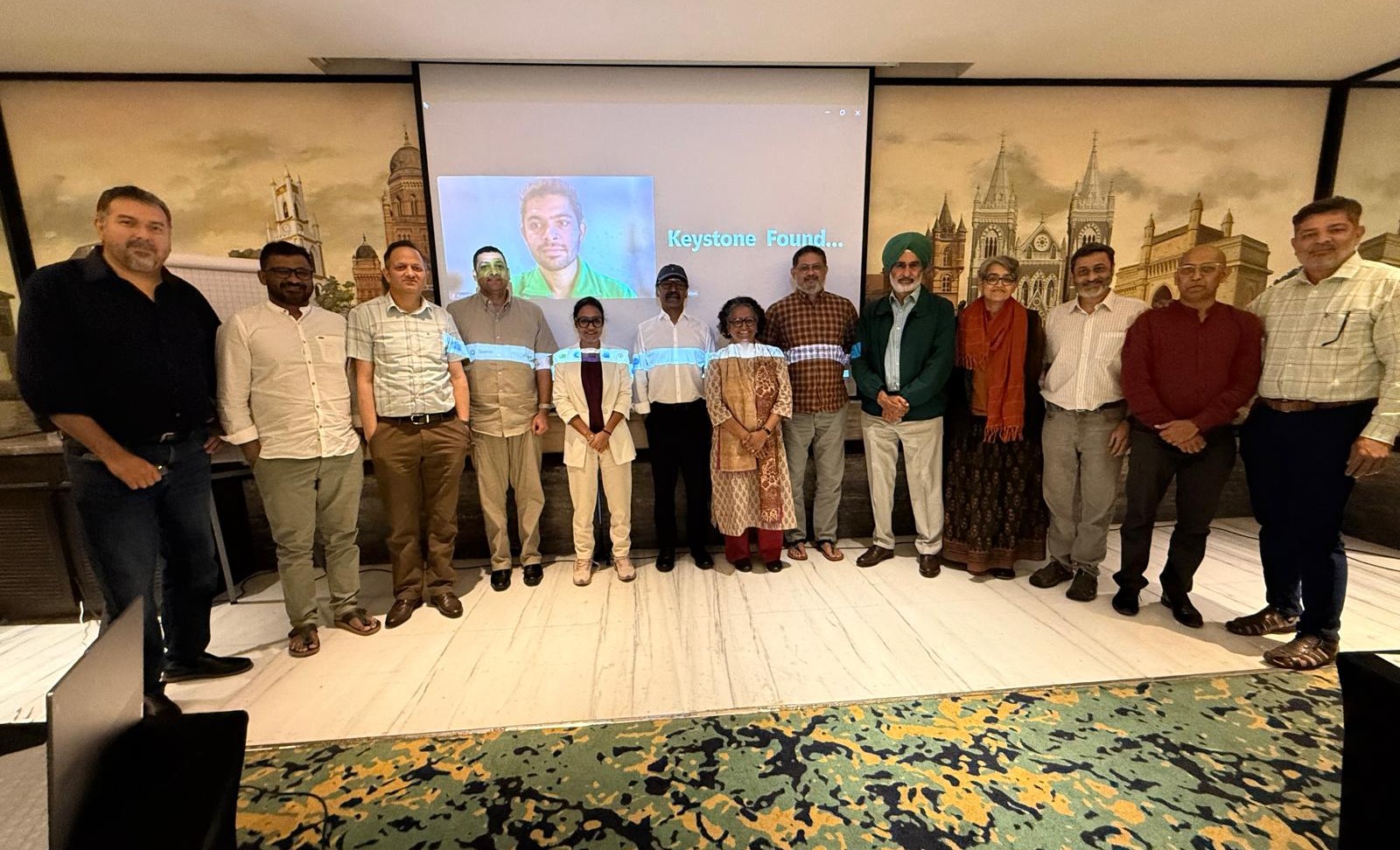
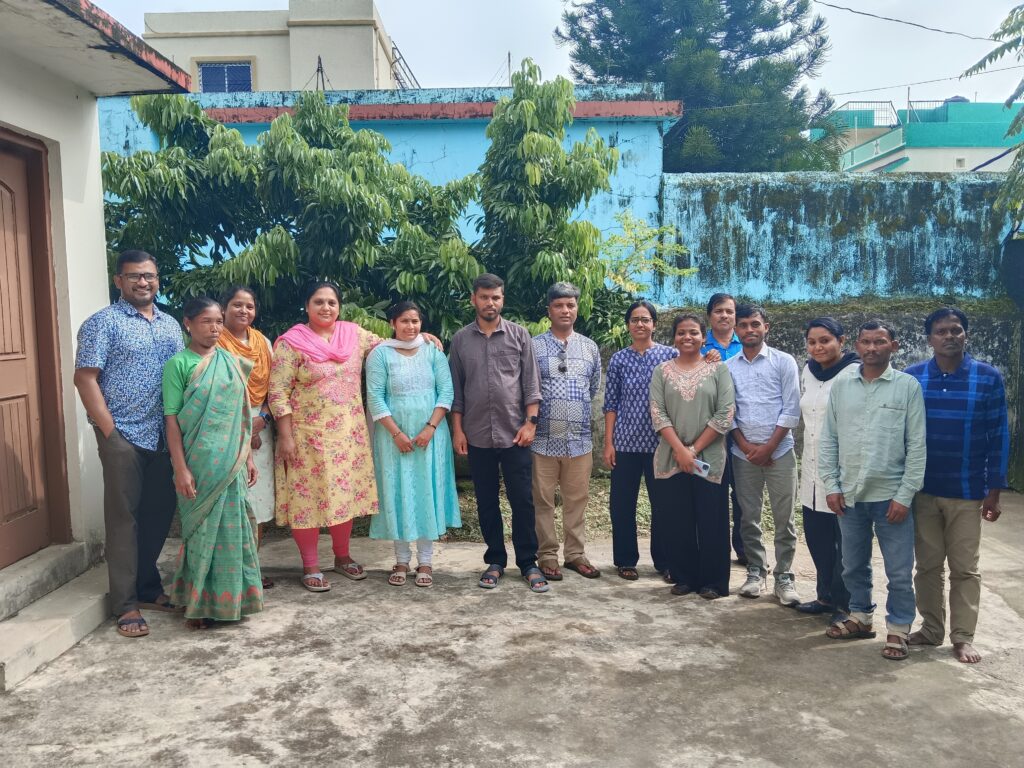
The inauguration brought together members from Keystone’s Eastern India and Nilgiris team, including Sarasameeta, Sumin George, Eswaran, Amsaveni, Fasella, and Chandrashekar, consultants, a few community leaders, CRPs, representatives of local organisations, and residents from the area where the office was being set up. The chief guest of the program was Bijju Toppo, a national award-winning tribal documentary filmmaker who uses film as a medium for social activism on behalf of marginalized Indigenous communities.
The event commenced with Nagesia community leader Narendra Nagesia, from Latehar, cutting a string of mango leaves by Narendra Nagesia, followed by a lamp lighting by the chief guest Bijju Toppo, community representatives, members of Keystone Foundation Eastern India and Nilgiris team, and residents.
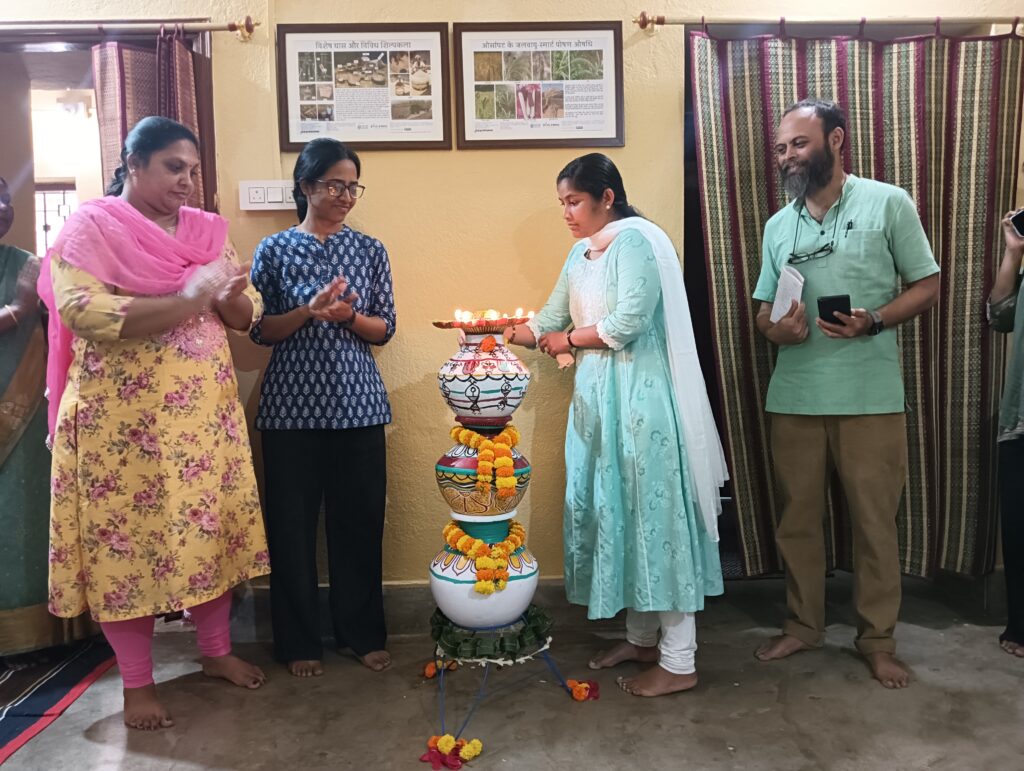
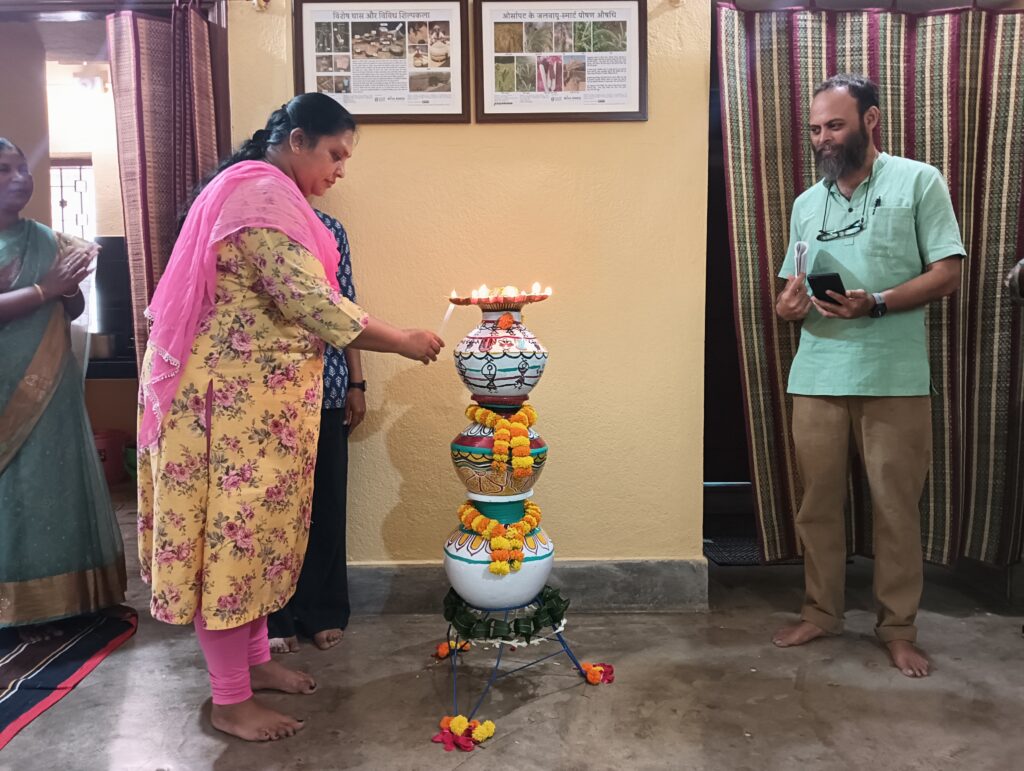
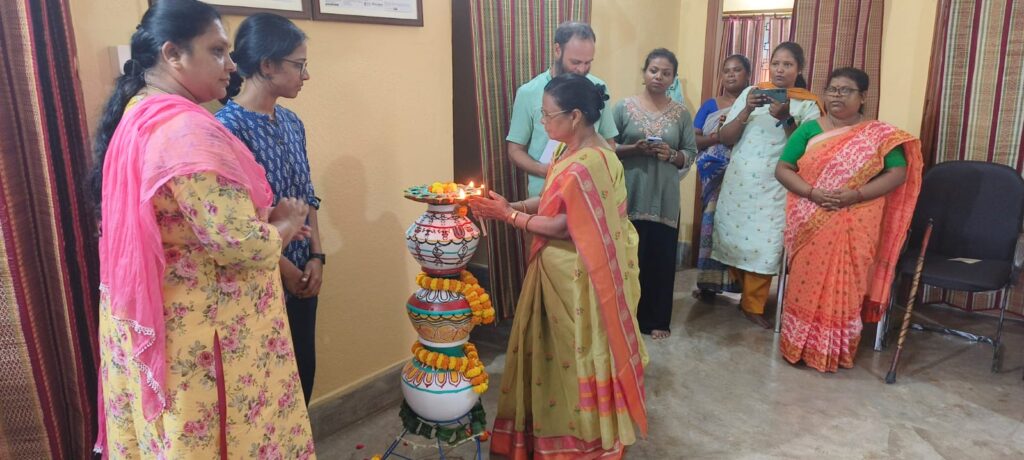
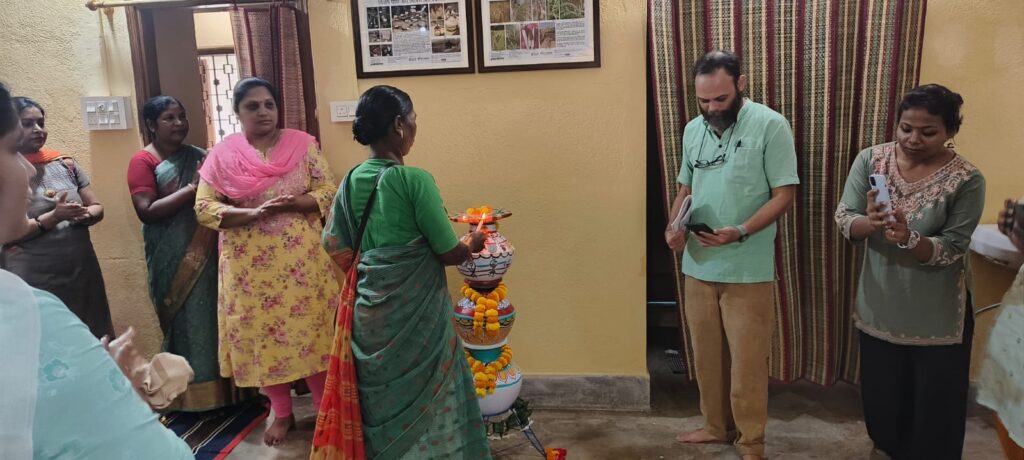
Lighting the lamp to mark the inauguration
Rohan Mukerjee provided a brief overview of the work being carried out in the Eastern Indian states of Jharkhand, West Bengal, and Odisha, with a focus on work with regard to Agroecology approaches, natural and traditional farming practices, traditional food systems, local seeds, wild foods, and addressing climate change challenges.

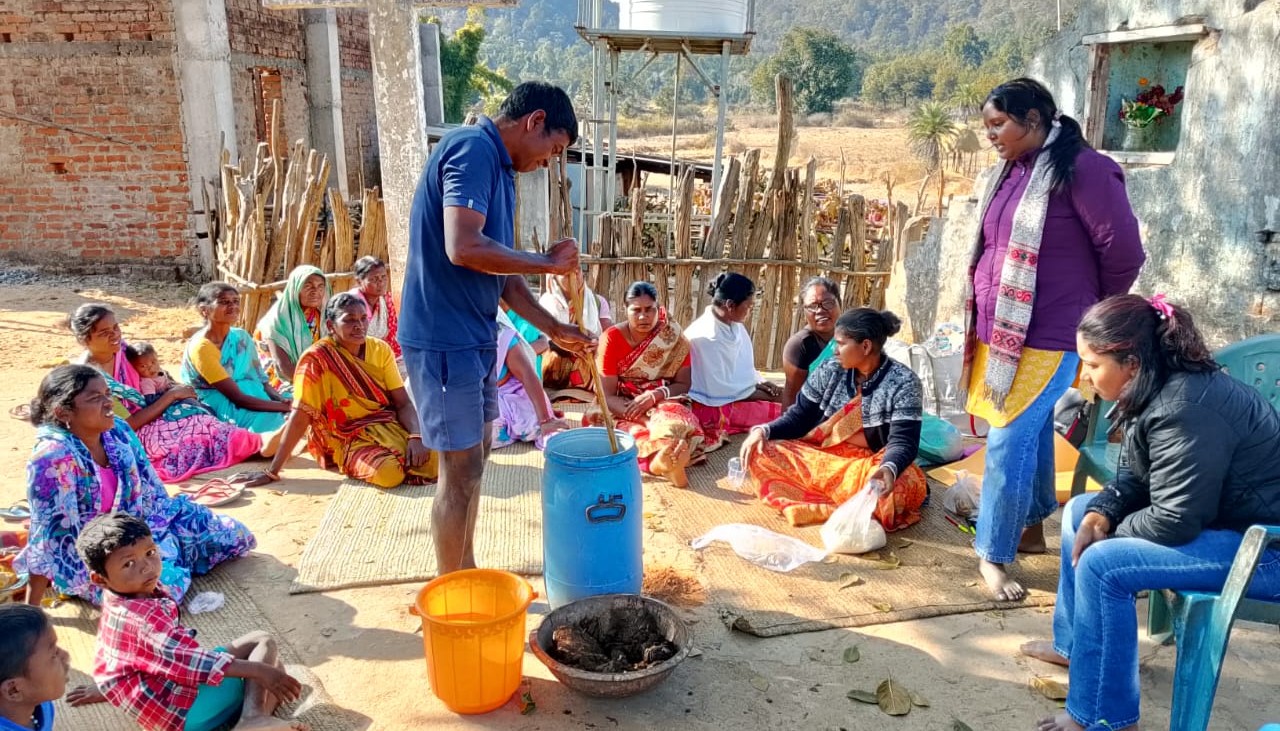
Narendra Nagesia provided a brief background of the Nagesia people and shared the challenges that the Nagesia people are facing as a result of a shift away from traditional crops and agricultural systems to hybrid seeds with substantial chemical inputs. He also provided an overview of Keystone’s work with the Nagesia people to revive traditional seeds and natural farming practices.
Bimla Nagesia shared about the work of Pat Agargami Mahila Sangh to revive traditional foods and crops in Orsa Pat, Latehar, District.
Surja Paharia (Field Assistant) shared his experiences from Sundar Pahari, where Keystone Foundation has been working since 2017 for the strengthening and revival of Jara-Kurwa, the traditional shifting cultivation-based mixed cropping system of the Paharia people.
Bijju Toppo traced the simultaneous shifts in agricultural and dietary patterns among Adivasi people of the region, sharing personal experiences from his village in the Mahuadanr block of Latehar District.
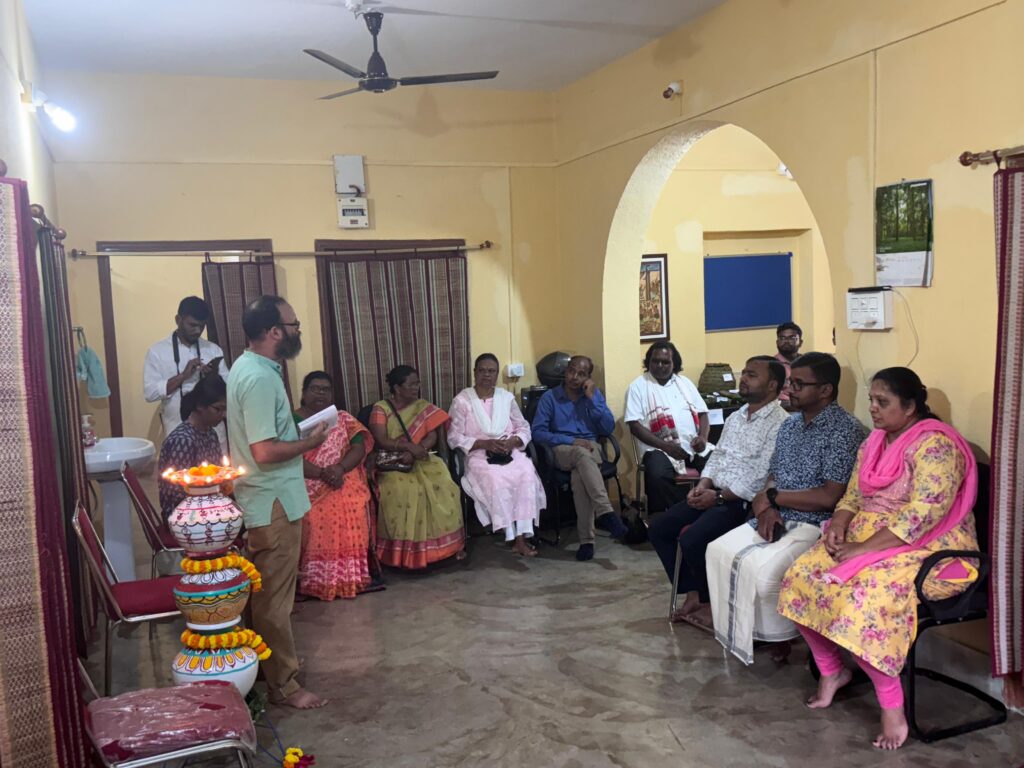
Cordula Kujur (Consultant) provided an insight into her association with Keystone Foundation and her work with various women’s organisations and networks. She shared her dreams for a unified front to address the varied challenges facing the local community in the region. Some of the challenges include changes in traditional diets and agricultural practices and their subsequent negative impacts on health and nutritional security, which are exacerbated by climate change.
Prasanta Rakshit (PBKSKS) provided an insight into the challenges facing the Kheria Sabar people in Purulia and Bankura Districts of West Bengal, the history of PBKSKS, and their association with Keystone Foundation to promote natural farming, traditional food systems, sustainable livelihoods, and community-led forest conservation and management.
Sarasameeta and Sumin George (Senior Programme Coordinators) pointed out how, despite certain differences, there are a lot of similarities between the issues being faced by the Adivasi and local communities in the Nilgiris and Eastern India. They shared their best wishes for the success and future expansion of the initiative.
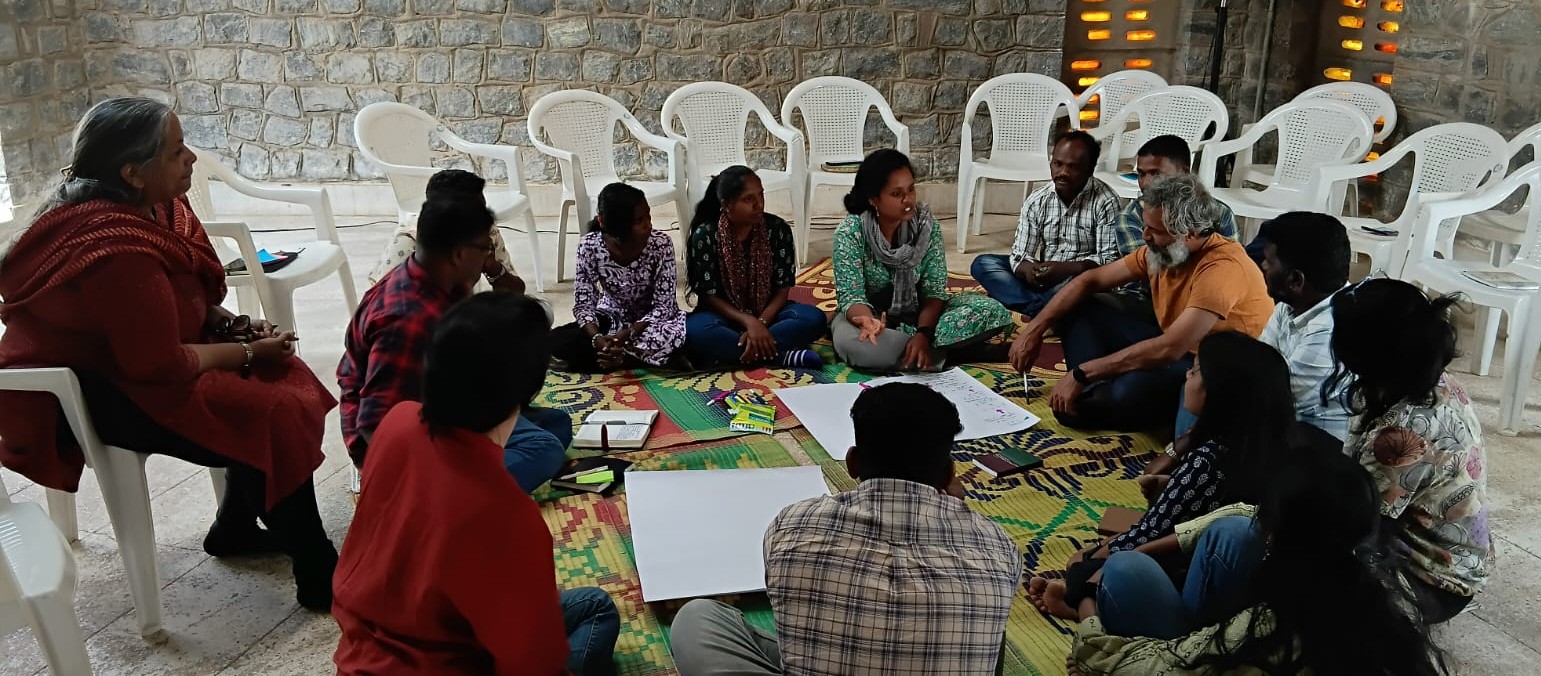
Members of the local community also shared their experiences with traditional food systems as they wished for the success of the resource centre and the initiative as a whole.
The event concluded with a simple Naasta comprising Daal pitha, a sweet, and a banana.
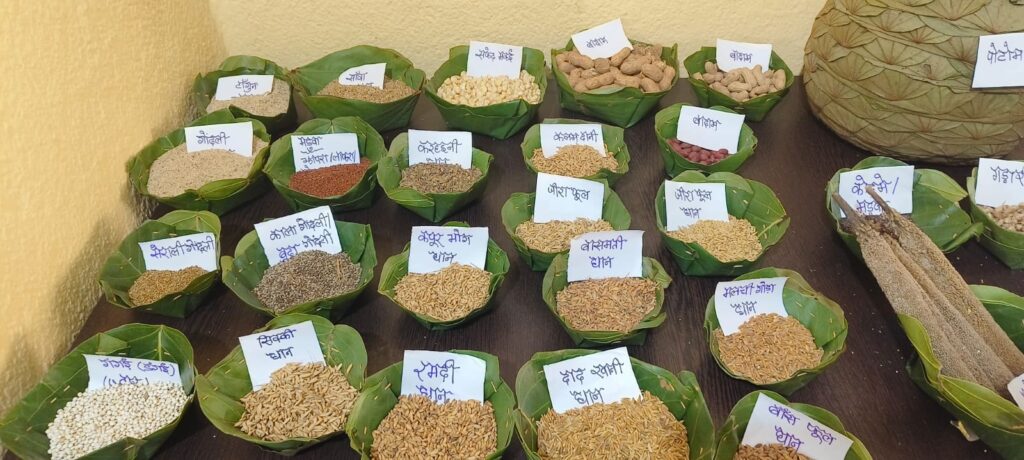
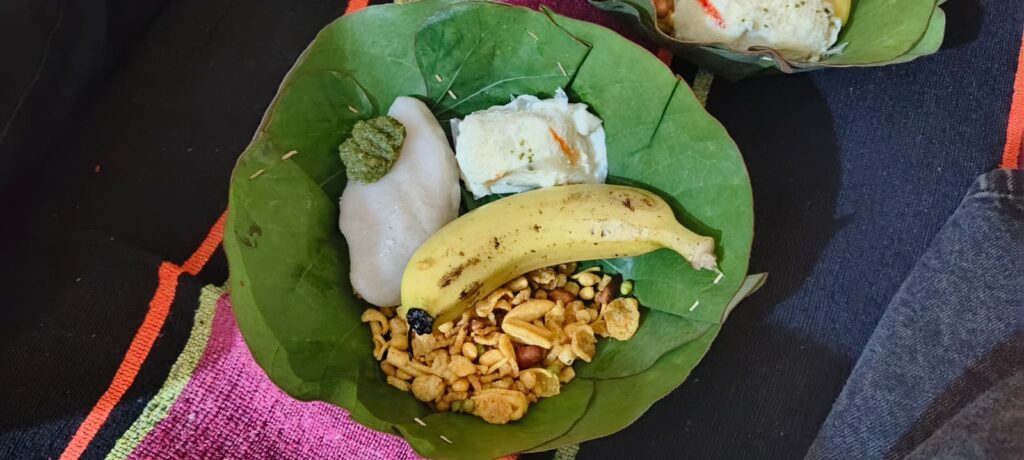
Photo credits: Rohan Mukerjee, Chandraseker Das