By Shawn Stephen-Biodiversity Conservation
A Three-Day Multi-Stakeholder Conference at Keystone Campus Using Open Space Technology to Build a Sustainable Future
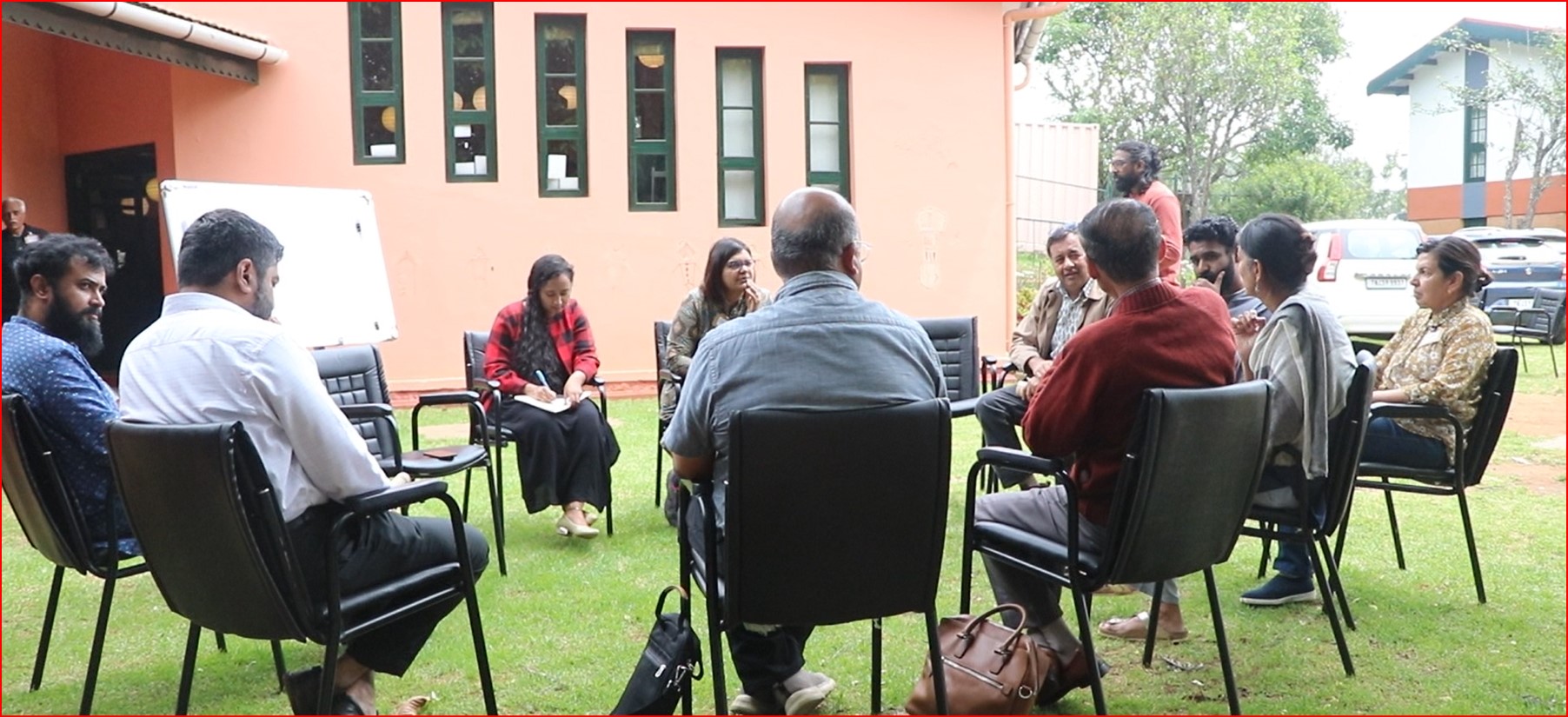
From June 20th to 22nd, the Keystone Campus hosted “Nilgiris Forever”, a multi-stakeholder initiative that engaged with the future of the Nilgiris through the lens of social and economic development. This conference aimed to develop a shared vision for the Nilgiris along with a set of actionable project ideas that would emerge from the discussions over the three days.
The conference was organized by the Nilgiris Foundation in association with Keystone. It was facilitated by Bharat Krishnan. A unique method called Open Space Technology was used.
Through this method, a process of self-organization was encouraged, where the agenda was decided by the participants based on a broad theme. This approach was designed to promote participation, create a sense of ownership among the participants, and encourage deeper engagement with the discussions.
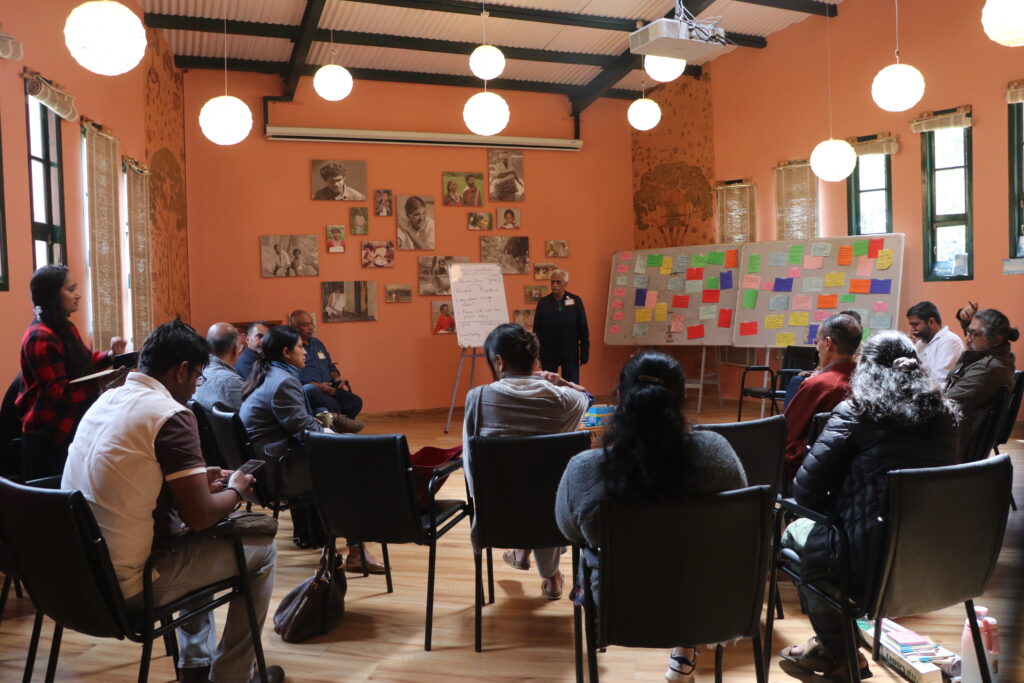
At the start of Day One, the intended proceedings for the following days were outlined, OST was introduced, and “Nilgiris Forever” was officially afoot! In only a matter of minutes, Mandare was filled to the brim with opinions about the Nilgiris and what their future entailed. The purpose of this introductory session was for the group to broadly consider the Nilgiris and all the problems they see it facing. To voice any issues they deemed relevant, note them down and stick them up on a board that was made available.
Here are some of the additions to the board: “The Nilgiris urgently requires a Comprehensive Development Plan”, “Opportunities for Indigenous youth by mobilizing their vocations and knowledge systems”, “Political Literacy”, “Health and Wellbeing for All”, and so on.
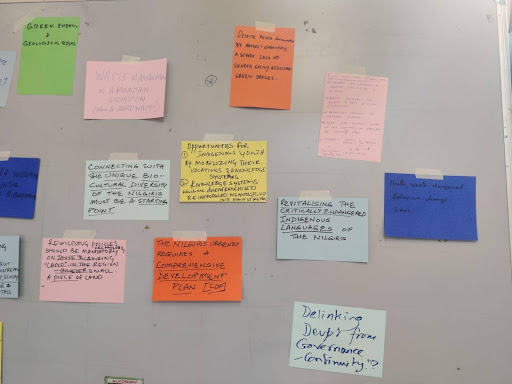
After half a day of discussions, everything that was up on the board was broadly categorized into 7 themes. The participants then get to choose whatever theme they would like to sit in on and contribute to. They also have the freedom to move between themes whenever they feel the need to. There is no pressure to stick to any particular theme. This is an important step in OST’s methodology as the flexibility this affords to move around makes space for a diversity of ideas and voices to thrive.
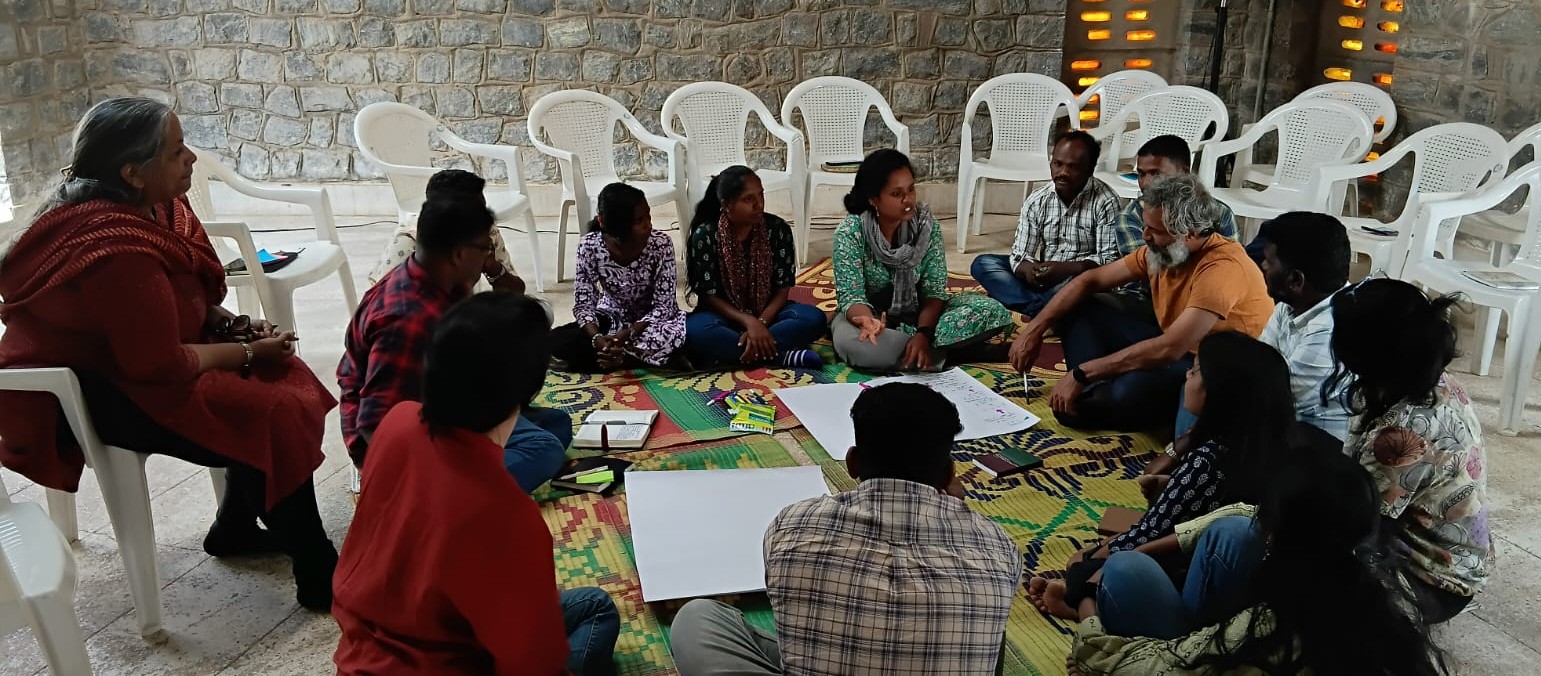
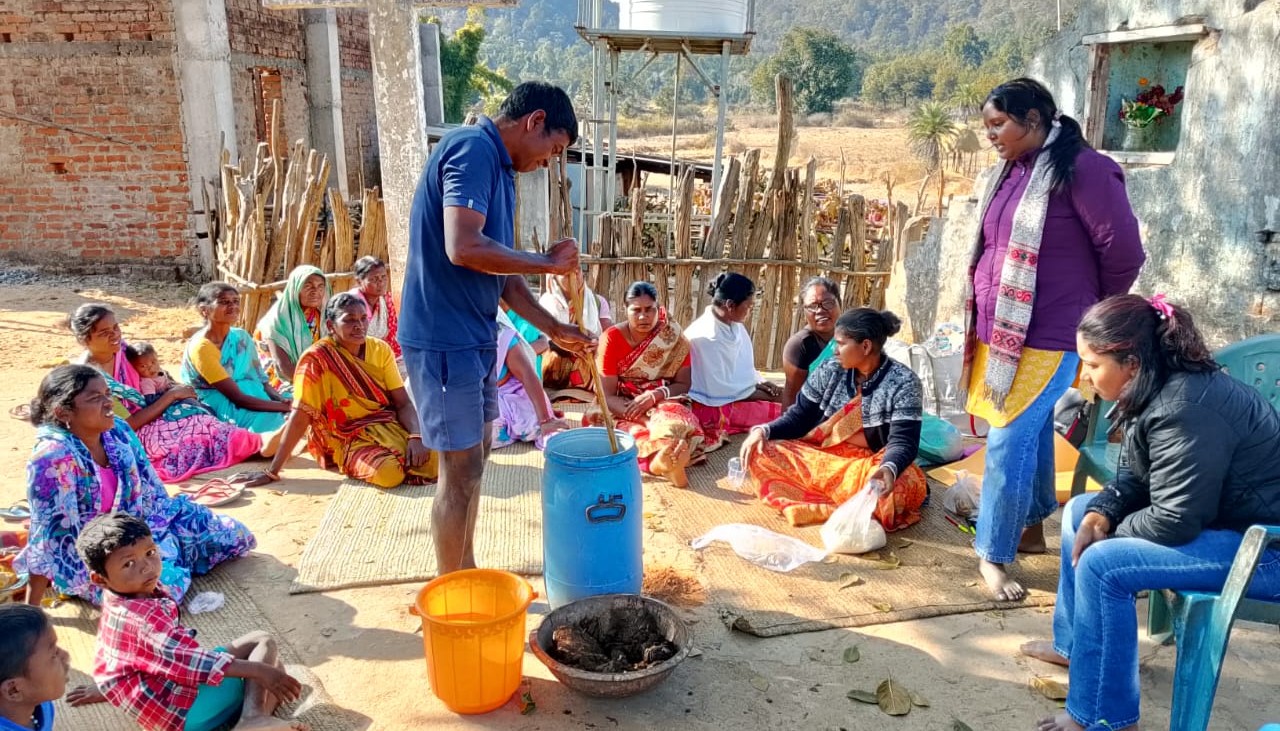
Soon, parts of the Keystone campus were allocated for each theme, key points of discussion under each theme were identified, and the participants eventually set off for what would be a good day and a half of thematically envisioning the future of the Nilgiris. Lively discussions, differing opinions, passionate rants, frustrated sighs, and unanimous agreements in each of the themes followed. Given that this conference was attended by people from different cultural, indigenous, and professional backgrounds, the range of topics discussed, the perspectives offered, and the personal anecdotes shared were testament to the very tangible stake every single participant felt they had in the future of the Nilgiris.
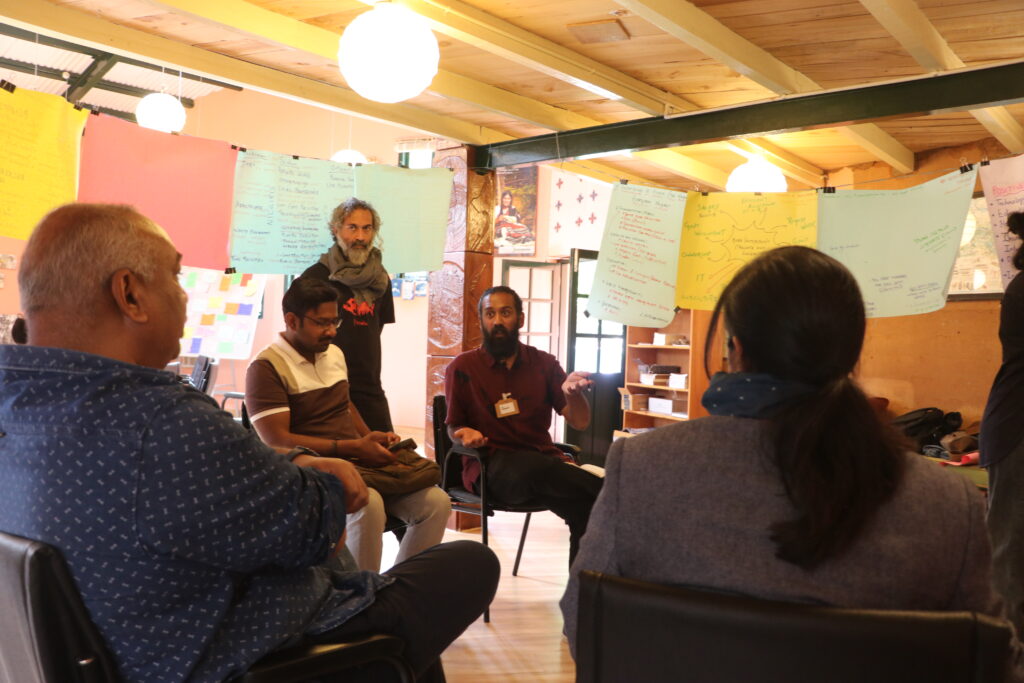
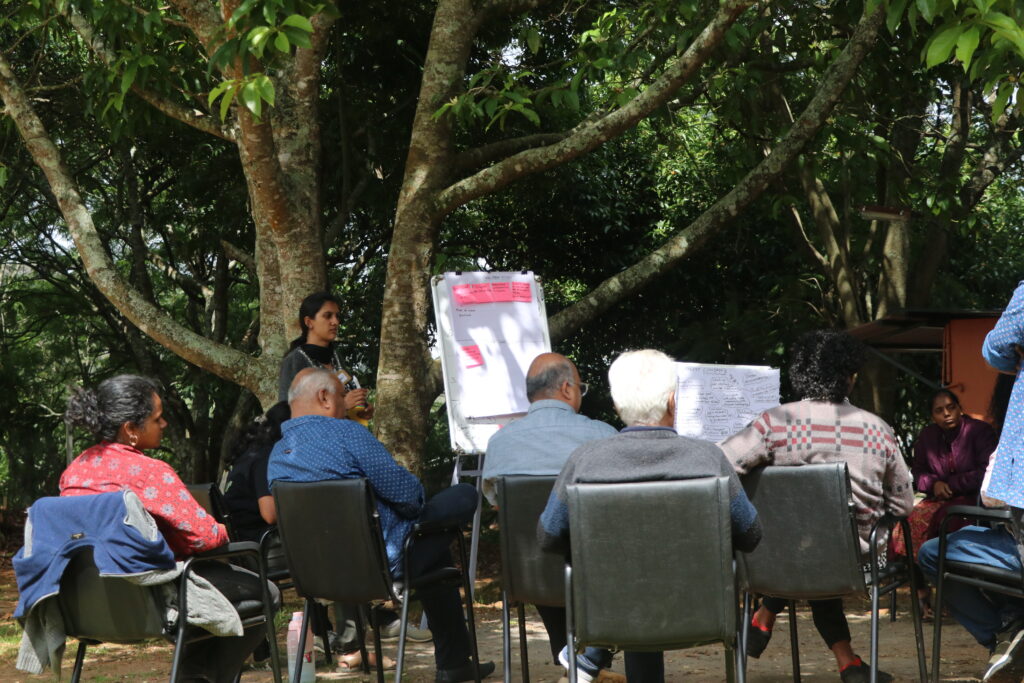
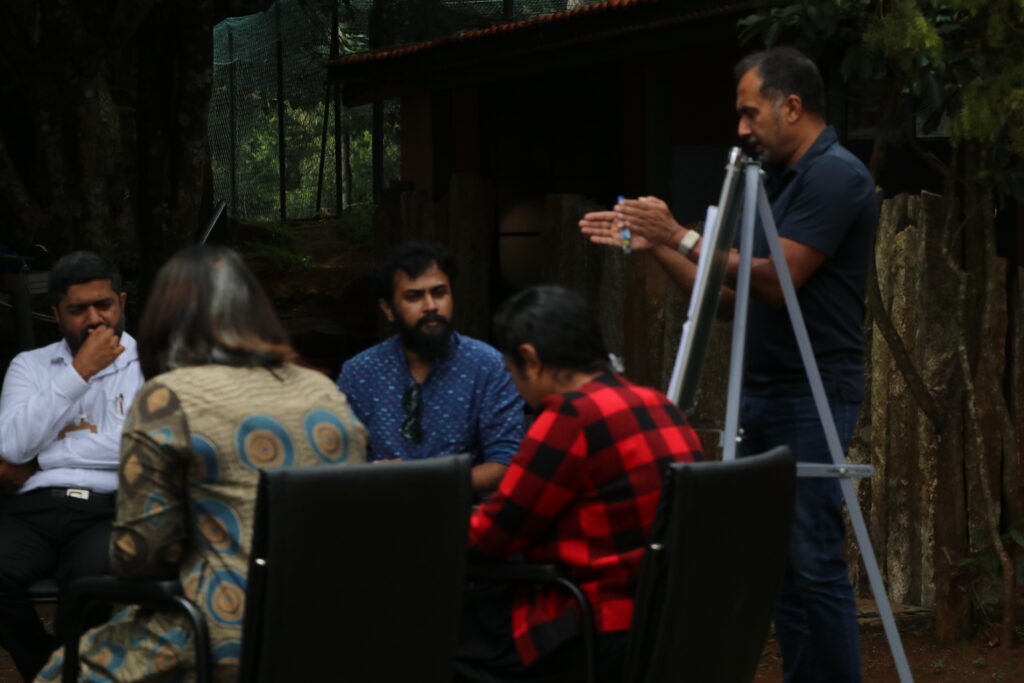
Group Discussion
Some themes made more progress than others, as a few discussions went round in circles, some ideas fell on deaf ears, and certain themes were simply starved of willing participants who were too busy being engaged in other themes. The system was tweaked, and the participants were asked to focus all their energy on one set of themes for the first half of the second day before moving on to the remaining themes. This ensured that all the themes got the attention they deserved.
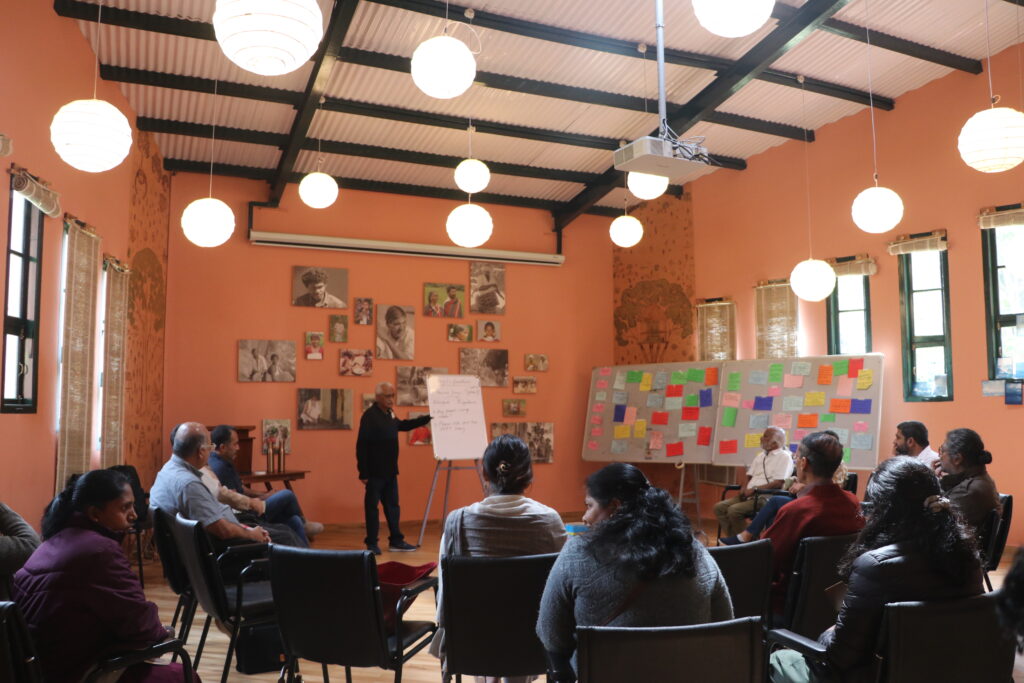
The discussions were carefully documented by the rapporteurs. They worked diligently to take detailed notes and capture the wide range of topics discussed under each theme. This information was later distilled into clear, bite-sized summaries for the participants.
Two days of brainstorming, problem-solving, and reflection were condensed into a final presentation. After incorporating feedback from the participants, this presentation was shared with the Collector of the Nilgiris district on the third day.
The presentation was warmly received by the Collector. Several of the key points were taken into consideration. Her willingness to collaborate with stakeholders to achieve the shared goals of the conference was clearly expressed and appreciated.
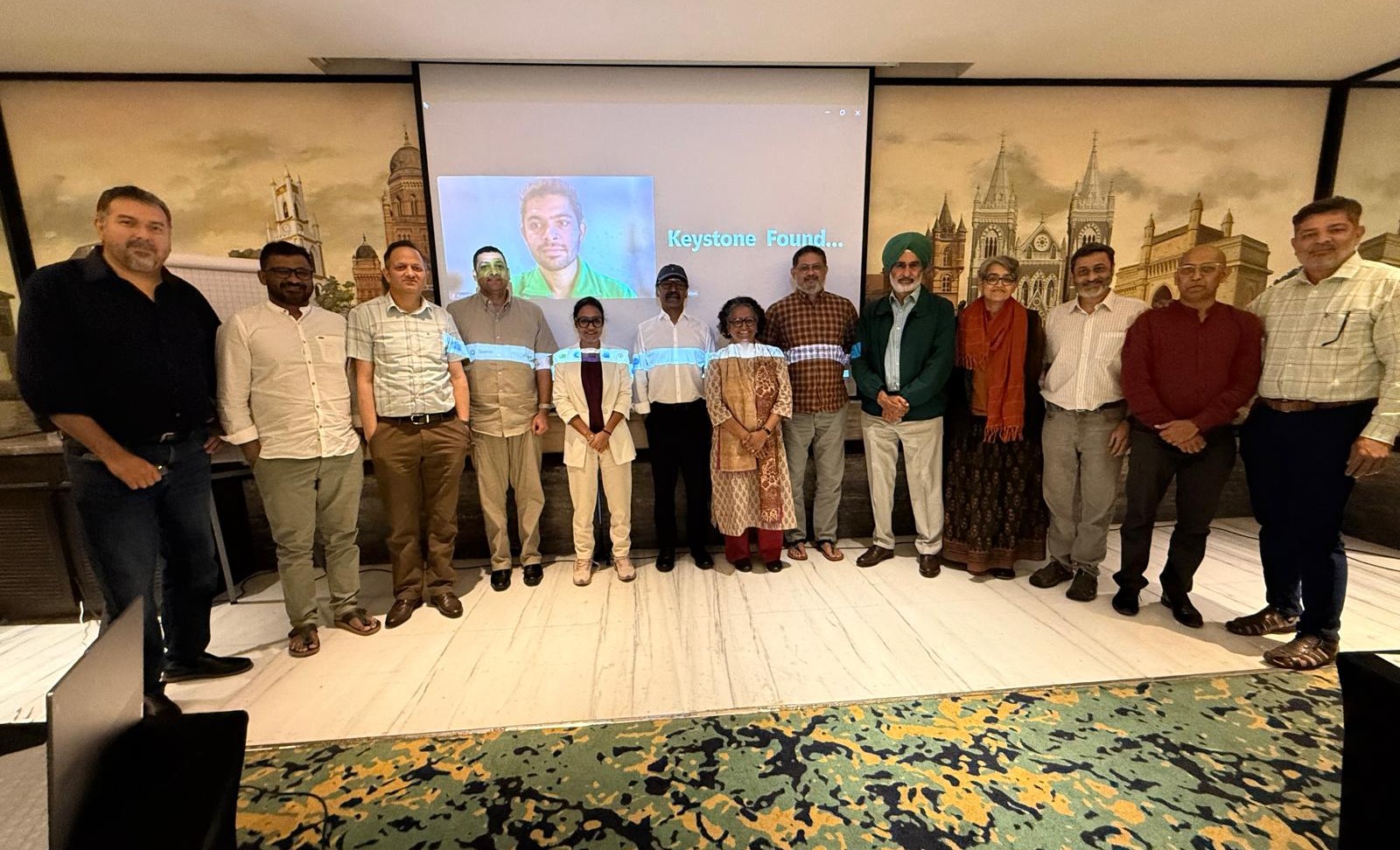
Something that was unanimously acknowledged right from the start was that this Nilgiris Forever conference was only going to be the beginning. While a lot of good ideas were put forward at this conference, there was a collective understanding that the only way any goals for the future were going to be realized was by following through on some of the actionable points that emerged from the session. It was on this note that the three-day Nilgiris Forever drew to a close. What can we do today to leave a better future for the Nilgiris and the upcoming generations that will call this home when that time comes?
Photo Credit: Sneha