By Ayoob A & Bijishna T K – Community Wellbeing
Keystone Foundation works closely with paddy farmers in Wayanad district. The figures for insurance registration, royalty schemes, and People’s Planning Scheme registration among paddy farmers in the various paddy field committees of Edavaka, Thondarnadu, and Vellamunda panchayats in Mananthavady taluk, Wayanad district, are given below. These statistics provide a clear picture of the level of participation, awareness, and responsiveness of farmers towards different government support programmes designed to strengthen agricultural livelihoods. By analysing these numbers, it becomes evident that the majority of farmers have shown a strong willingness to take part in schemes that ensure financial stability, risk reduction, and long-term sustainability in paddy cultivation.
Timely registration is one of the most crucial factors in determining whether farmers receive the benefits of these schemes promptly. When farmers enrol within the stipulated time frame, the departments concerned can process claims and release funds promptly. This ensures that paddy farmers receive financial assistance exactly when they need it, especially during critical periods such as land preparation, sowing, and crop maintenance. Prompt registration also helps farmers protect themselves against unexpected risks, such as natural calamities, pest attacks, or price fluctuations, by providing insurance coverage and other support mechanisms.
Strengthening Farmers through Scheme Enrollment:
Proper and systematic enrollment not only improves the financial security of farmers but also enhances their overall productivity. With timely access to scheme benefits, farmers can invest more confidently in essential farm inputs such as seeds, fertilisers, labour, and irrigation. This contributes to improved crop health, better yields, and stronger economic resilience. Furthermore, being part of structured schemes strengthens the connection between farmers and institutional support systems, encouraging more informed decision-making and adoption of best agricultural practices.
The collective efforts of the paddy field committees in these panchayats have been instrumental in spreading awareness and assisting farmers throughout the registration process. Committee members have taken the initiative to reach out to individual farmers, clarify doubts, and guide them through the necessary steps. Their involvement has ensured that even farmers with limited access to technology or formal documentation were not excluded from the benefits.
Additionally, the decentralised registration system enabled farmers to save valuable time by completing their scheme registrations quickly and efficiently. Since many of the registration activities were made available at centres located close to their homes, farmers no longer needed to travel long distances or depend on external intermediaries. This reduced transportation costs, minimised waiting times, and made the overall process far more convenient.
Improving Accessibility and Farmer Participation:
This accessibility encouraged greater participation across all categories of farmers, including small and marginal farmers who often face difficulties in accessing institutional services. By simplifying the procedures and bringing the services closer to the community, more farmers were encouraged to complete their registrations on time.
The coordinated efforts of the Keystone Foundation and the Pada Shekara Samithi (paddy farmers’ collectives) further strengthened the entire process. Their consistent support, awareness campaigns, and field-level mobilisation contributed significantly to making the registration procedures smoother, more transparent, and more farmer-friendly. Together, these interventions have helped create an environment where farmers feel supported, informed, and empowered to access the schemes that are crucial for their agricultural and economic well-being.
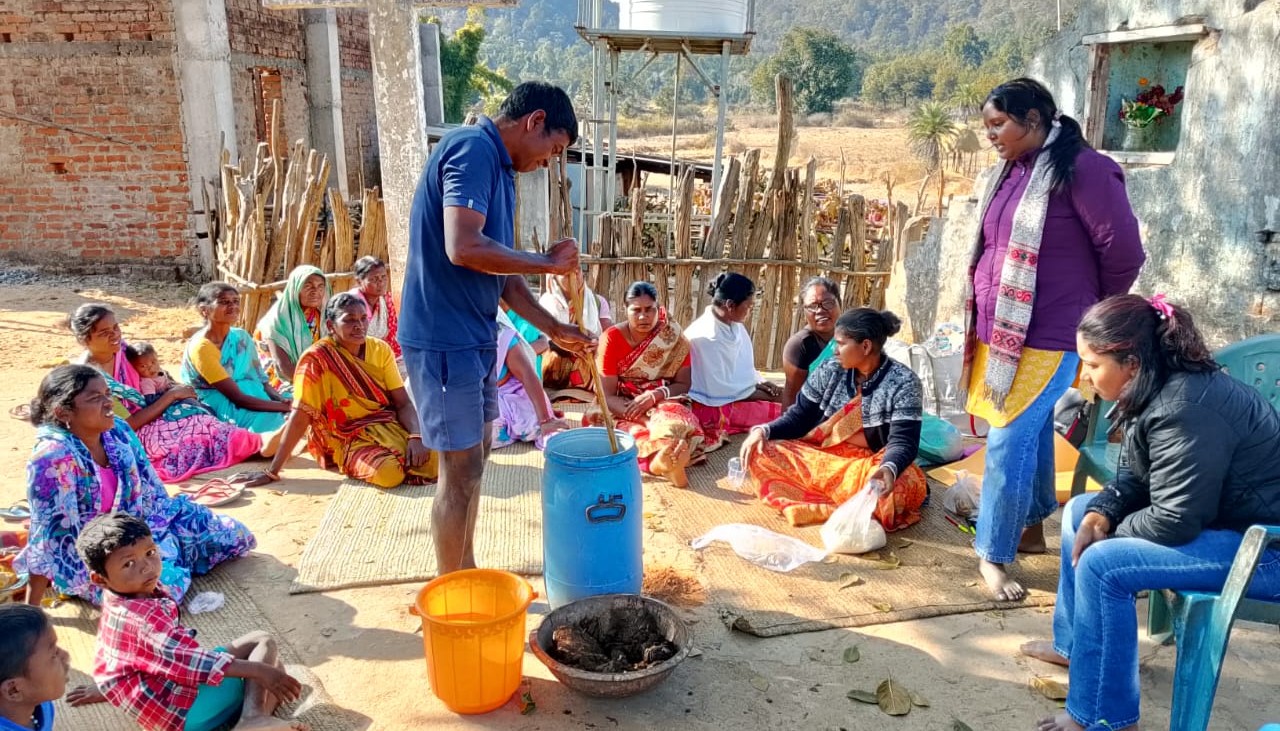
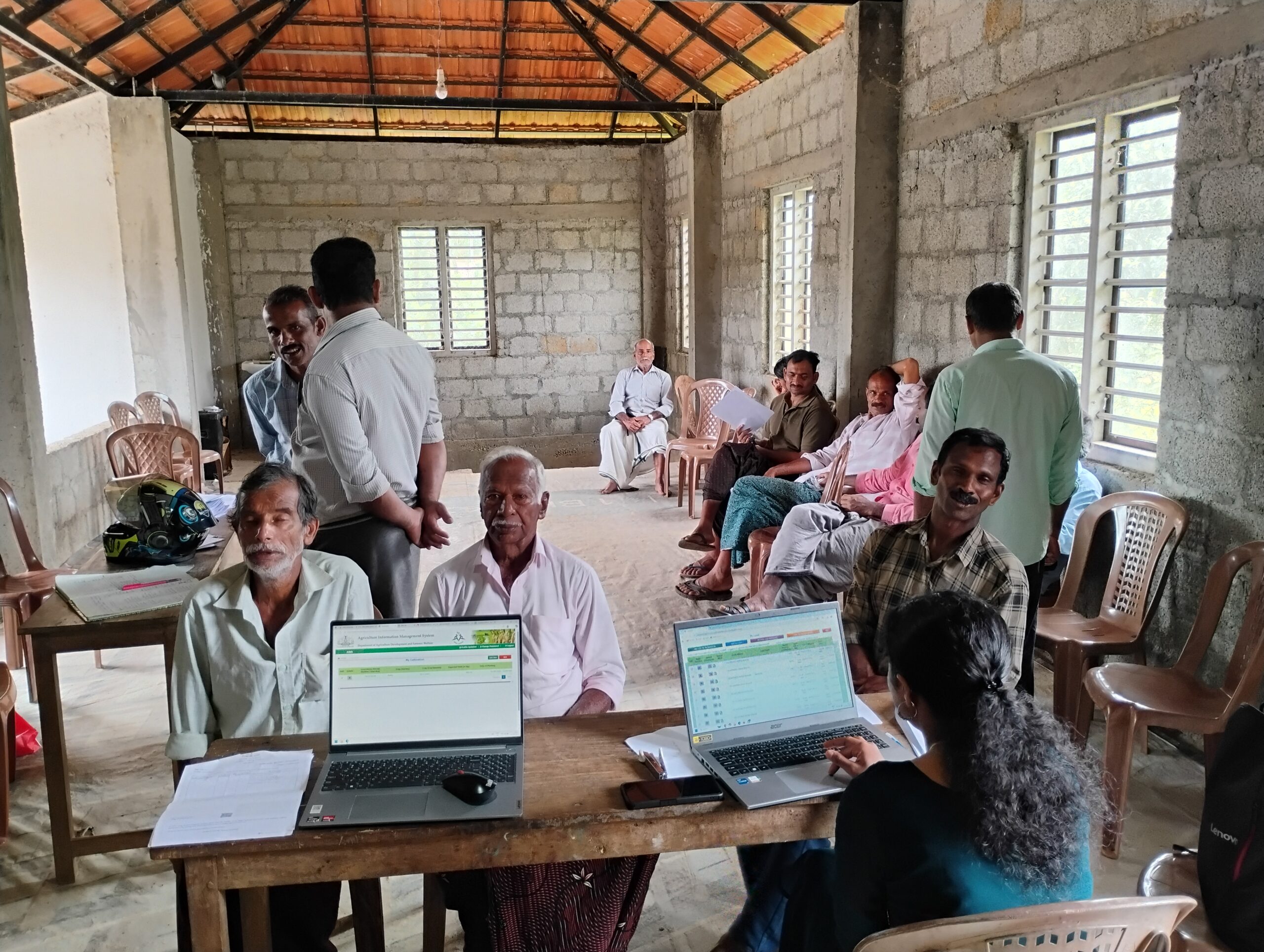
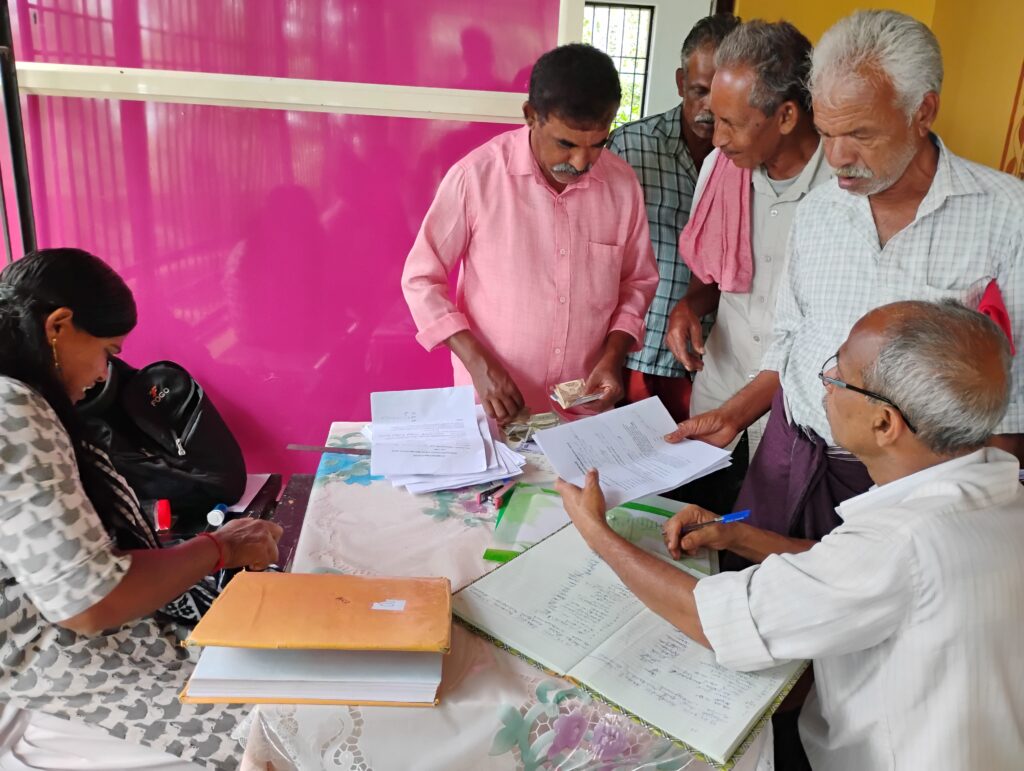
Keystone Foundation directly visited the paddy field committees in the panchayats and conducted registration camps at various locations.
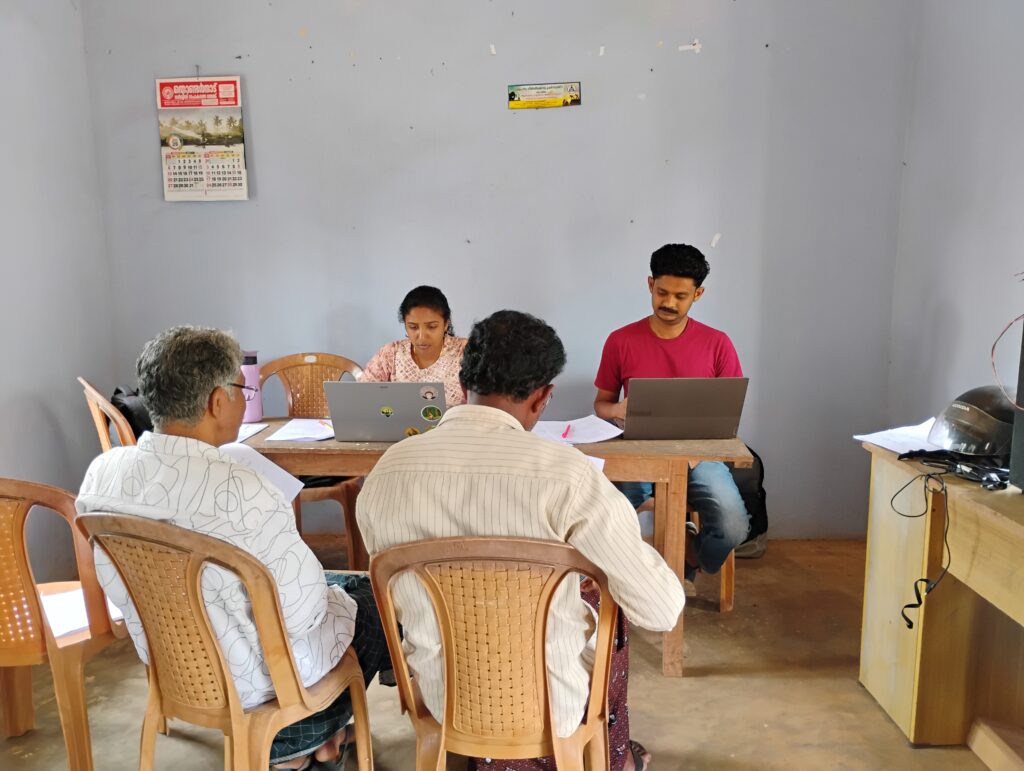
Photo credits- Shelly
Farmers List:
| NO | NAME OF THE GP | NAME OF THEPADASHEKARASAMITHI | NUMBER OF MEN FARMERS | NUMBER OF WOMEN FARMERS | TOTAL FARMERS | ST FARMERS |
| 1. | Edavaka | Eco Friends Padashekara Samithi | 25 | 13 | 38 | 7 |
| 2. | Vellamunda | Kommayad Padashekara Samithi | 80 | 41 | 121 | 0 |
| 3. | Vellamuda | Karakkamala Padashekara Samithi | 92 | 53 | 145 | 65 |
| 4. | Thondernadu | Puthushery Padashekara Samithi | 20 | 11 | 31 | 10 |
| 5. | Vellamunda | Paliyana Padashekara Samithi | 100 | 53 | 153 | 32 |
| TOTAL NUMBER OF FARMERS=488 | ||||||
Scheme Registration List:
| NO | Name Of The Padasekara Samithi | Total Number OfInsurance Registrations | Total Number Of Royalty Registrations | Total Number Of People Plan Registrations | Total Land(Acre) |
| 1. | Eco Friends Padashekara Samithi | 38 | 30 | 36 | 35.593 |
| 2. | Kommayad Padashekara samithi | 121 | 100 | 121 | 106.44 |
| 3. | Puthushery Padashekara Samithi | 31 | 26 | 29 | 90.46 |
| 4. | Karakkamala Padashekara Samithi | 145 | 130 | 145 | 40.55 |
| 5. | Paliyana Padashekara Samithi | 153 | 131 | 151 | 123.56 |
Examples of leverage fund types:
| NO | Name Of The Padashekara Samithi | Name Of The Scheme | Total Fund | ||
| Sustainable Development of Rise 2025-26 | Royalty Scheme | People’s Plan Scheme | |||
| 1. | Eco Friends Padashekara Samithi | 51253 | 36000 | 173693 | 260946 |
*Sustainable Development Of Rise 2025-26 Scheme Amount Per Hector=3600
*Royalty Scheme Amount Per Hector=3000
*People’s Plan Scheme Amount Per Hector=12200
Paddy Insurance:
Kerala’s paddy insurance scheme provides financial protection to farmers against crop loss caused by floods, drought, pests, diseases, and unexpected weather events. It helps reduce economic risks in paddy cultivation by offering compensation for damages, ensuring stability, and supporting farmers’ livelihoods through timely relief and improved resilience.
Royalty Scheme:
The Paddy Royalty Scheme provides financial incentives to registered paddy farmers for conserving paddy fields, supporting sustainable cultivation, and ensuring continued food security by rewarding farmers for maintaining active paddy cultivation.
Sustainable Development of Rice 2025-26:
Kerala’s Sustainable Development of Rice 2025–26 focuses on enhancing productivity, promoting climate-resilient farming, conserving traditional varieties, improving water management, and supporting farmers through technology, training, and incentives for eco-friendly, sustainable rice cultivation.
The details mentioned above can be obtained on this website: https://www.aims.kerala.gov.in/home