By Rohan Mukerjee –Biodiversity Conservation
As the monsoons commence, mushrooms of various sizes, shapes, and hues spring up across Purulia’s forests and fields. These wild mushrooms are one of the most relished uncultivated delicacies of the Kheria Sabar people. However, not all of them are edible, as we found out through our interactions with Sraban Sabar, a village elder from Bengthupi Sabar Para.
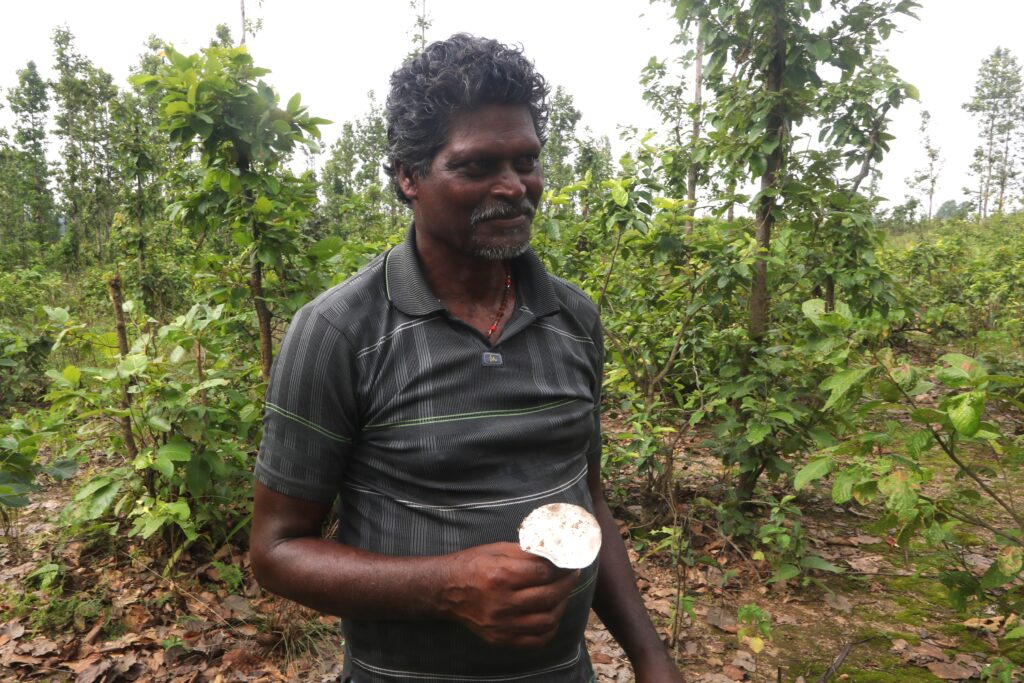
On a sultry July morning, accompanied by Fatik Hembram, Bishnu Sabar, and Kumaresh Mahato, I made my way to Bengthupi to meet Sraban Sabar, the father of PBKSK’s treasurer Meghnad Sabar, to learn more about wild mushrooms consumed by the Kheria Sabar people. Around 20 minutes into our journey, Bishnu and Kumaresh pulled up by the side of an open forest patch, and once we drew up behind them, they pointed out several mushrooms of one variety sprouting in the forest, and we all went off-road to photograph.
Neither of my companions knew the name of the mushroom nor was sure if they were edible or not. But they were confident that Sraban Sabar, who was going to visit in Bengthupi, would know, so we took a few of these mushrooms with us to show him.
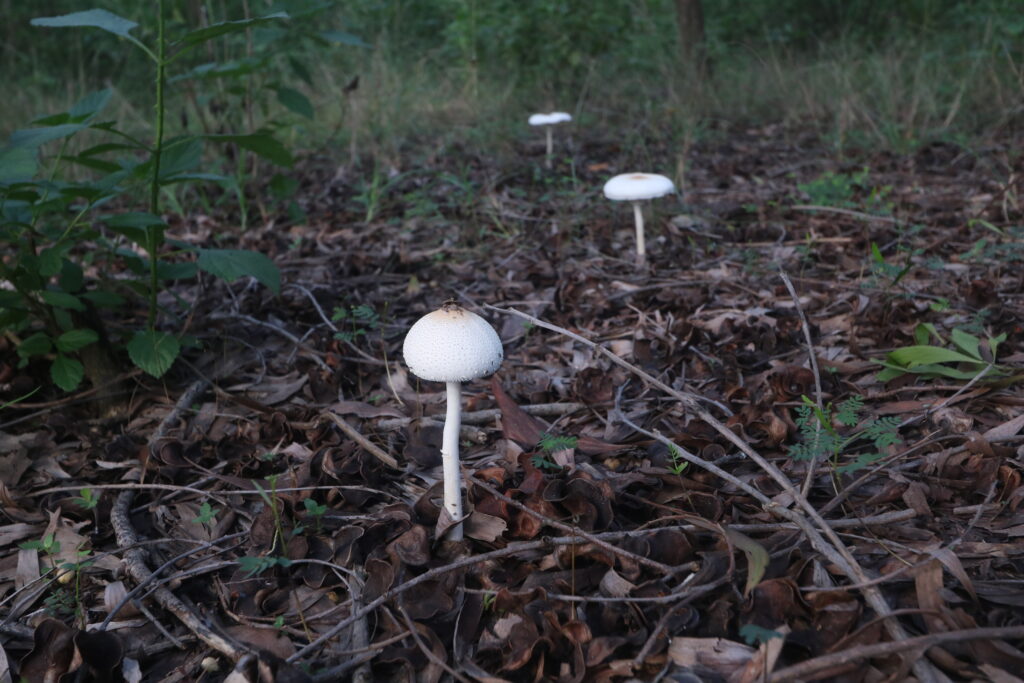
Sure enough, the moment Sraban saw them, he said they were known as Gobar Chattu or Chaith, as mushrooms are referred to in Bengali and the Sabar language. He pointed out that this mushroom variety was not eaten. He said that they could at times be confused with an edible variety known as Bhonda Chattu, and he shared a story of how he himself had been fooled. A few years ago, he and a few fellow villagers were going to Thakur Ghor (Temple), and on their way there, just like us, they saw lots of mushrooms sprouting at a particular spot.
So, they thought that we would collect them on their return journey. While returning from the temple, they stopped their vehicle at the spot, but when they got close, they saw that they were all Gobar Chattu. When the people nearby saw them, they laughed and asked, “What mushrooms are you collecting?”. They replied that, thinking these mushrooms were Bhonda Chattu, they had stopped by to collect them. The locals said that had these mushrooms been Bhonda Chattu, they would have collected them by now, but since they are Gobar Chattu, they are still there. So, they laughed at their mistake and turned back and returned to their vehicle.
The Paschim Banga Kheria Sabar Kalyan Samiti’s (PBKSKS) Community Learning Centre (CLC) teachers Nandlal Rajwar and Bishwanath Mahato, joined us, and accompanied by them and Meghnad Sabar, we made our way to the Bengthupi Sal Bon (Shorea Robusta Forest), where, guided by Sraban, we located and collected 7 different varieties of mushrooms – Khoi Chaith, Bhonda Chaith, Bod Phukri Chaith, Kend Chaith / Kamar Chattu, Patla / Saada Patra Chaith, Jam Chaith, and Lal Patra Chaith. The mushrooms were not easy to spot as they were largely covered by leaf litter, and it took a seasoned eye to spot them.
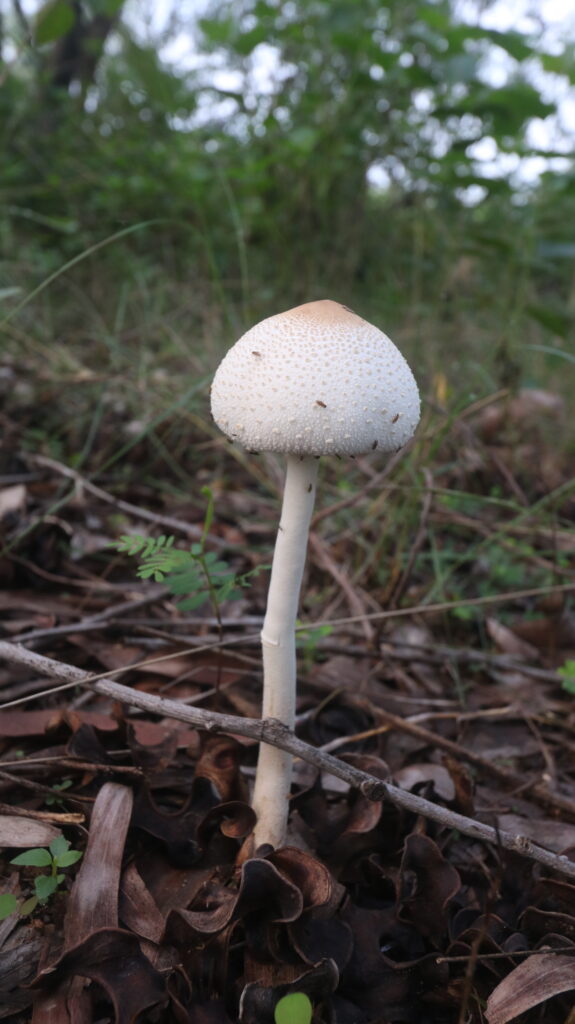
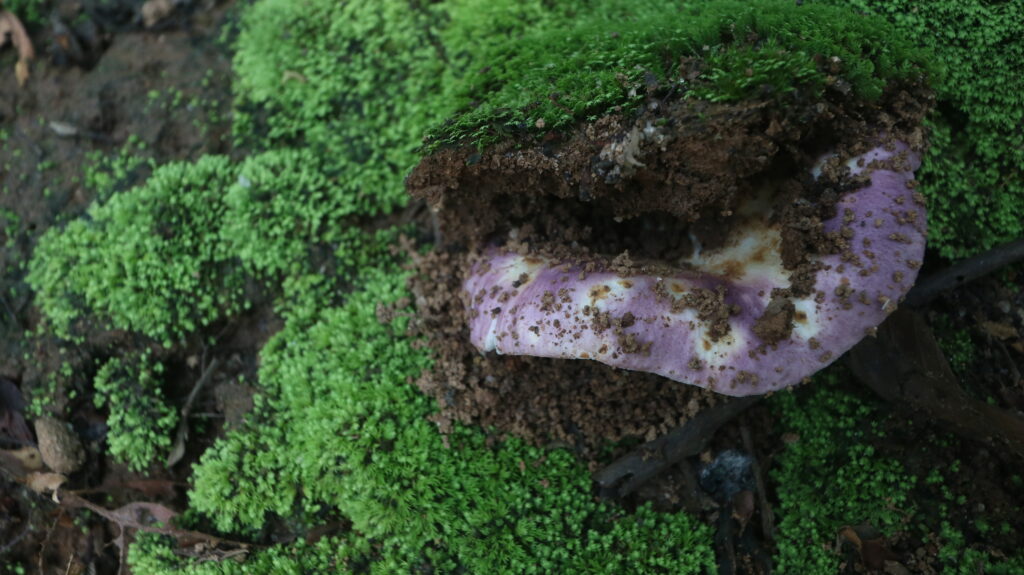
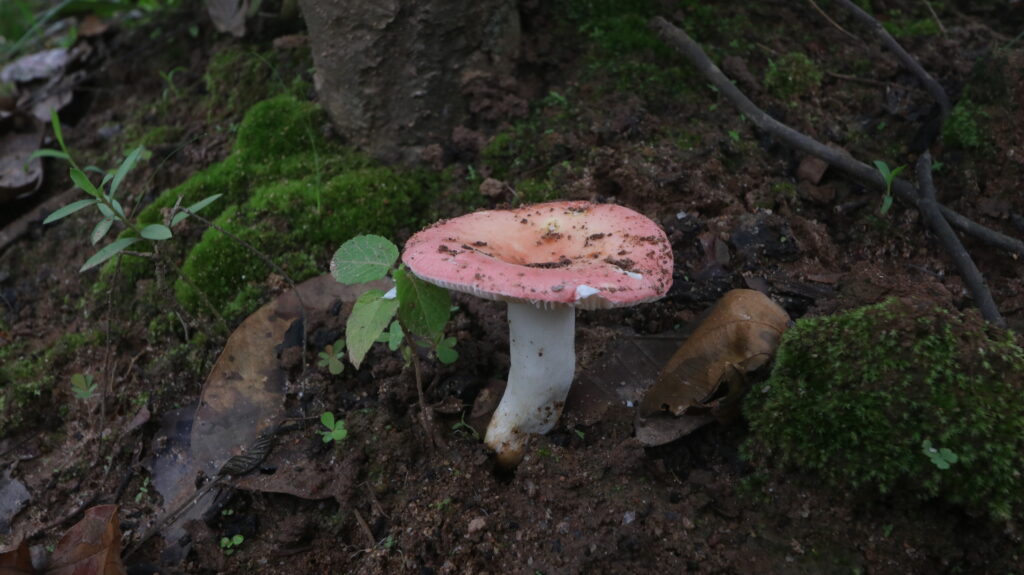
Sraban shared that the mushrooms we found are available from Asharh (Mid-June to Mid-July) to the middle of Srabon (Mid-July to Mid-August). During that period, out of the mushrooms we found, we managed to collect a few different kinds and mix and eat them. Those who go early in the morning get a little more than those who go later in the day. If anyone manages to collect a lot, like those who go early, they keep what they need for their consumption and sell the rest.
7 varieties of wild mushrooms
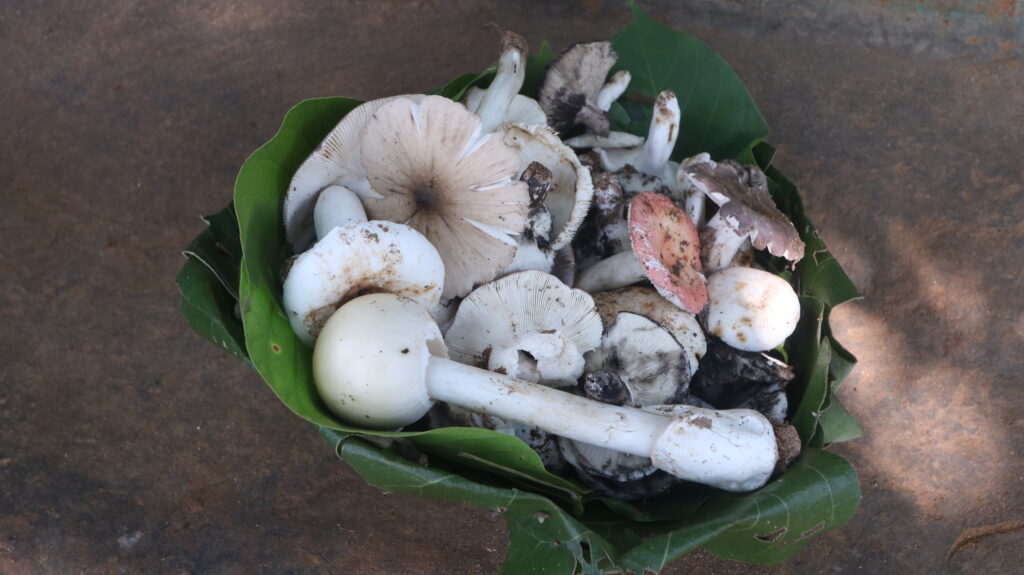
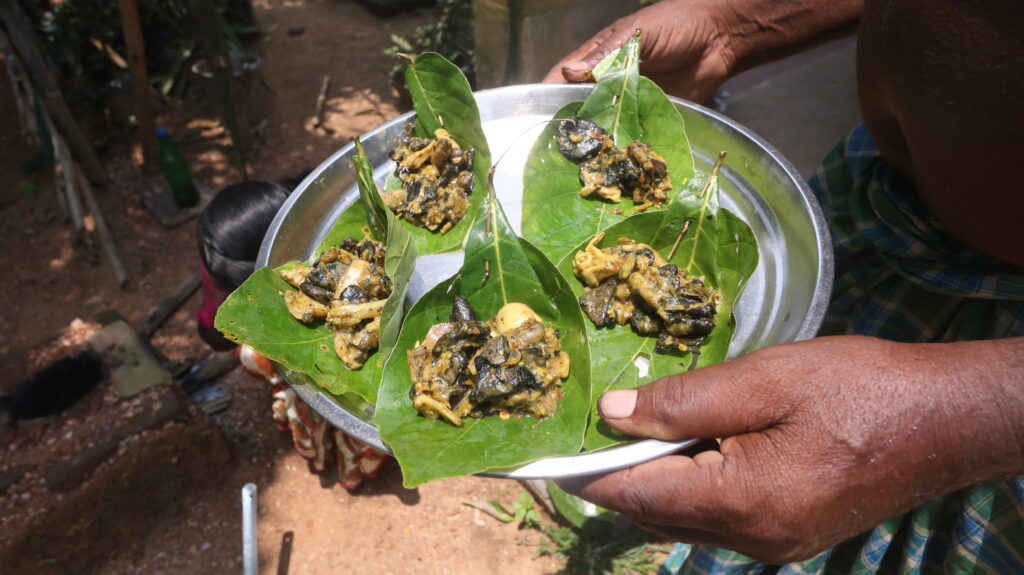
Once we returned to Sraban’s home, he carefully sorted and cleaned the mushrooms, tearing them into smaller pieces. He then cooked them, frying them in mustard oil with minimal spices – onion, garlic, green chilis, ground whole turmeric, and red chillis. We all then got to taste the delicious preparation served in leaf bowls.
Through the Using Diversity project, the rich traditional knowledge of the Kheria Sabar people is being documented and shared with the next generation through village elder programs led by villagers like Sraban Sabar. The project is also supporting Sabar’s efforts to protect and safeguard their forests and associated forest resources like the wild mushrooms of Bengthupi forest.
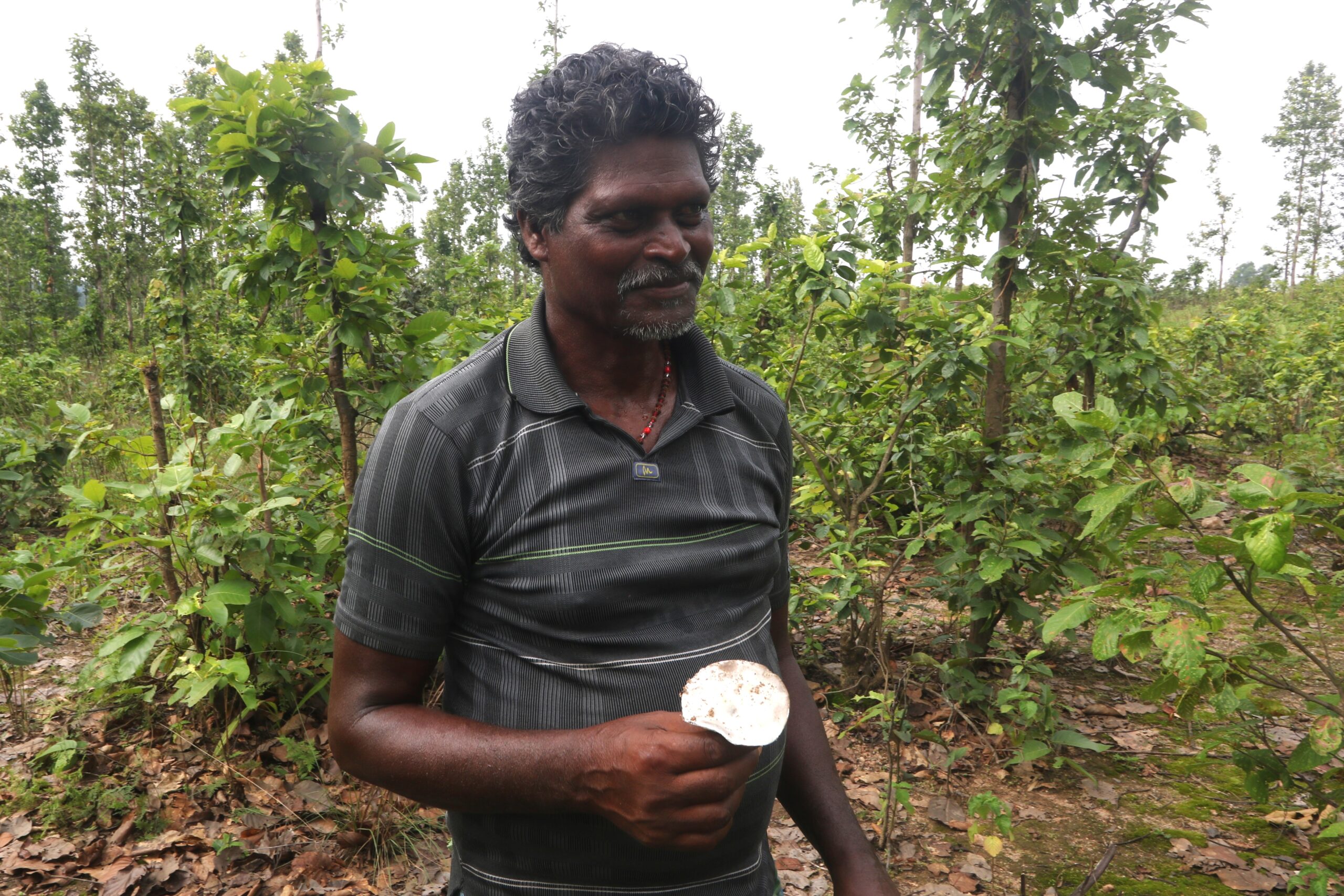
Share village elder Sraban Sabar with the Sal forests of Bengthupi village, where, in addition to spotting and collecting several mushroom varieties, he shared his traditional knowledge and experiences with this mercurial source of wild food.