By Saneesh P B, Community Wellbeing
Tuber crops are precious gifts hidden in the soil by nature. Among them, Kaachil (yam) is one of the most important varieties. Different types of kaachil are among the major tuber crops of Kerala. It is a tuber that provides nutrition, medicinal value, and strengthens immunity.
Kaachil holds a long-standing place in our food habits and everyday life. Rich in both nutritional and medicinal properties, this tuber has many important benefits.
Diversity of Kaachil Varieties
Kaachil is known locally by different names, and exists in several varieties. These varieties differ in colour, size, and shape. Variations are also seen in growth, mainly influenced by the following factors:
- Soil quality
- Farming and maintenance practices
- Climatic conditions
- The shape, size, and colour of leaves; the twining pattern of vines; and the colour, shape, and size of tubers are the key indicators used to identify different varieties.
Nutritional Value
Kaachil is an excellent source of carbohydrates, providing the body with essential energy. It is rich in dietary fibre, which supports digestion.
It contains vitamins such as C, B6, B1, and B2, and minerals like potassium, iron, and magnesium. These help regulate blood pressure and improve immunity.
Medicinal Benefits:
- Kaachil is beneficial for several health conditions:
- Enhances the body’s immune system
- Helps reduce indigestion, fatigue, and inflammation
- Used in traditional medicine to treat skin diseases and rheumatic ailments
Climate Change and the Importance of Tuber Crops
One of the greatest challenges the world faces today is climate change. Irregular rainfall, extreme heat, and soil degradation are severely affecting agriculture. In such situations, tuber crops like kaachil, chena (elephant foot yam), tapioca, taro, sweet potato, and lesser yams emerge as effective solutions.
Reasons for their climate resilience:
- Can grow even with limited water, allowing cultivation during droughts
- Highly adaptable to different soil types
- Can be stored underground for long periods, ensuring food security
- Serve as a stable food source during climate-related crop failures of rice and wheat
- Therefore, promoting the cultivation of tuber crops like kaachil is crucial for food security, health, and climate-resilient farming practices.
Kaachil Cultivation Method
Adequate moisture throughout the growth period is essential for good yield. A warm and humid climate is ideal for kaachil cultivation. The crop grows well in loose soil with good drainage. Excess soil acidity can seriously affect yield; hence, the soil should be tested before cultivation and lime should be applied as required to reduce acidity.
Planting
As the rains begin to recede, the land should be loosened by digging to a depth of 20–25 cm, breaking clods and applying lime as needed. If sufficient rainfall is received during the month of Kumbham (February–March), pits of about 60 cm depth and 45 cm diameter should be dug. Topsoil mixed with organic manure should be heaped into mounds. A spacing of 90 cm between mounds is recommended.
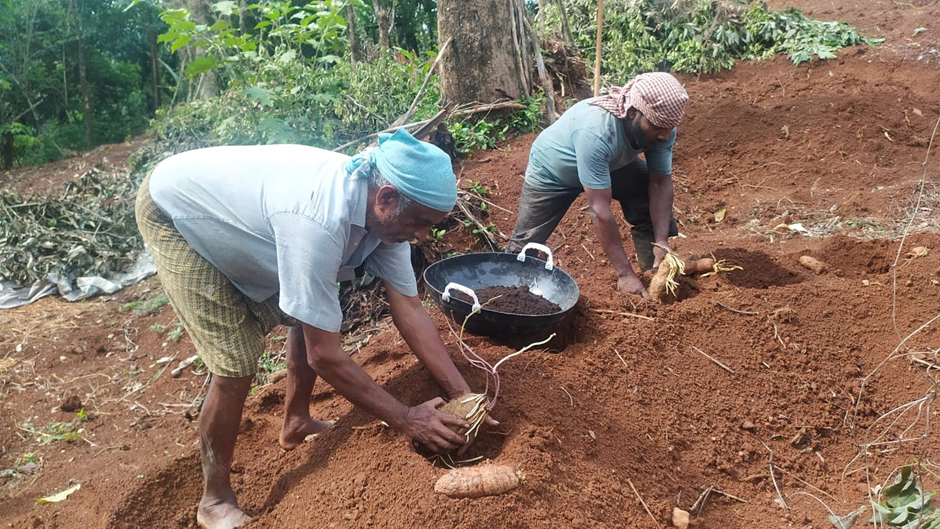
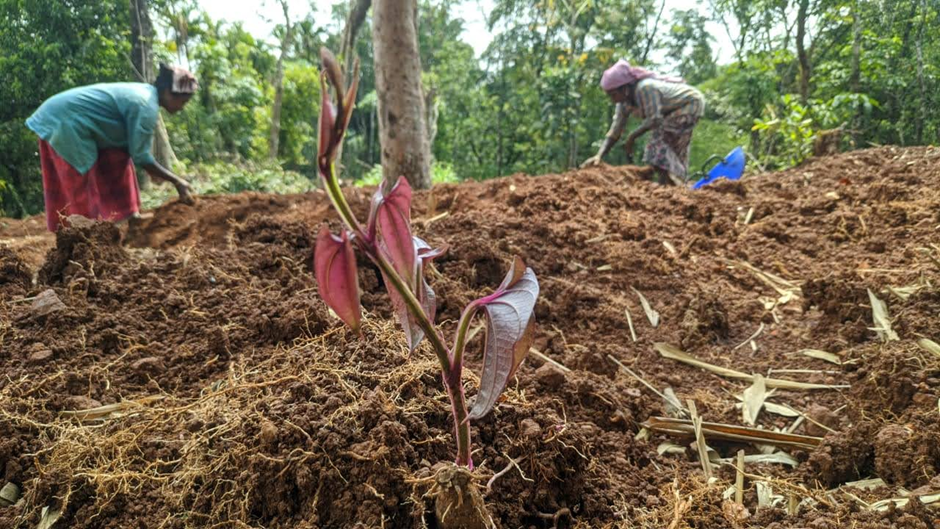
Small pits are made in these mounds, the seed yams are planted and lightly covered with soil. Dried cow dung powder and compost are then added, and the mounds are mulched well using green leaves or dried leaves.
Providing Support to Vines
As soon as the vines start growing, they should be supported using ropes or stakes and guided onto the support. This ensures good sunlight exposure to the leaves and results in better yield. After the vines spread, weeds should be removed and the soil loosened during dry spells. Top dressing before earthing-up is essential for higher yield. Liquid organic manures such as jeevamrutham or fermented bio-inputs can be used as top manure.