
By Ayoob A, Community Wellbeing
As part of the UNESCO Women for Bees initiative, Keystone Foundation successfully conducted a practical beekeeping training programme for five women beekeepers from Wayanad district on 10th November 2025. The initiative aims to empower rural women by equipping them with sustainable livelihood skills, particularly in the field of apiculture. This training marked a significant step toward enhancing women’s participation in environmentally sustainable income-generating activities.
Aspects of the Training
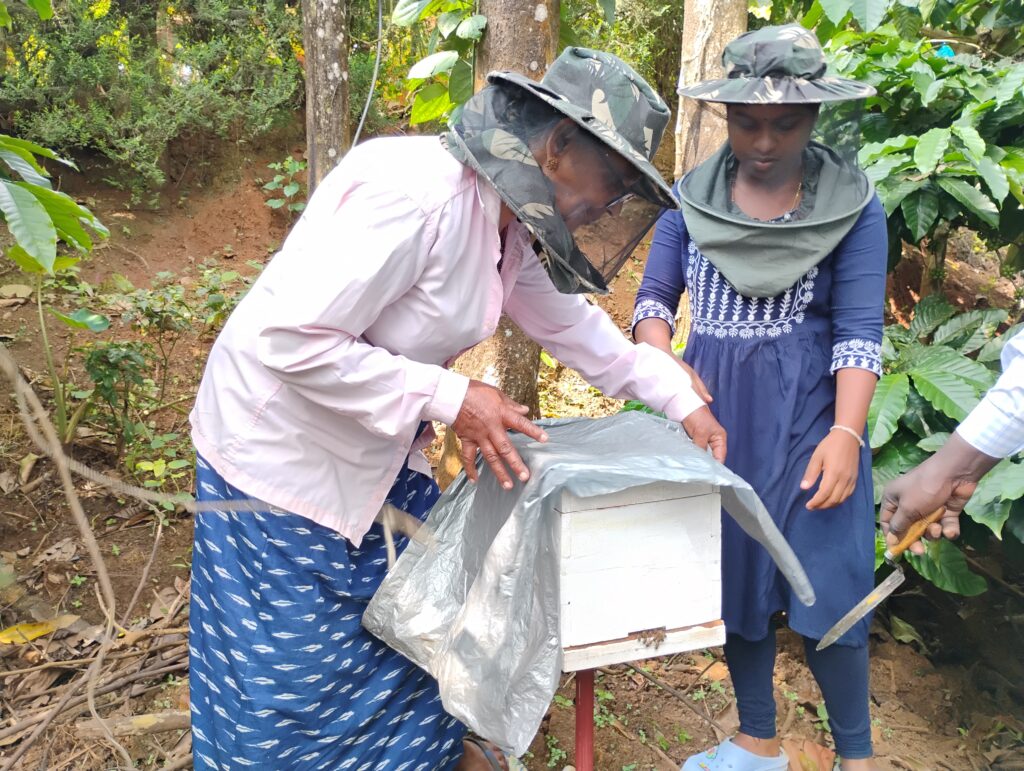
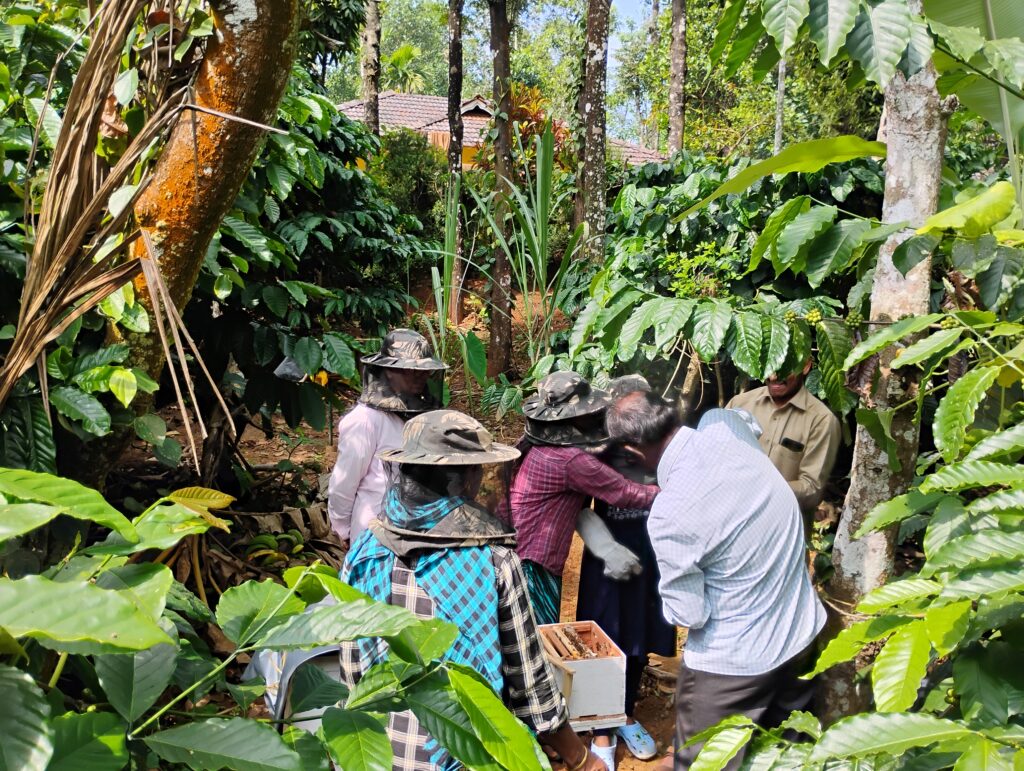
The training was led by Mr. Krishnan T, the Director of the Wayanad Grama Vikas Farmer Producer Company Ltd, who has long-standing experience and expertise in beekeeping practices. Unlike conventional group-based classroom sessions, this training adopted a hands-on, field-oriented approach. The trainer
personally visited each participant’s home, where the bee boxes provided under the programme were installed. This approach enabled individualised guidance and real-time problem-solving based on the unique conditions of each site.
During this time, Mr. Krishnan examined the current status and health of the bee colonies, assessed the maintenance of the boxes, and identified areas that required attention or improvement. He provided practical instructions on regular monitoring, cleaning, and management of bee boxes to ensure healthy bee colonies and better honey yield. The women were also trained on the division of bee boxes. This is a crucial technique that helps increase the number of colonies, thereby expanding their beekeeping operations sustainably.
Pest Prevention
An important highlight of the training was the introduction of a natural preventive method to protect the bees and boxes from pests, such as fleas and small insects. The trainer explained that a mixture of talcum powder and turmeric powder can be lightly sprinkled over and around the bee boxes as an effective deterrent. This eco-friendly method reduces dependence on chemical pesticides and helps maintain a healthy environment for the bees. The training session began at 9:30 a.m. and continued until 3:00 p.m., providing ample time for the participants to practice what they learned and clarify their doubts. By the end of the day, the women expressed their enthusiasm and confidence in applying the new techniques to improve their beekeeping practices.
Through this initiative, Keystone Foundation continues to demonstrate its commitment to empowering women, conserving the environment, and promoting sustainable livelihoods. The training not only strengthened the
technical capacity of the women beekeepers, but also contributed to promoting gender inclusion in rural entrepreneurship and the broader goals of the UNESCO Women for Bees initiative.