Saneesh PB, Community Wellbeing and Vishnu N M, Biodiversity Conservation
Forest fires are a major challenge in Kerala’s forest regions during the summer season. Hot and dry weather between February and May primarily drives natural forest fires in the state. While natural causes such as lightning or friction between trees can trigger fires, such cases remain rare. Reports from the Forest Department indicate that human activities cause about 95% of forest fires in India, often due to negligence or lack of awareness (Kumar, S., et al. 2019). In Wayanad, forest fires threaten biodiversity. Here,most of the fires happening are anthropogenic from the forest officers’ view.
Forest fires are mainly of three types:
- Surface Fire:
This is a fast-spreading fire that burns dry leaves and small plants on the forest floor. This is the most common type in India. - Crown Fire:
This is a highly dangerous firre that spreads rapidly through the upper canopy of trees. It causes severe damage to wildlife and trees. This type is rare in India. - Ground Fire:
This fire spreads through organic matter beneath the soil. It is difficult to detect. Though it produces less smoke and flame, it is the hardest to control.(Saigal 1989)
Small-scale forest fires can help in the germination of new plants and in controlling weeds. However, uncontrolled fires can destroy forest biodiversity, and it may take years for the burnt area to recover.
Fire Watchers and Preventive Measures:
To prevent forest fires, the Kerala Forest Department selects local people as “fire watchers” every year. Even before summer begins, preventive measures such as creating fire lines in fire-prone areas are undertaken.
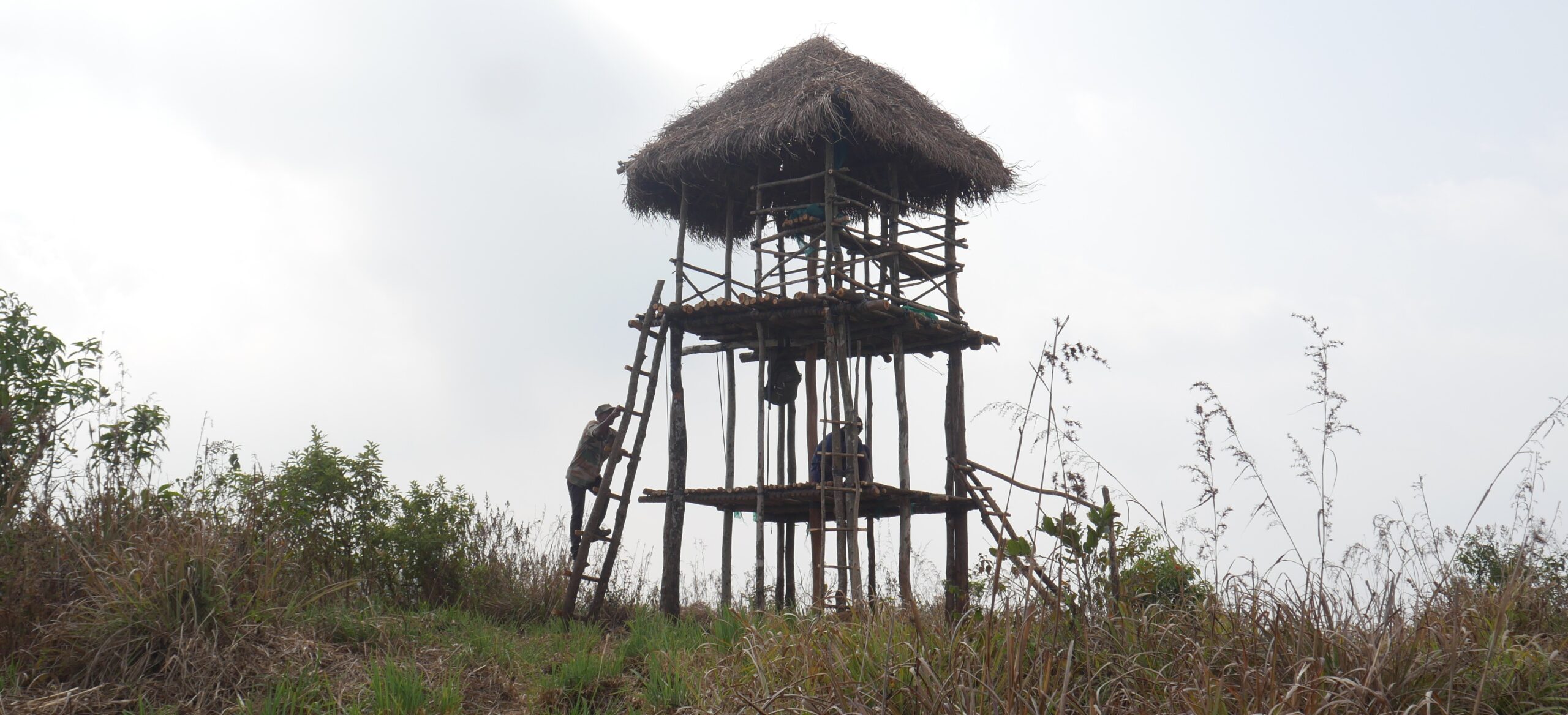
Each area is monitored by 2 to 4 watchers. Since the most vulnerable time for fire outbreaks is between 12 PM and 5 PM, watchers observe from temporary shelters (called machan) built on hilltops or trees during this period.Their duties are like preparing fire lines, preventing accidental fires, patrolling through the fire-prone areas, and monitoring.
In recognition of the hard work of fire watchers in the North Wayanad Division, the Keystone Foundation stepped in to provide support at a crucial time. They distributed ration kits containing essential supplies such as rice, sugar, and six additional items to 350 fire watchers.
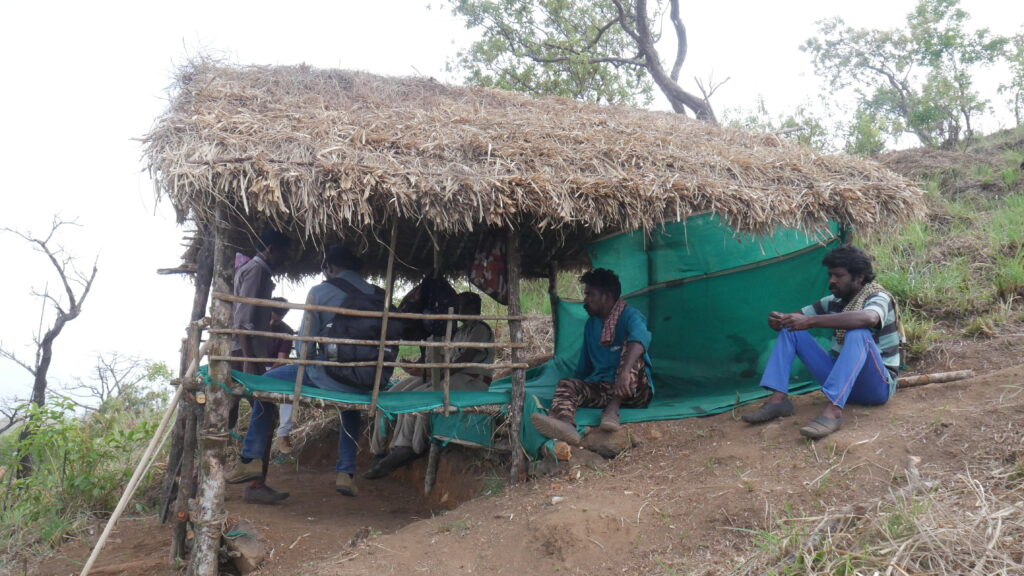
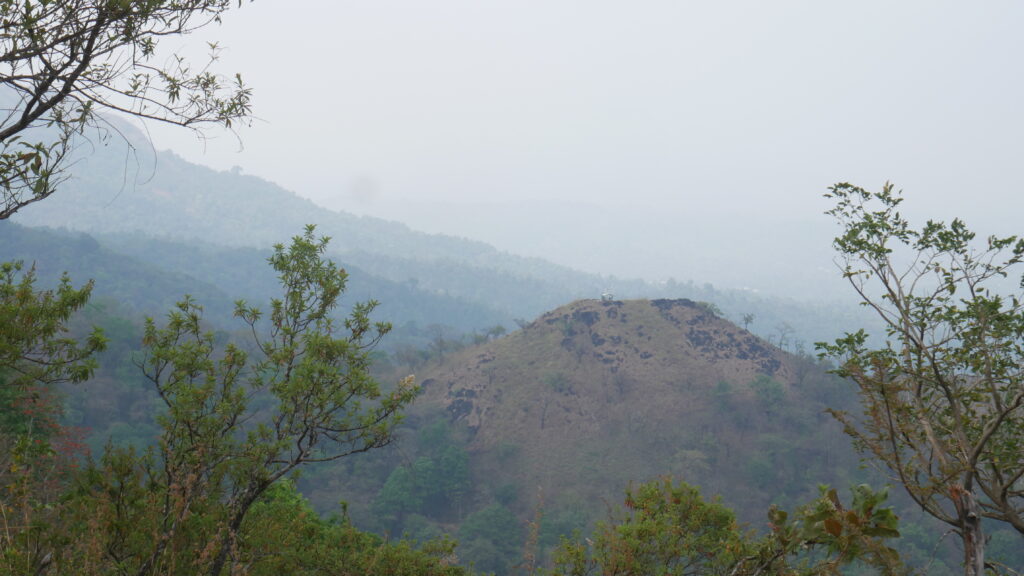
To encourage the construction skills of watchers, the Kerala Forest Department organized a temporary shelter (machan) building initiative called the “Machan Challenge.” The Keystone Foundation supported the prize distribution ceremony, which took place at the Division office on March 25, 2026. Prior to that, a team from the Keystone Foundation and the Forest Department visited all the sites where fire watchers were working to evaluate their skills. Based on this evaluation, we selected and awarded an honorarium to recognize their efforts as follows: prizes.
Division Level: First Prize – ₹5,000
Range Level: Prizes for 1st, 2nd, and 3rd positions in Begur, Mananthavady, and Periya Ranges (₹4,500 per range)
Awareness Reels: ₹1,000
Best Fire Watcher: ₹1,000.
The best shelter selected from this program was “Theerthavukunnu” in the Periya Range.

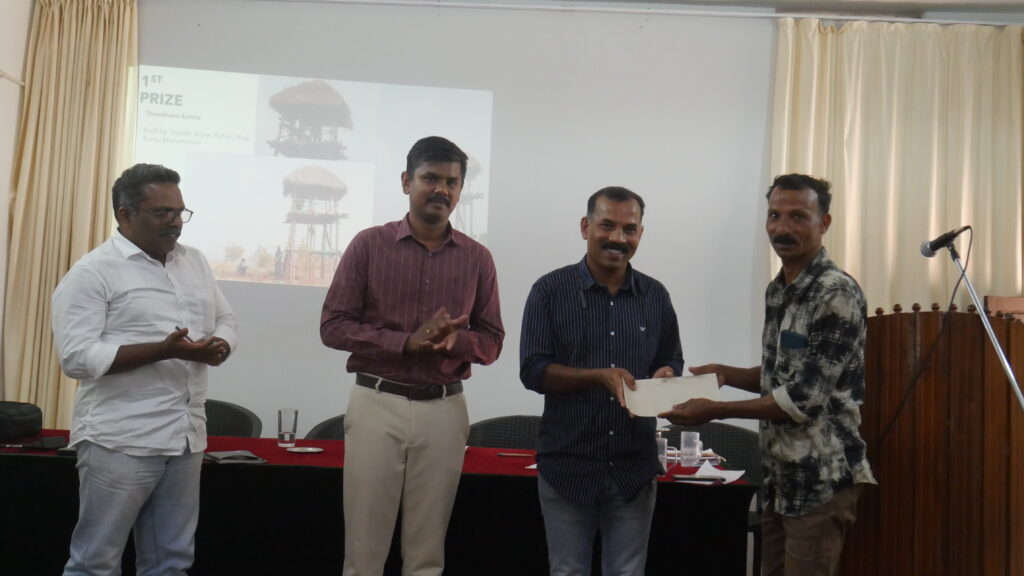
We conducted this program to build skills in constructing shelters using traditional practices. This also serves as recognition for the fire watchers. Indigenous communities possess deeper knowledge about the forest than anyone else. These people who understand its pulse are honoured through such initiatives.As part of this ongoing effort, additional studies are planned to investigate the traditional relationship between indigenous communities and fire.