Rohan Mukerjee with Surja Paharia, Krisna Paharia and Kamlesh Paharia, Biodiversity Conservation
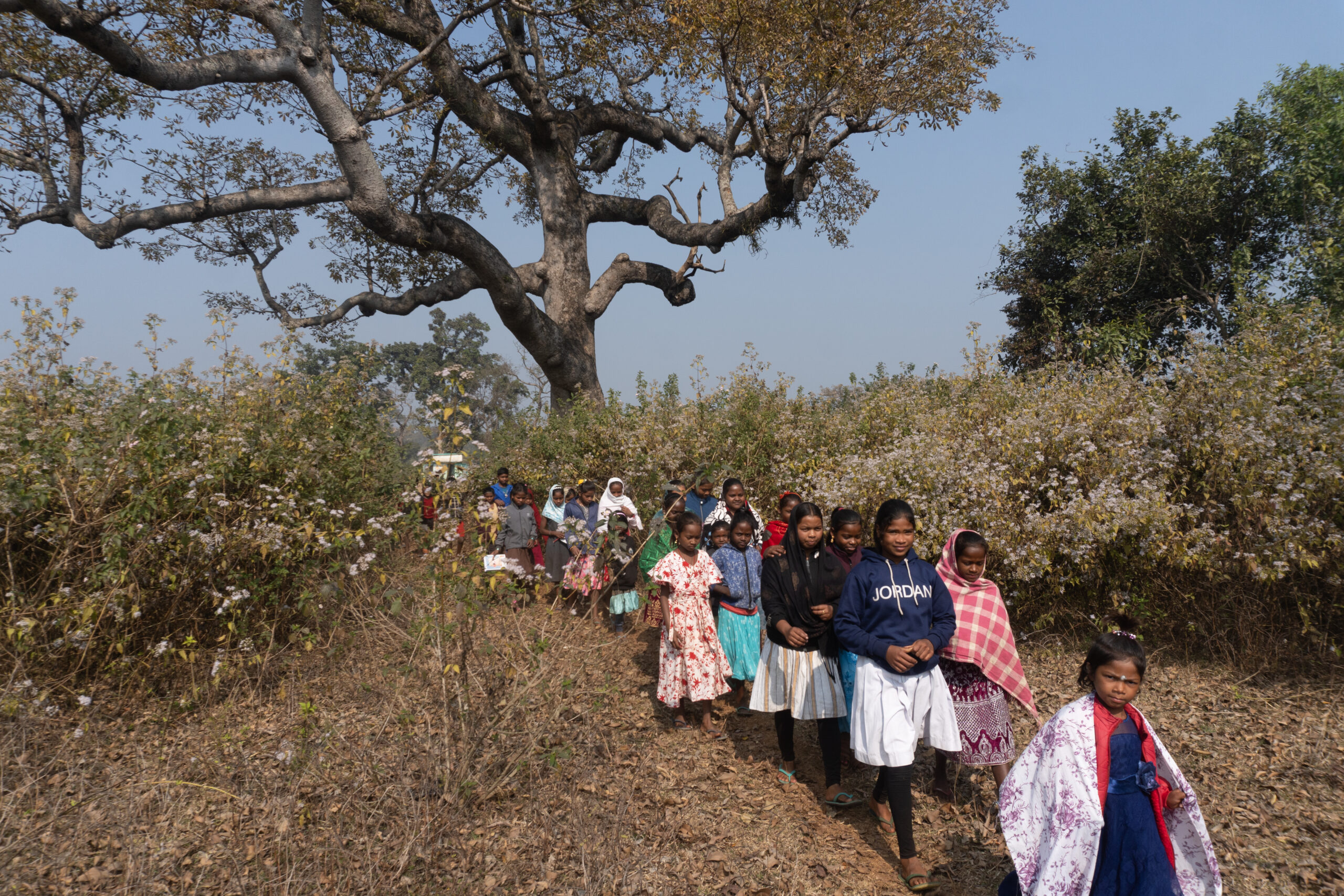
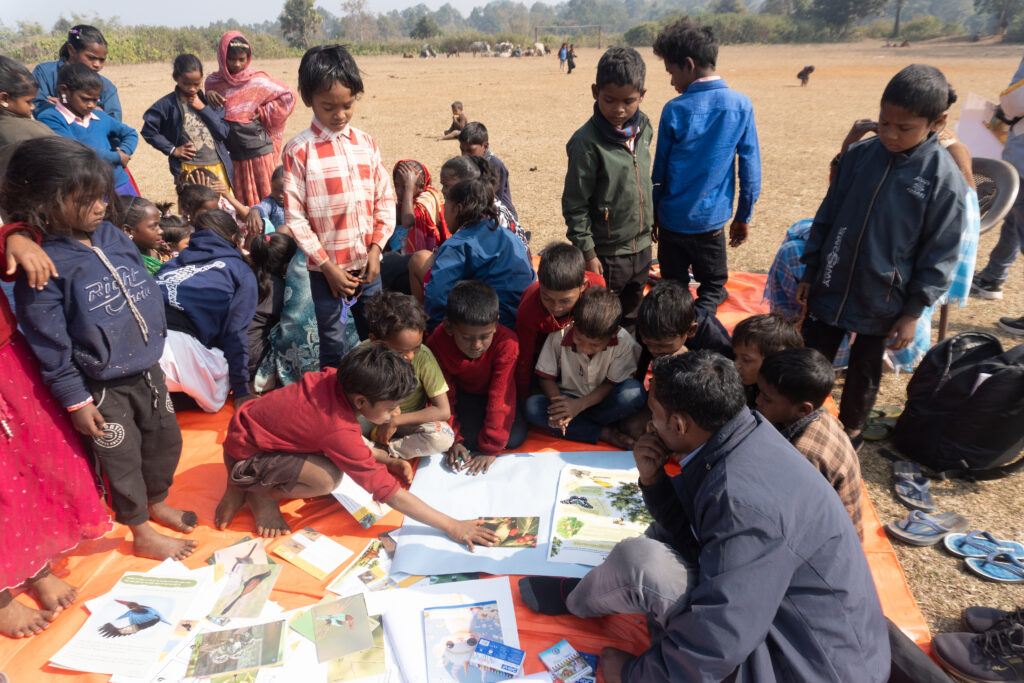
On a crisp, clear winter morning, Paharia children gathered at the football ground in Gadgama village for a nature and biodiversity awareness programme. This programme built on earlier children’s awareness programmes on forests and wild foods in the Pahari villages of Sundar Pahari. We decided to pilot seasonal awareness programmes that focus on the climatic and ecological phenomena of the season in which the programme takes place.
The programme brought together 123 children from Gadgama and the neighbouring villages of Chota Palma, Dumli, Bada Palma, and Porkhani. Girls and boys participated in nearly equal numbers, and the children ranged in age from 4 to about 15 years.
Surja Paharia (Field Assistant) anchored the programme along with CRPs Krisna Paharia from Salgama and Kamlesh Paharia from Gadgama. Other CRPs and Water Stewards—Jawra Paharia from Telo, Jama Paharia from Porkhani, and Sanjay Paharia from Chamdade—also joined to support the activities.
Seasonal Climate Patterns and Phenological Changes in Winter and Spring:
The session began with a discussion about the current weather conditions, specifically the cold winter winds and fog that envelop the hills during these months. The children mentioned that the wind is called ‘Taha‘ in the Paharia language. The CRPs (Community Resource Persons) pointed out that during this season, a cold easterly wind, called ‘Purab Taha‘, blows.
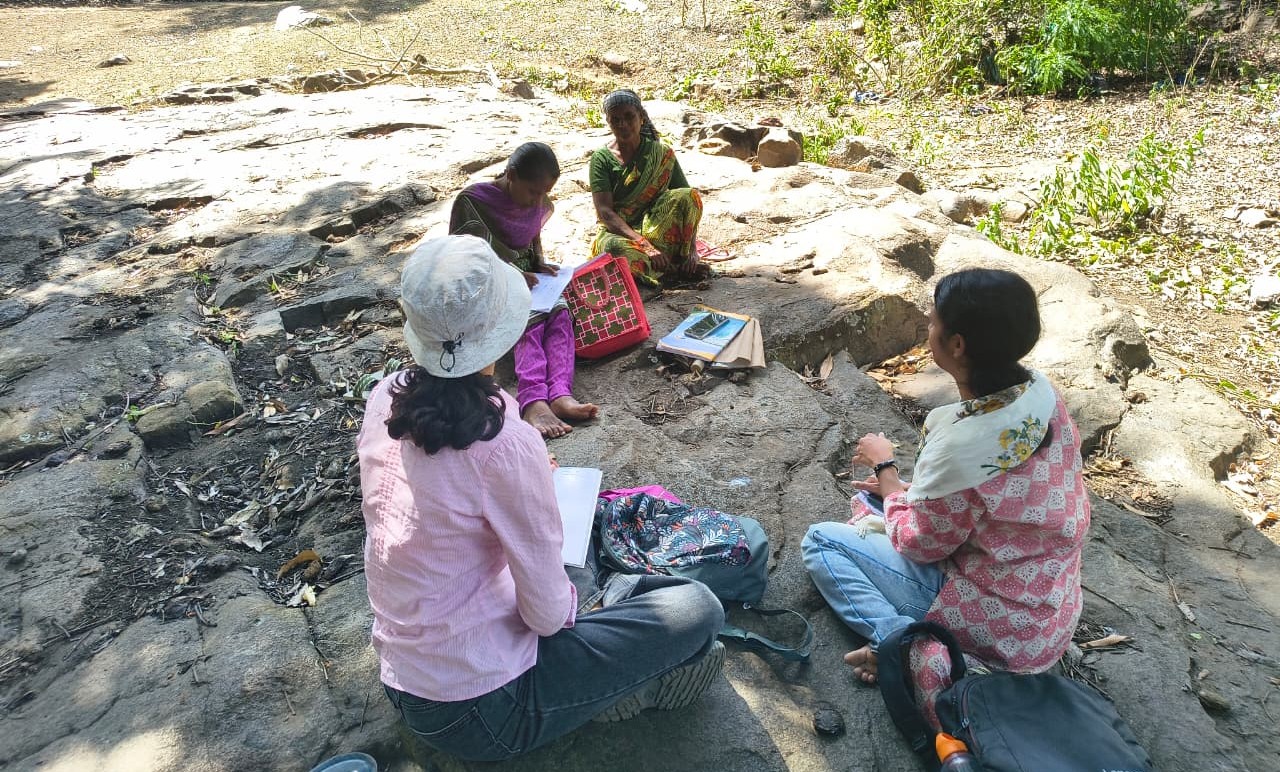
When asked what they observe most mornings during these months, they immediately replied that they see ‘Kuhri‘ (fog) when they wake up at this time. Krishna and Kamlesh shared the benefits of the fog. They noted that it serves as an important source of water for crops, forest trees, and plants during periods without rain, and also helps in replenishing groundwater.
However, anything in excess can cause problems. Excessive fog can be harmful to crops and plants. It creates challenges by blocking essential sunlight and promoting the spread of pests and diseases. which poses a challenge for certain crops and plants.
The Phenological Changes of Trees and Plants:
The discussion revolved around natural phenomena observed during the winter and spring months, particularly the seasonal changes in trees and plants. The children spoke about the blooming of flowers, mentioning that currently, most of their gardens are overflowing with bright yellow mustard flowers, and that as time progresses, their forests will be adorned with various types of flowers such as Simri (red silk cotton tree), Jirhuli, Tai, and Murugu flowers. Here, ‘poo’ is the Paharia word for flower. Among the fruits available at this time is the Lagurd or Ber fruit. Another phenomenon discussed was the shedding of leaves and the emergence of new shoots in several tree species such as Busre/Kusum, Simri/Red Silk Cotton, and Sakua/Sal.
They explained that the new leaves of many trees, like Kusum, are bright red in color, unlike the usual green of the old leaves, and they also explained some of the reasons for this phenomenon. He explained that the new leaves turn red due to anthocyanin pigments, which protect the tender young leaves from harsh sunlight and also deter herbivores like deer and monkeys from eating them before they mature, by making them unpalatable and difficult to digest.
Understanding Pollination and Bird Diversity:
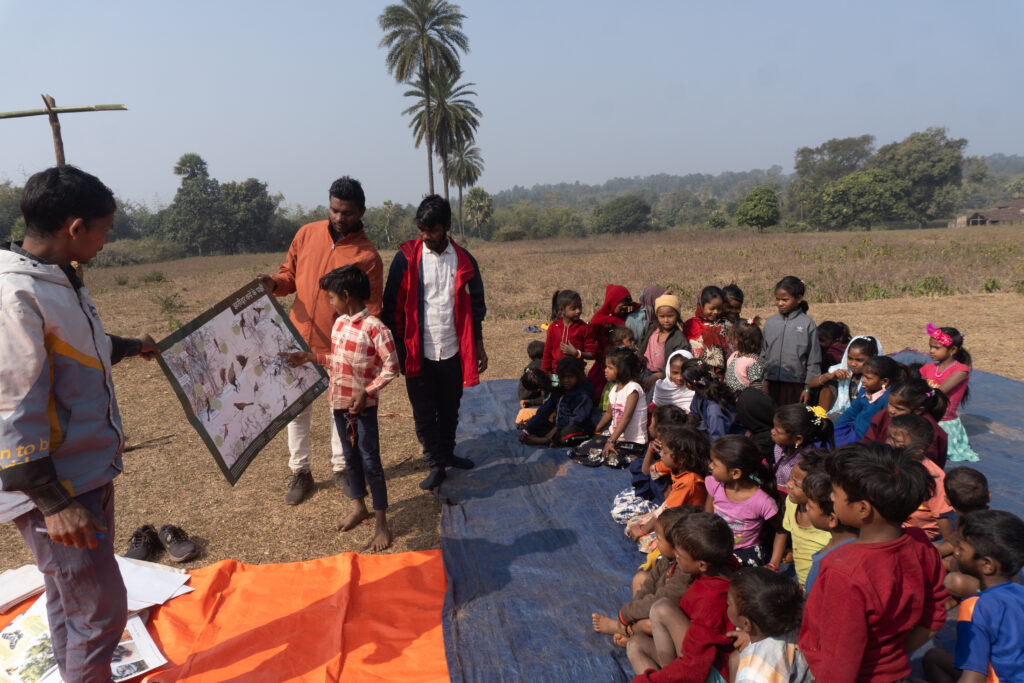
During Winter and Spring, fields and forests come alive with a variety of birds and insects who are attracted to the variety of flowers and fruits. The children were shown a variety of posters and a discussion on the role of insects and birds in pollination of flowers and the importance for reproduction of trees and plants was facilitated. This was followed by a discussion on different kinds of birds found in different habitats, the food they consume and the adaptations they have which are attuned to their specific diets. This session involved the presentation of a variety of posters and cards and was well received by the children. The boys who spend a lot of time in their surrounding forests and other habitats were able to identify a majority of the birds, especially those found in forests and grasslands and around habitation.
Sanjiv Paharia, a young boy from Gadgama, had an impressive knowledge of birds of the area, and was able to provide Paharia names of most birds. He even pointed out that some birds, like parakeets, were missing from one of the posters. He even identified birds like the Grey Horbill, which has become relatively rare in Sundar Pahari.
Learning from the Forest: Trails, Drawings, and Herbariums:
After the initial sessions, the facilitators divided the children into two groups based on gender and took them on a forest trail. The boys showed greater enthusiasm for birds, while the girls demonstrated strong interest and knowledge of plants and trees. During the trail, the children identified several trees and plants, including Piar/Char, Jambu/Jamun, Kiro/Bhelwa, Siddhe, Pindara, and Otta Ari (a climber bearing fruit).
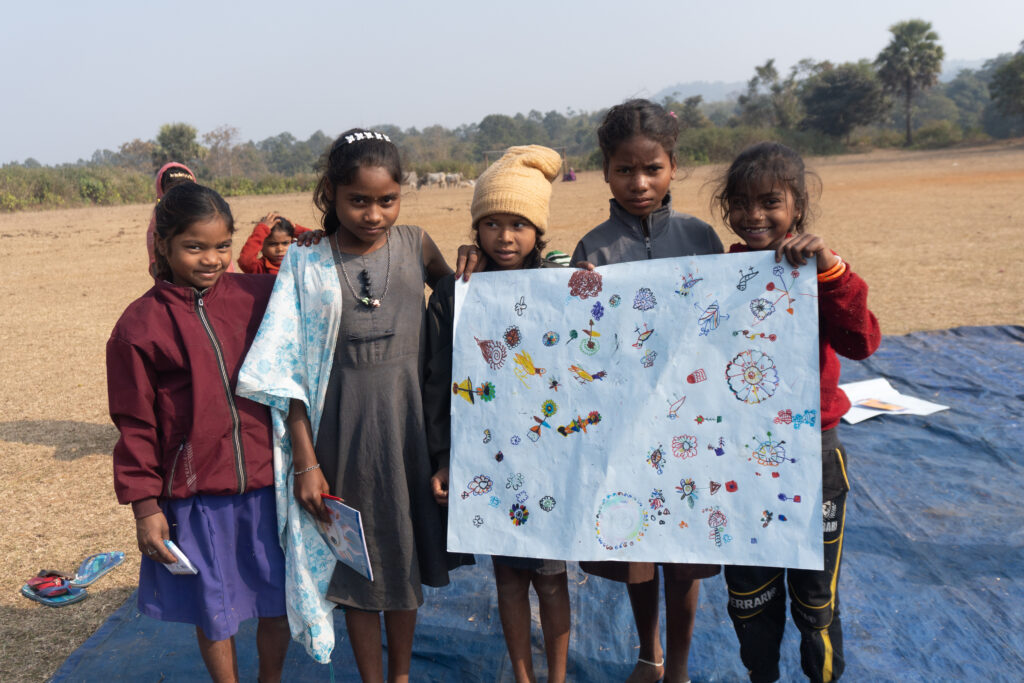
The girls collected leaf and flower samples to bring back with them. After returning, the facilitators regrouped the children and asked them to draw what they found interesting during the sessions or the forest trail. Children across all age groups participated enthusiastically, creating a wide range of drawings and sketches. A group of older girls produced a series of detailed drawings of the leaves, flowers, and fruits they had observed.
The facilitators then demonstrated how to make a simple herbarium by collecting plant parts such as leaves and flowers, drying them between weighted newspapers, and pasting them onto paper with relevant information. They also encouraged the children to observe nature around them over the following weeks, make notes or sketches, and speak with elders about anything new they noticed. The children could share these observations during the next awareness programme.
Physical Activities and Concluding Address:
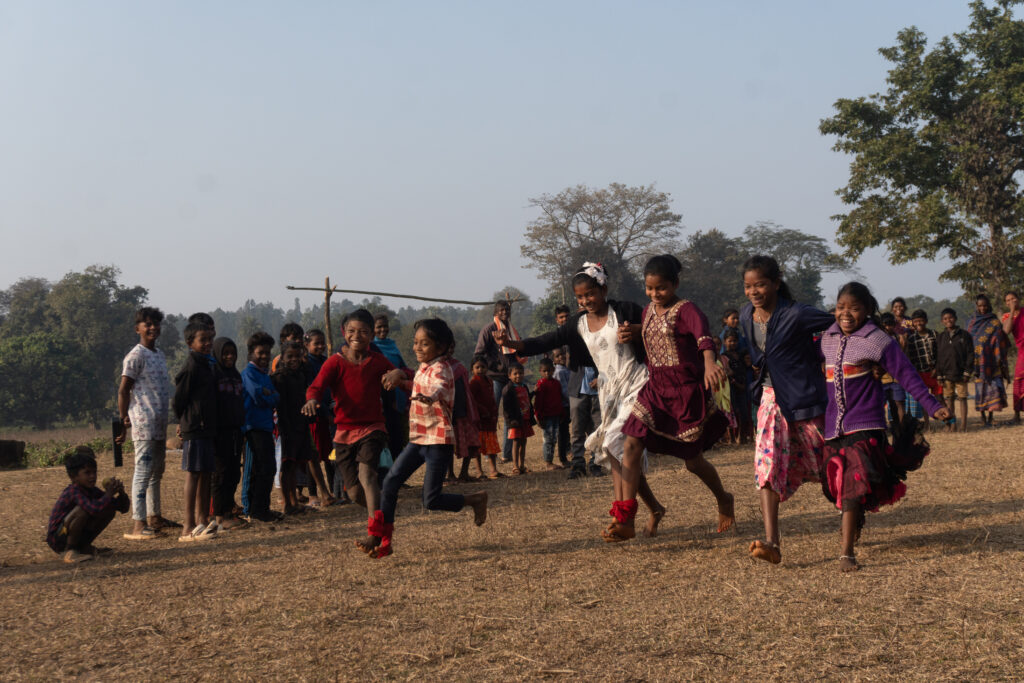
Alongside the programme activities, the children eagerly took part in various physical games. Some confidently walked across the field on homemade bamboo stilts, while others played an energetic game of football using a makeshift ball. Kamlesh also planned several games, and before concluding the programme, he organised a series of three-legged races. These races drew a large crowd of children and adults, who cheered for the participants and encouraged those who stumbled to get up and finish the race.
The programme concluded with Mukhiya Dharmendra Paharia addressing the children. He spoke about the rich traditions of the Paharia community and stressed the importance of understanding and continuing to consume traditional foods such as Gangi, Tialo, Petge, Muto, Kodme, Garrari, and Batwa Jaggu—staples made from maize and millets—as well as various wild and uncultivated foods. He also highlighted the importance of education and explained how it can help the children face and overcome the challenges of their present realities.