Reshma Majhi, Biodiversity Conservation
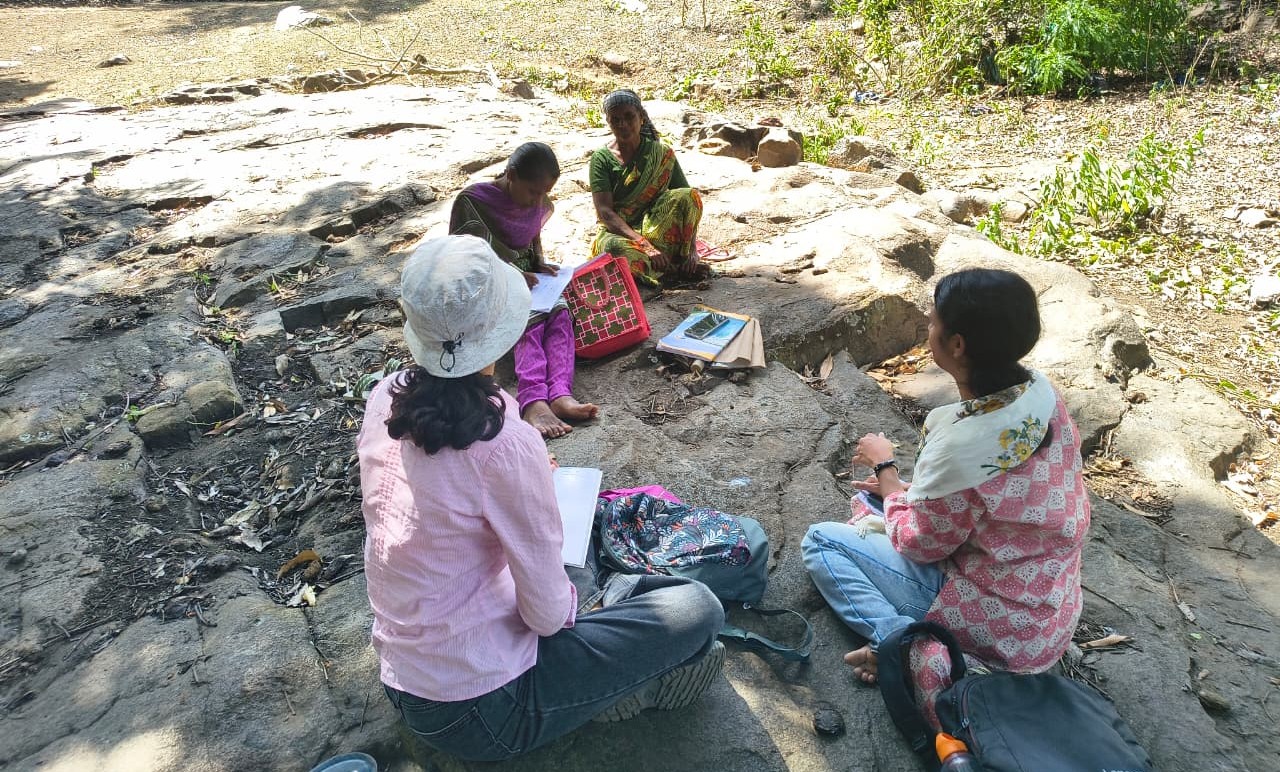
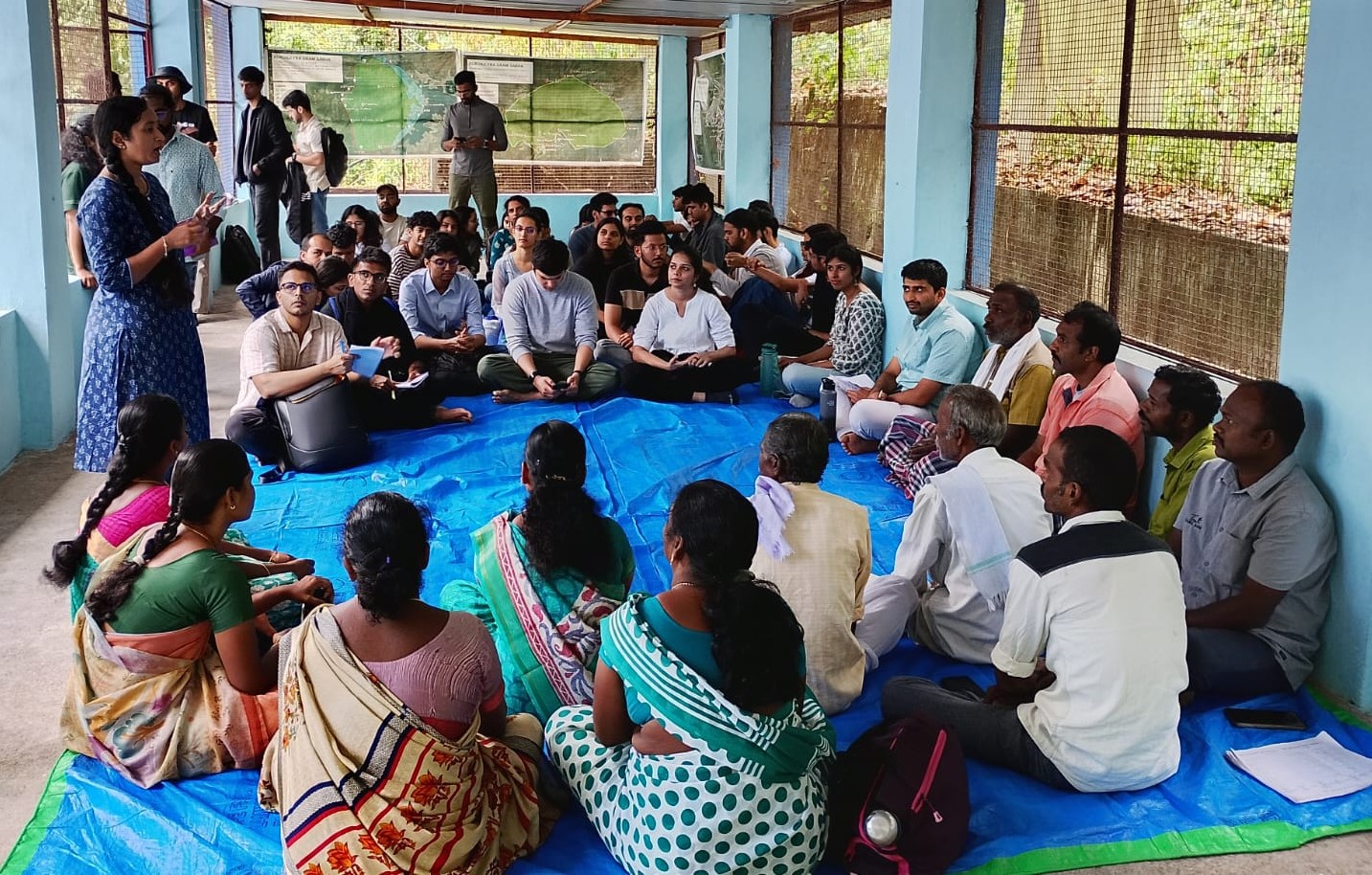
On 9th April 2026, community members organized a traditional food preparation event in Bikrampur village’s Naya Tola hamlet, East Singhbhum. The Naya Tola hamlet has 21 households belonging to the Santhal community. The Rosa Luxemburg Foundation project supported the event and focuses on traditional foods in Jharkhand’s Kolhan region. Organizers aimed to document traditional foods and their preparation methods through the event. They also encouraged intergenerational knowledge sharing about traditional food practices. Additionally, the event promoted discussions on the benefits, importance, conservation, and revival of traditional foods.
A total of 17 participants attended the event, including 14 women and 4 men. Most participants were women, as they hold significant knowledge and experience in traditional food preparation especially with regards to greens and Mahua based preparations. The presence of elders was especially important, as they are the primary knowledge holders of these practices. Their participation helped accurately document and share authentic food preparation methods and associated cultural values.
One of the primary objectives of the event was to preserve indigenous knowledge related to traditional food systems. Over time, many traditional foods and their preparation techniques have become less common, as people increasingly depend on market-based food systems. Earlier, these traditional foods were an essential part of daily life and survival, especially for tribal communities like the Santhals. However, with changing lifestyles, modernization, and reduced access to forests, this knowledge is slowly disappearing.Through this event, organizers encouraged the community, especially younger generations, to reconnect with their cultural roots and nutritional food heritage.
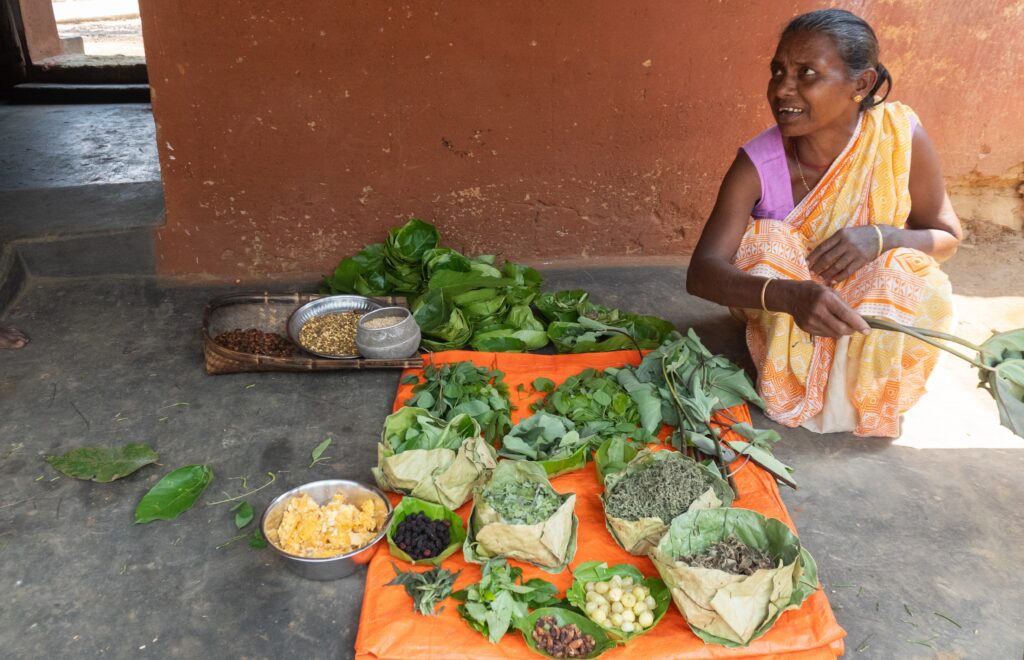
A variety of different traditional foods were on display, and these included fresh and dried greens and Mahua flowers and fruits. During the event, seven women demonstrated the preparation of different traditional foods principally using wild greens and Matkom / Mahua flowers. They collectively have deep knowledge of seasonal food availability, collection methods, and cooking techniques.
In total, they shared knowledge about traditional food items commonly consumed during April and May.This period is particularly important because it is the season when a variety of wild foods and green leafy vegetables become available. All the food items on display were collected from neighbouring homesteads and forest areas.
The traditional dishes prepared during the event were as follows:
Matkom / Mahua Flower items –
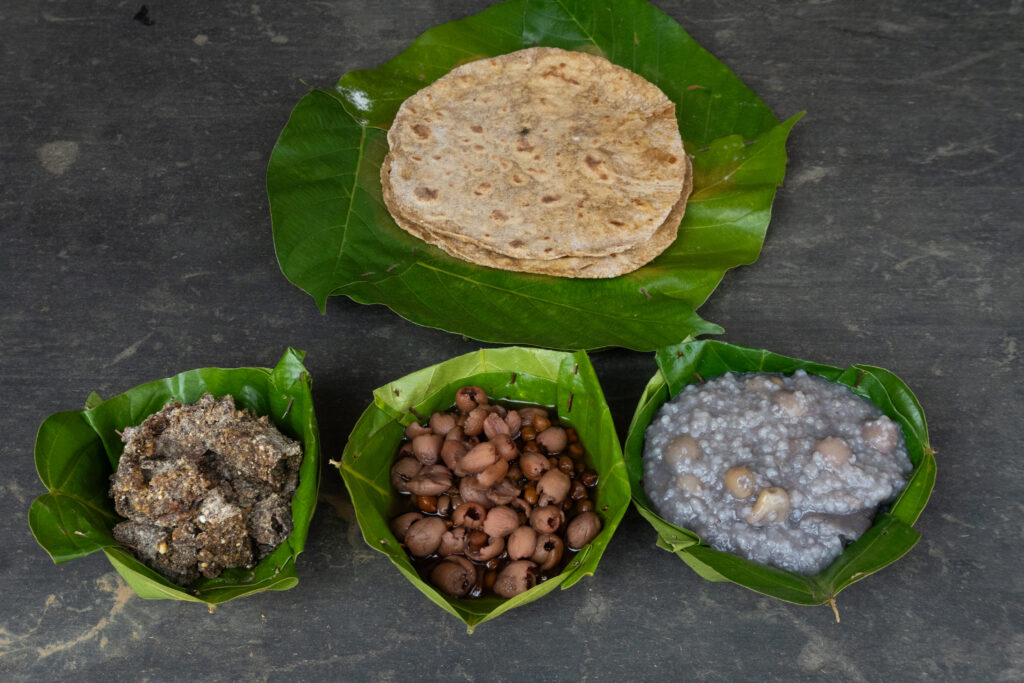
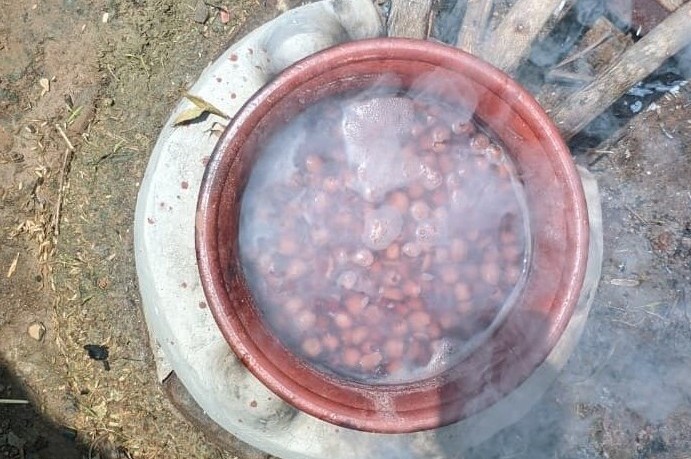
- Matkom Leto – a traditional dish made using rice flour (chawal ka aata), fresh Matkom / mahua flowers, salt, and water. The ingredients are mixed to form a soft preparation, which is then boiled.
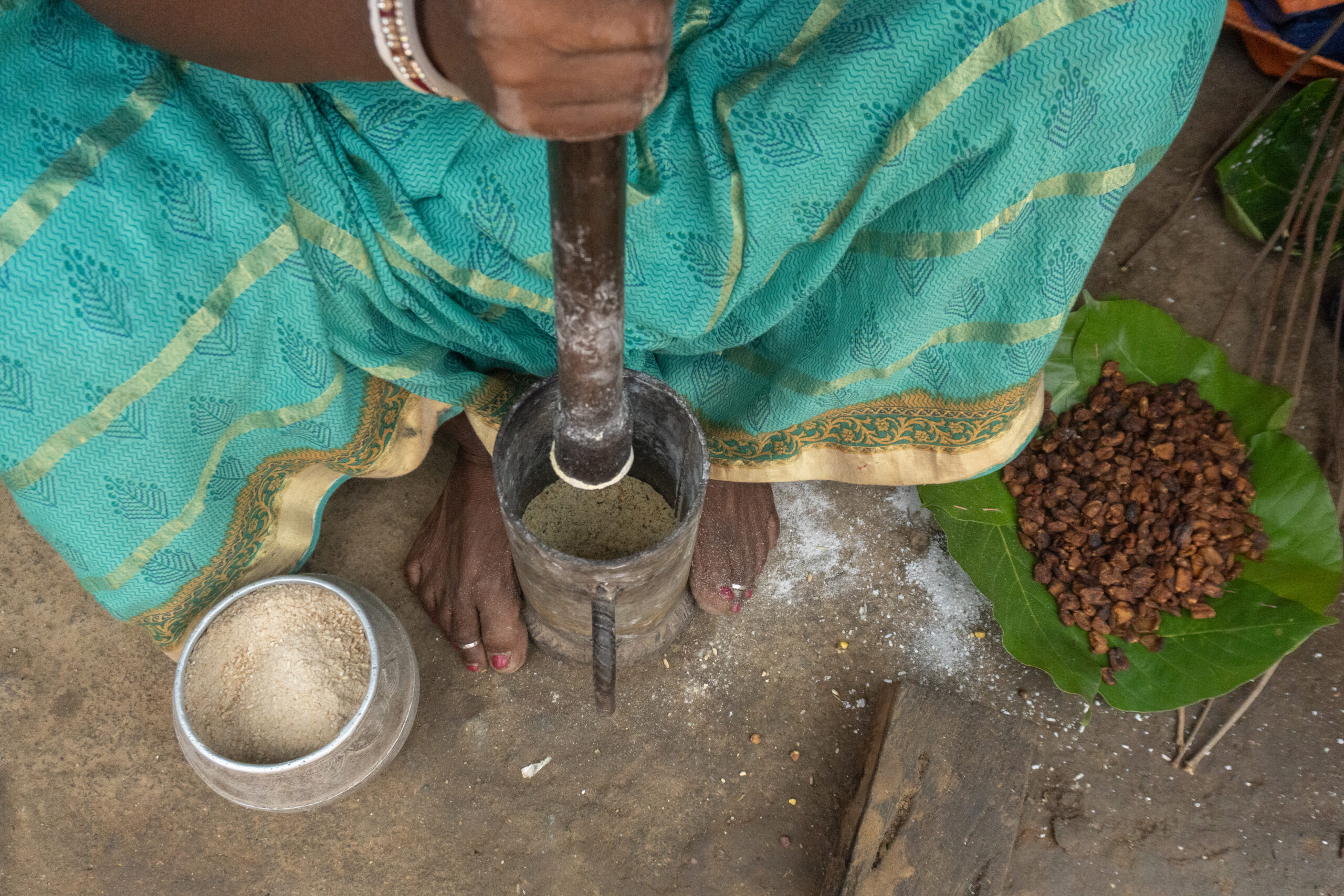
- Matkom Lathe – made using mahua, rice flour, roasted rice, roasted black chickpeas, sesame seeds, and flaxseeds. All these ingredients werepounded together with an iron mortar and pestle until they made a course mixture.
- Matkom Roti – which is made using wheat flour and mahua pissa (ground on a traditional grinding stone). The dough is prepared and then cooked like chapati.
- Matkom Tiki – which is made using dried mahua flowers, roasted black chickpeas, and roasted tamarind seeds. These ingredients are combined and boiled.
Arah / Saag / Greens
- Matha Arah Antidesmadiandrumaa wild green that grows in neighbouring forest areas and also in and around homestead plots. They cooked these greens without oil, using only boiling water and a pinch of salt for taste. Matha Arah is sour and makes an excellent accompaniment to dried fish, bhindi and Maar Bhaat (Rice gruel).
- People boiled wild taro leaves, Saru Arah (Colocasia esculenta), and cooked them with fresh tamarind.Saru Arah mixes well with other ingredients like Kudrum Saag, Bhindi, and Amra (a wild fruit).
- People used Kidu Arahare leaves from an uncultivated sweet potato variety to prepare two dishes. They cooked one dish with fresh tomato and another with Masur Daal.
- People find Singh Arah (Bauhinia purpurea) in the wild and grow it in homestead plots. They steamed the tender new leaves using only the water used for washing them. It also mixes well with other greens like Munga / Drumstick leaves and Lal Saag.
- People find Muich Ara (Polygonum plebeium), an uncultivated green, in habitation areas and the wild.. People harvest it from December to February and dry the leaves for year-round consumption. They cooked dried Muich Arah leaves with ripe tomato, tamarind, green chilies, and a little salt.
These foods come from multiple sources. Community members collect uncultivated foods and wild greens from nearby forests. They also grow food in kitchen gardens and harvest seasonal produce from planted trees. Accessibility determines the availability of these food sources. People easily gather some items near the village, while others require deep forest travel. Collecting such resources can take an entire day, as it involves long walking distances and careful gathering.
The event also highlighted a women’s group in the hamlet that runs a Mahua-based enterprise. The group procures and stores Mahua flowers and seeds from fellow villagers and sells them in the market and to local traders and these has been providing a valuable additional income for the women involved and promoting sustainable use of traditional resources.However, the women also shared concerns about the impact of climate change on their livelihoods. They noted that mahua production has decreased in recent years due to irregular rainfall and rising temperatures. Despite these challenges, the group continues to run their enterprise with determination.
Another important aspect highlighted during the event was the use of traditional cooking utensils. The women used traditional pots and cookware that few households use today. Today, many families use aluminium utensils due to their easy availability in the market. The practice of making traditional pots has declined, and only a few elders still use them. According to the participants, food cooked in traditional utensils, especially on a chulha (wood-fired stove), tastes much better and are healthier. Overall, the event served as an important platform for knowledge sharing, cultural preservation, and community learning. It emphasized the importance of documenting traditional food practices and passing them on to future generations. By valuing indigenous food systems, the community can strengthen its identity and promote sustainable living practices.