Vishnu N M, Biodiversity Conservation
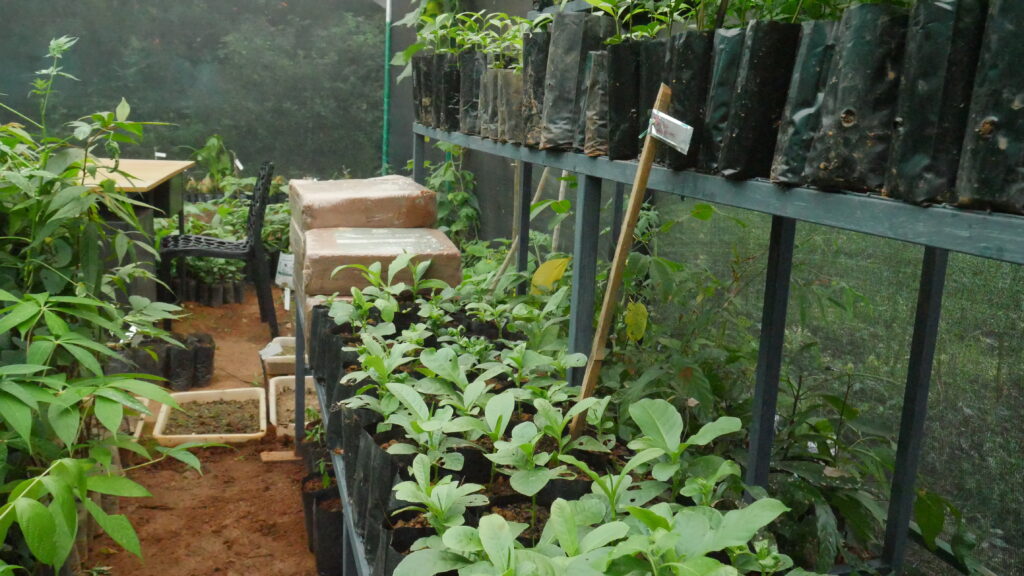
The nursery is the backbone of our restoration work in Wayanad. To restore the forest to its original state, we need native plants. Currently, the major challenge we face is the invasion of non-native species, mainly Senna spectabilis, followed by Lantana camara and Chromolaena odorata. To address this issue, we have initiated a process to manage these invasive species first.
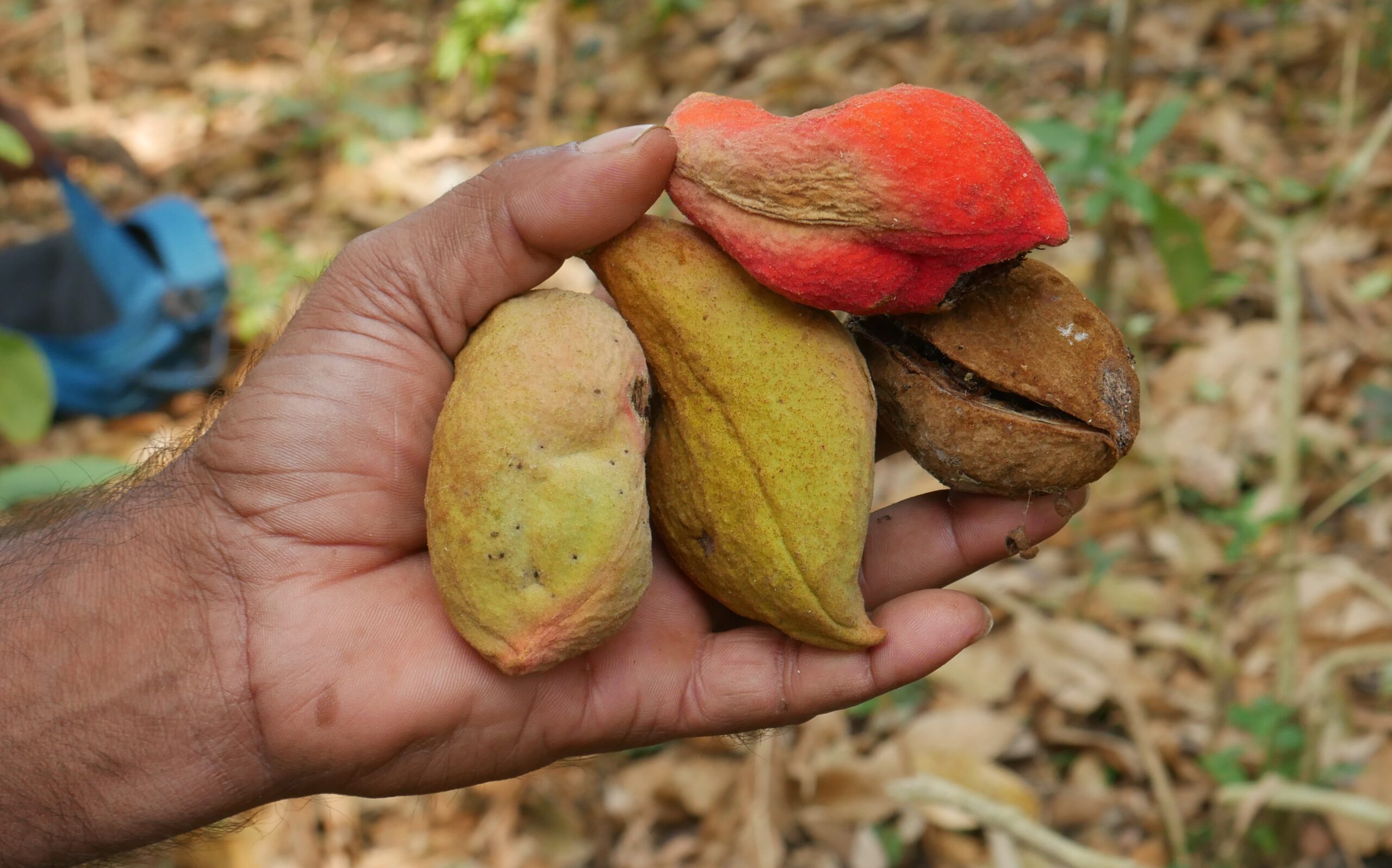
Once we have managed the invasives, we will fill the gaps in the forest based on our forest inventory and insights from village elders. This will help us determine which plants are needed and where they should be planted. Our field teams are also collecting seeds of the necessary plants from nearby areas, following our seed collection protocol. We will propagate these seeds in our nursery to support the restoration efforts.
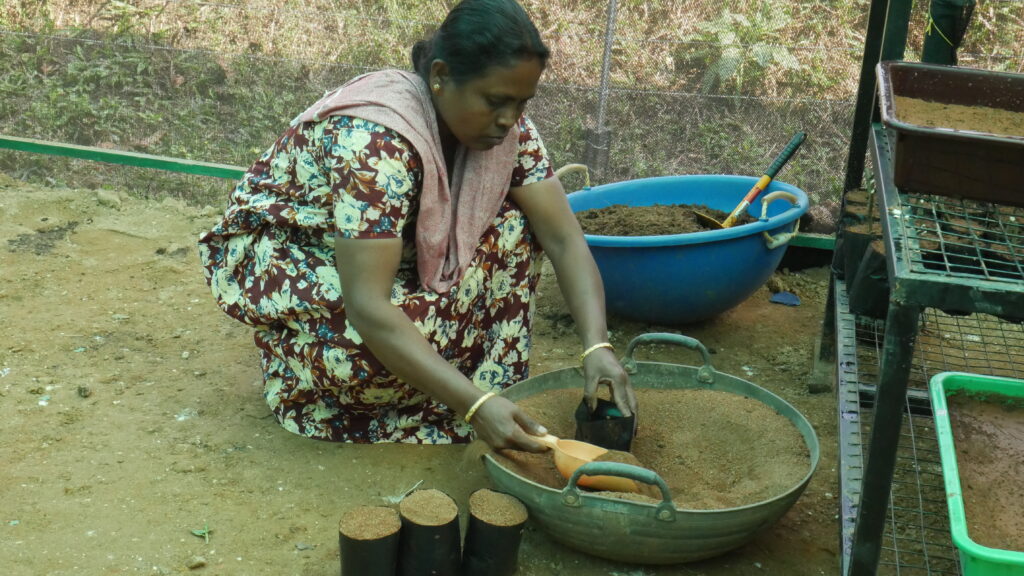
Photo credit : Vishnu N M
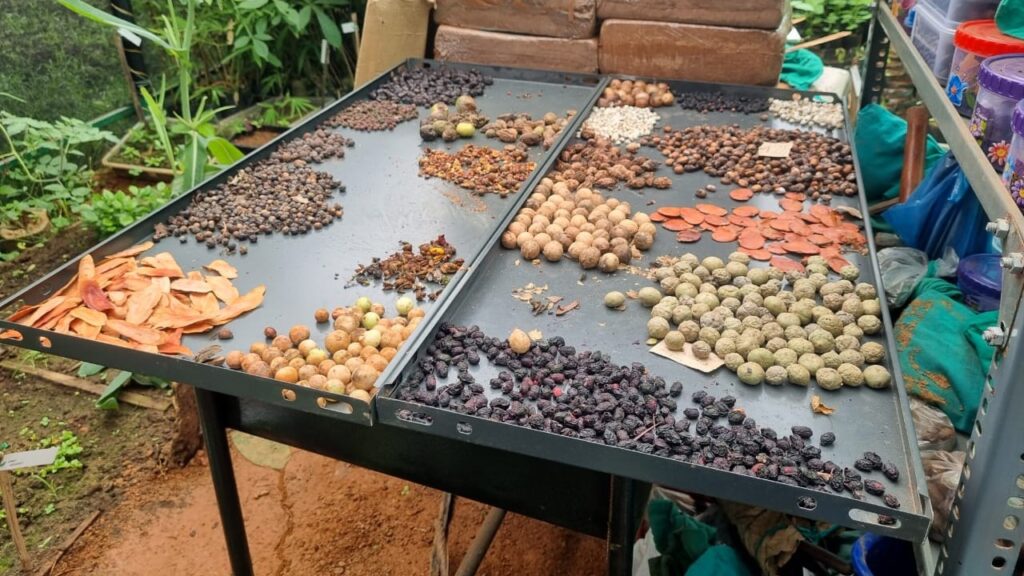
The nursery caretaker, Usha, and Renju, a Barefoot Ecologist, carefully treat each seed to ensure successful germination and growth. For instance, Cassia fistula, abundant in Wayanad’s moist and dry deciduous forests, produces many seeds every year naturally. However, only a small number of these seeds successfully germinate and develop into seedlings in the wild. Because Cassia fistula seeds have hard coats, growers soften them by soaking before sowing to improve germination. They either dip the seeds in hot water for one hour or soak them in water longer. Different plant species require different seed treatments to break dormancy and achieve successful germination under nursery conditions. In contrast, growers can directly sow Pongamia pinnata, Macaranga peltata, and Mallotus nudiflorus seeds without treatment. These species germinate well in mother beds and do not require any special pre-sowing treatment methods.
The nursery serves as a vibrant laboratory for plant enthusiasts and restoration ecologists dedicated to rejuvenating our natural world. Nurturing seeds and plants is a vital and inspiring endeavor.
After keeping the seedlings in a controlled environment, they are getting a little older.The nursery team will move the saplings outside to help them adapt to outdoor conditions.
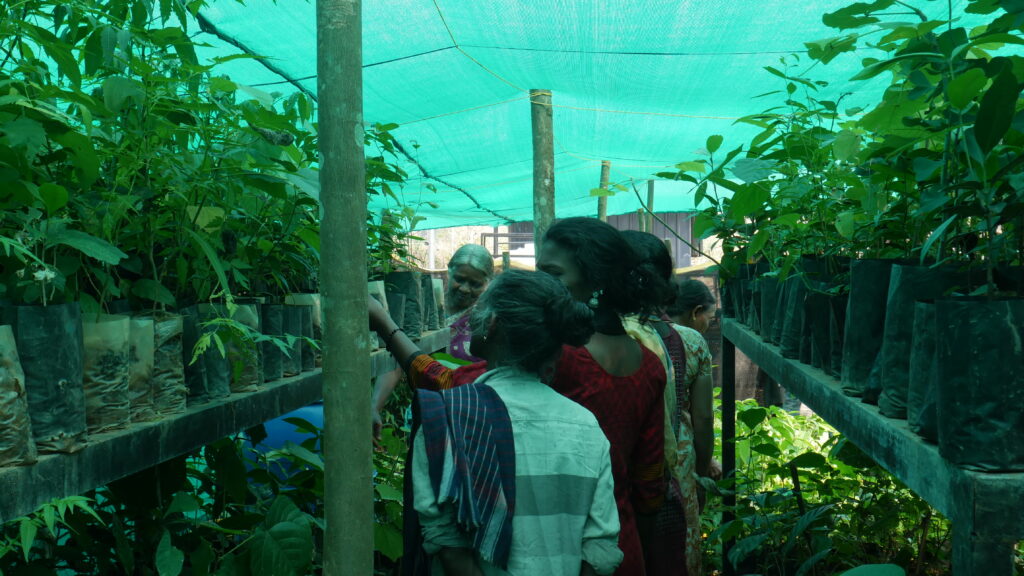
Photo credit : Vishnu N M
Watering is also important for raising saplings; the right amount of water is necessary for the growth of the plants. Some species, like Syzygium caryophyllatum, Hydnocarpus pentandra, Vateria indica, etc., require more water, while others, such as Catunaregam spinosa, Dalbergia latifolia, Erythrina variegata, etc., need less water.
In our Begur nursery, more than 7000 saplings under 115 species, including RET species, are available in our nursery. Some of this will be planted in the restoration site this planting season.