Rohan Mukerjee, Biodiversity conservation
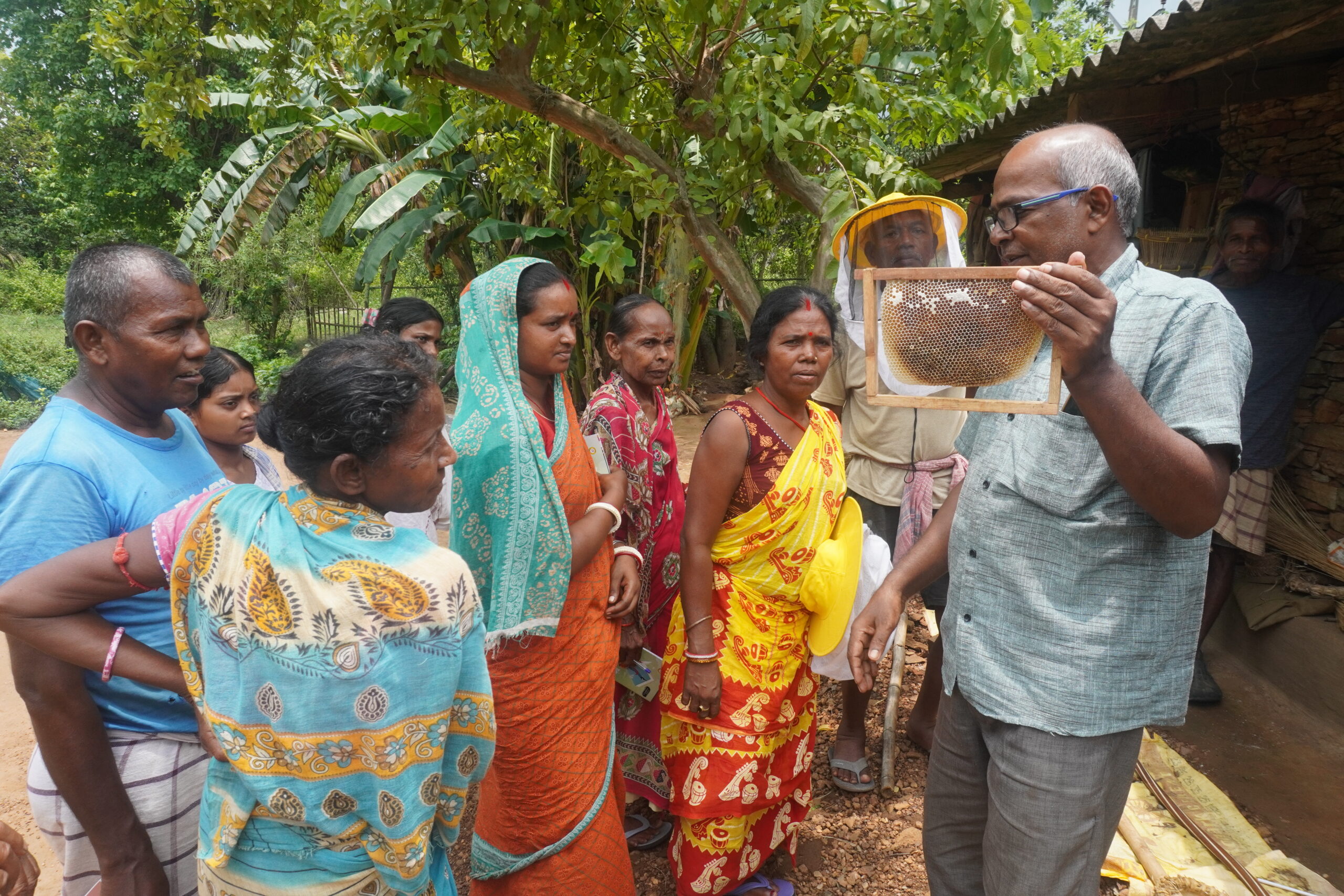
On the 2nd of July 2026, two hands-on beekeeping training programs were conducted in the villages of Patkita and Gohla in Musabani Block, East Singhbhum District, Jharkhand. Through the Eastern India project, two villagers in Patkita and Gohla villages received two bee boxes each. Manoj Das, who has been supporting the establishment of the beekeeping initiative in Jharkhand, had supplied the bee boxes along with Apis Cerana colonies.
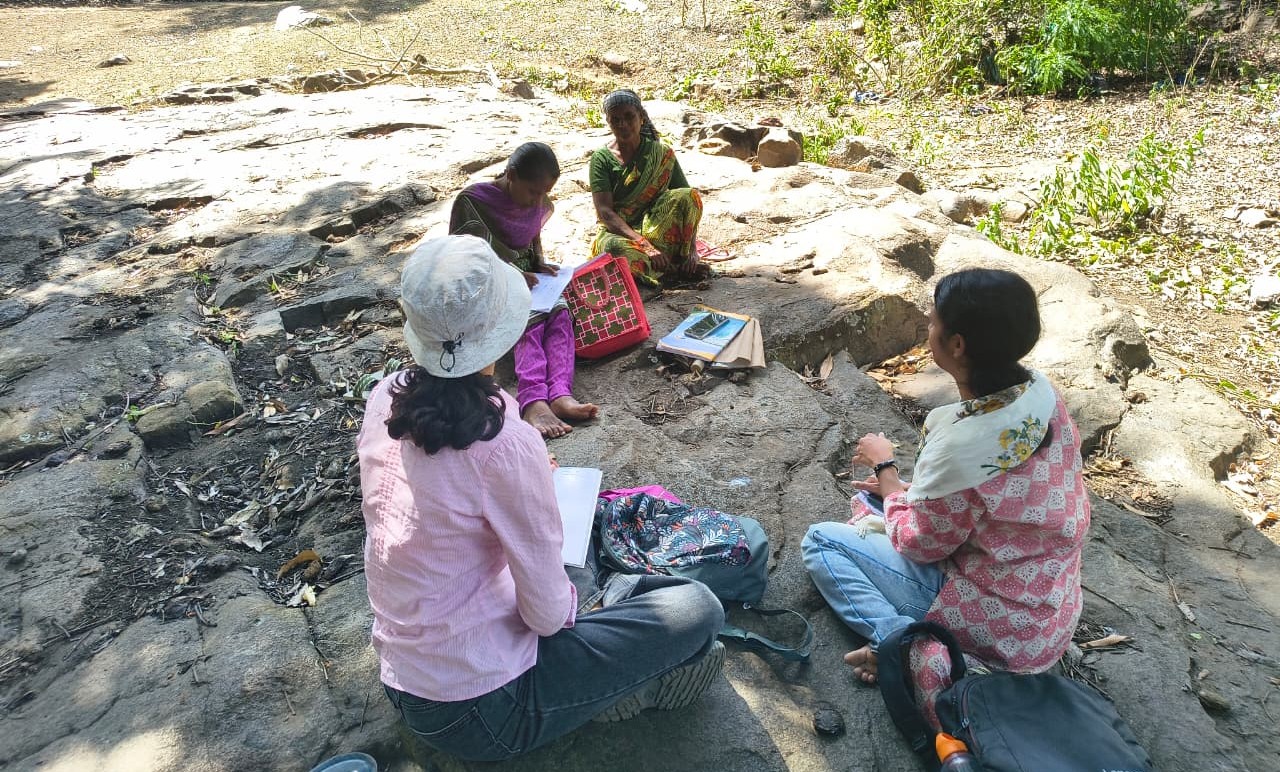
On 2nd July 2026, Manoj Das accompanied me to Musabani to carry out hands-on beekeeping training with the new beekeepers and interested villagers. We first visited Patkita village accompanied by CRP Baby Patar, where the training program was conducted in the homestead of beekeeper Shivnath Hembram. The program involved 13 participants, including members of Sarjom Aajivika Sakhi Mandal, a women’s group from Patkita. Manoj commenced the meeting with a discussion on the major bees found in the area.
Villagers pointed out that they have 4 major kinds of honey producing bees, namely – Dumur (Apis Florea), Lele (Apis Dorsata), Saat Chapia (Apis Cerana Indica) and Lutti (Stingless bees). The participants then discussed flowering plants that bees visit in different seasons, as well as those they largely avoid. Manoj explained that while other insects do not store nectar, bees collect and store it as honey for future use, which humans also benefit from.
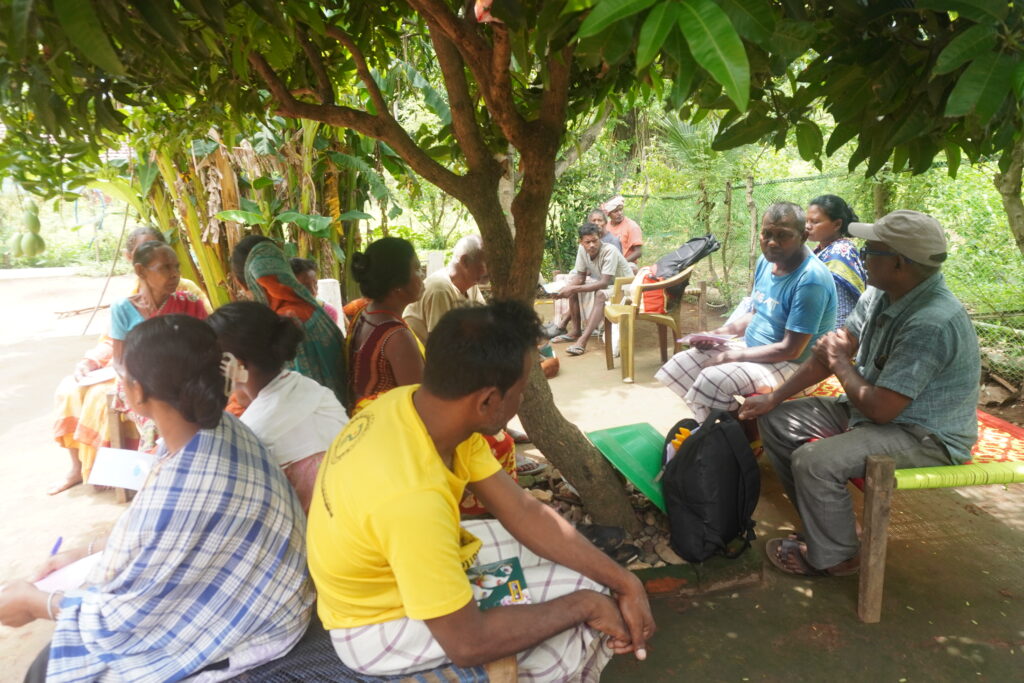
photo credit: Rohan Mukerjee,
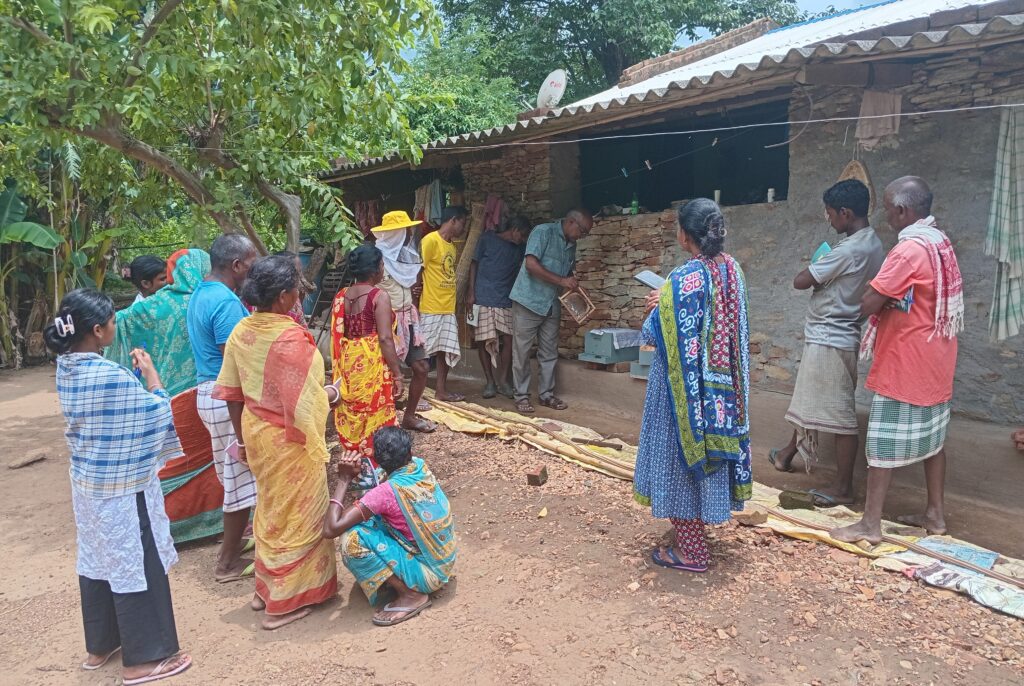
photo credit: Rohan Mukerjee,
Manoj also listed some prominent flowers that are sources of nectar and pollen for bees, like Mustard flowers, which are a source of both nectar and pollen; Sesame, which is a source of nectar but not pollen; Palm, which is a major source of pollen; and Eucalyptus, which is a substantial source of nectar.
Manoj then provided an overview of a bee colony, describing the different types of bees in a colony – Queen, workers and drones, and the roles each of them plays. He explained that, unlike dogs, bees cannot identify their owners. However, understanding their behavior, needs, preferences, and disturbances can help reduce conflicts and the risk of bee stings. Manoj then inspected Shivnath’s bee boxes and demonstrated how to handle bees and clean and maintain the boxes.
He pointed out that combs from two frames had joined together, probably due to issues while moving the boxes. The frames may not have had enough space between them during the movement. He demonstrated how to solve the problem by separating the hive from the frames. He joined the additional comb to a separate frame using banana leaf fiber for the larger section. For the smaller section, he used a flame to melt and join the comb.
Emphasized the need for working slowly and avoiding sudden movements when dealing with bees. He advised us to remain calm if a bee stings us and carefully remove the sting with a knife, allowing the bee to survive. After removing the sting, we should mask its smell with natural products like mud or fruit peel. Otherwise, other bees may detect the smell and become agitated, increasing the risk of further stings and making it difficult to continue working on the bee box. He also discussed major threats to bees, which included lizards, hornets, ants, and beetles.
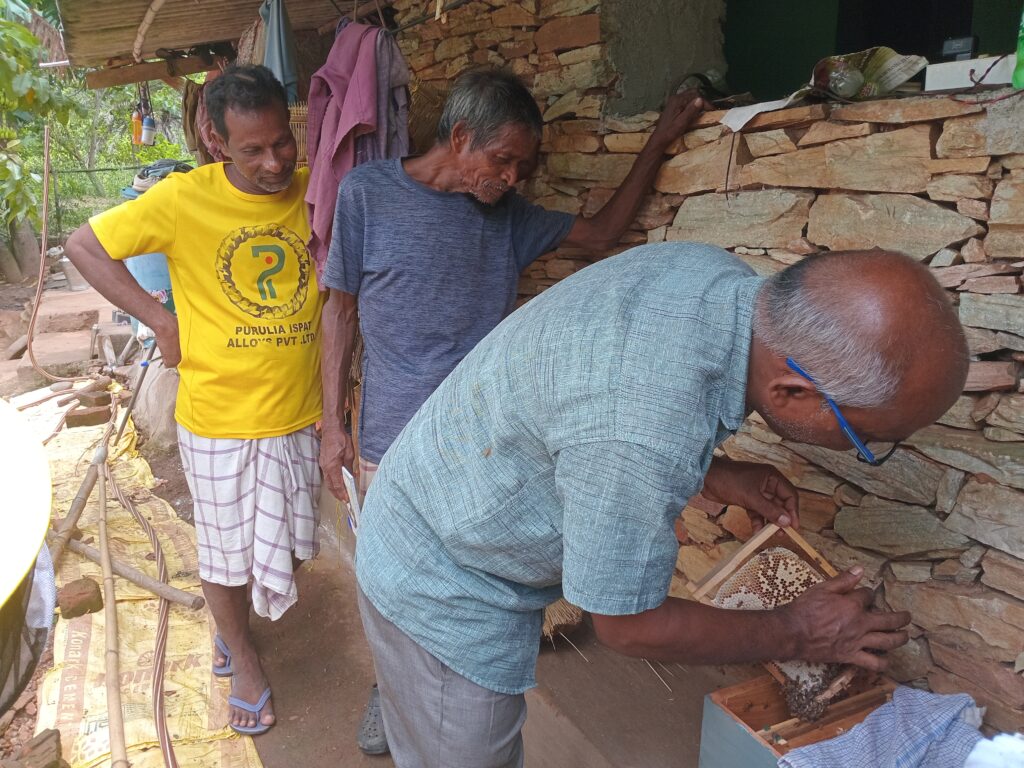
photo credit: Rohan Mukerjee,
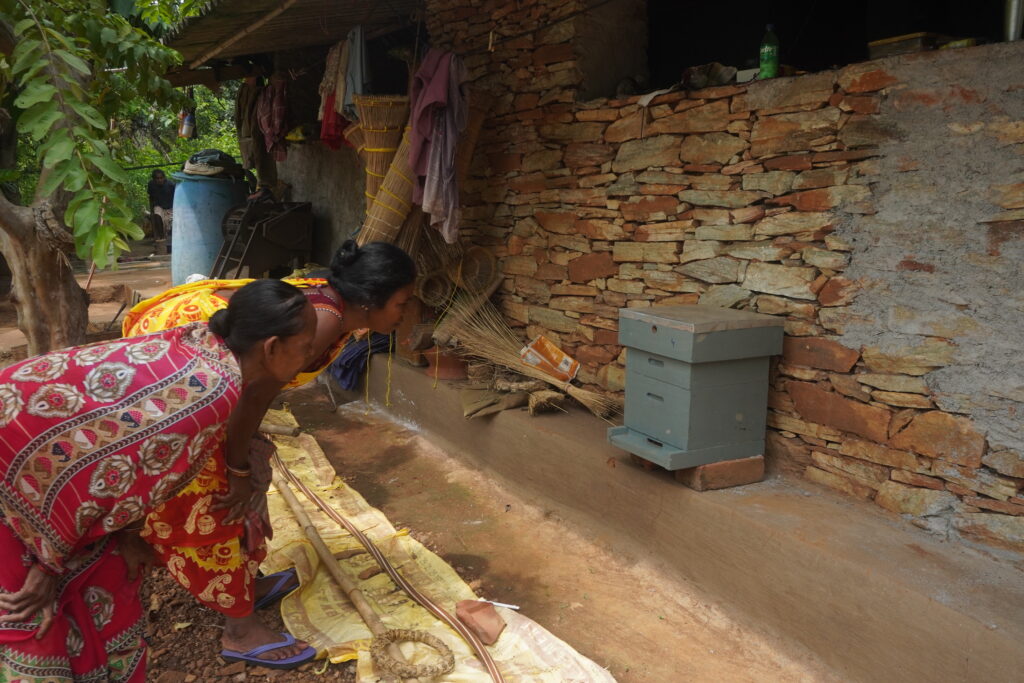
photo credit: Rohan Mukerjee,
Strengthening Beekeeping through Practical Knowledge:
He pointed out a variety of beetle that had infested the bee boxes, though only in small numbers. He said that if these beetles spread unchecked, their larvae will eventually take over the box. This will force the bees to abandon it. The only way to address this is to find and kill the beetles. He also provides an overview of harvesting honey and the peak months for this.
Members of the women’s group appreciated the training and expressed interest in starting beekeeping themselves. They also inquired about the possibility of receiving bee boxes. Manoj concluded that understanding bees’ life cycle, behavior, foraging habits, and threats can improve beekeeping practices. He added that better understanding can help improve bee rearing and positively impact the initiative’s productivity.
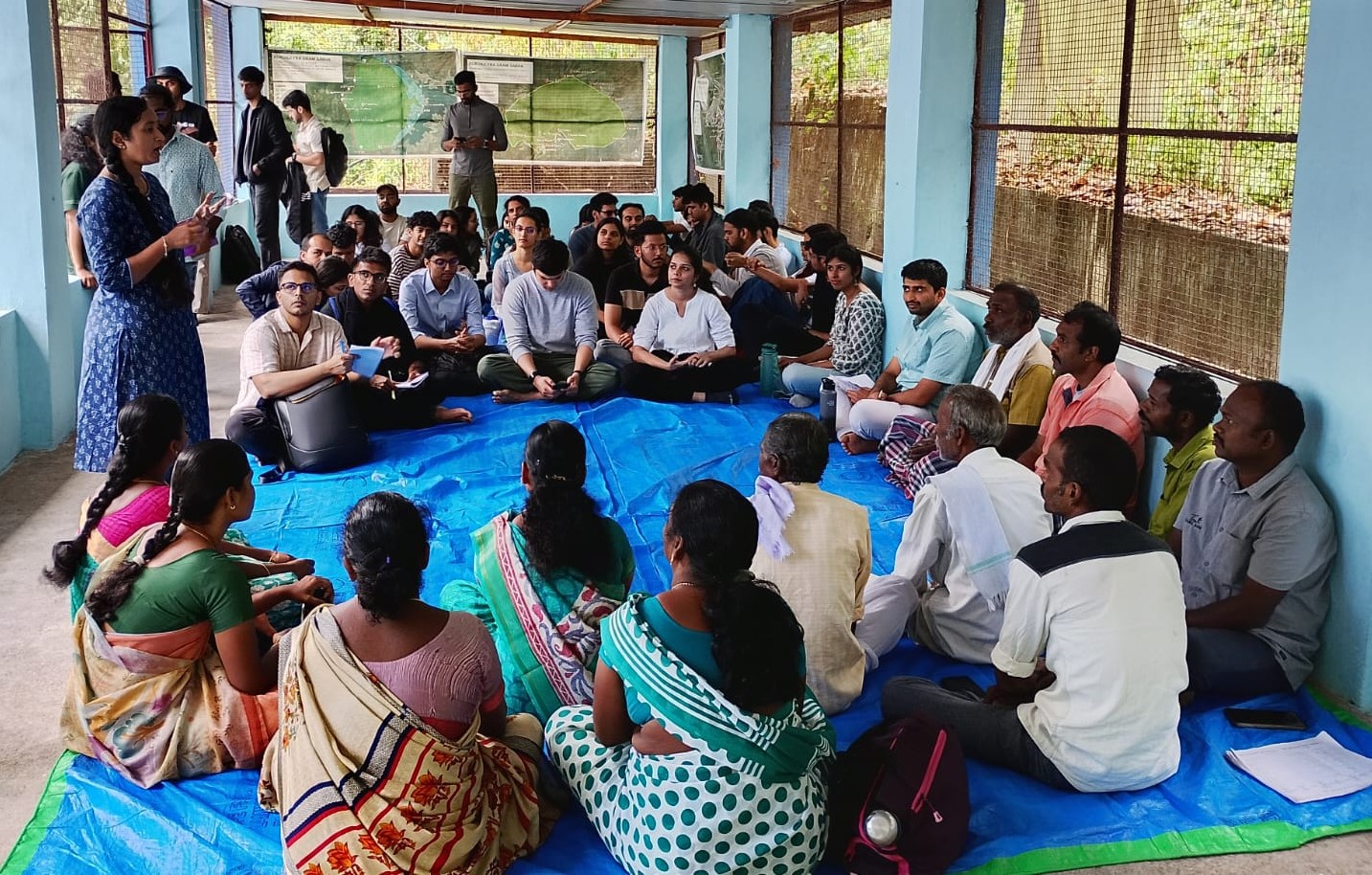
After concluding the program in Patkita, we travelled to Gohla village where CRP Kapra Mahali was awaiting us. The second programme took place at Badal Mardi’s homestead, where he keeps two bee boxes. Ten participants joined the programme. Since Gohla had a community programme scheduled, the beekeeping training had to be brief. However, Manoj used the available time to inspect the bee boxes with Badal and a few other villagers.
These boxes also had a few beetles, which the team removed. One of the combs also needed separating and reattaching to separate frames. Manoj provided a brief overview of the lifecycle and behavior of bees and key issues to bear in mind when rearing bees and carrying out regular monitoring and maintenance of bee boxes.
Despite beekeeping being new to the area, both beekeepers and villagers were enthusiastic about the initiative and keen to learn more about the bees they were hosting and how to successfully carry out beekeeping themselves.