
Workshop on Ethical Wildlife Photography for Light & Life Academy
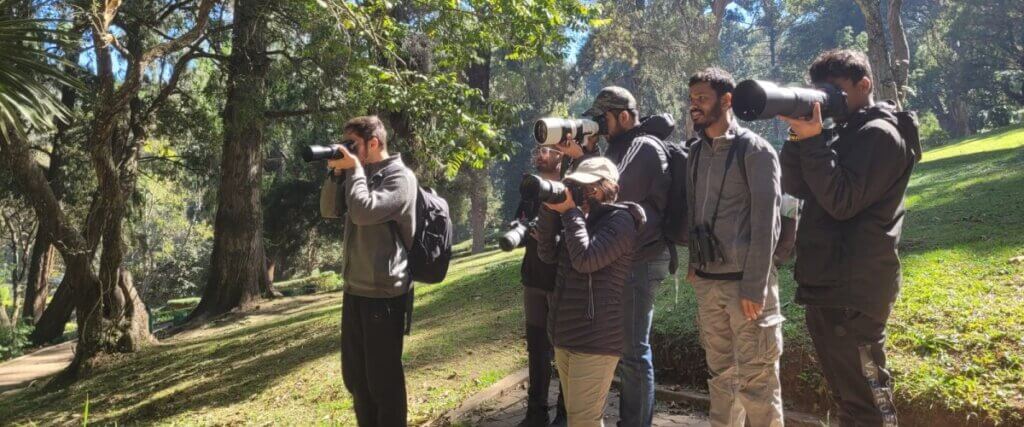
February 14, 2023 By Habeeba Fathima and Chandrasekar DasBiodiversity Conservation programme On February 13 and 14, we conducted a two-day workshop for the students of Light and Life Academy, Coonoor. The first day engaged the students in a theory session on an overview of the behaviour of birds and how to understand birds in order […]
Wildlife Crew Goes on an Educational Field Trip
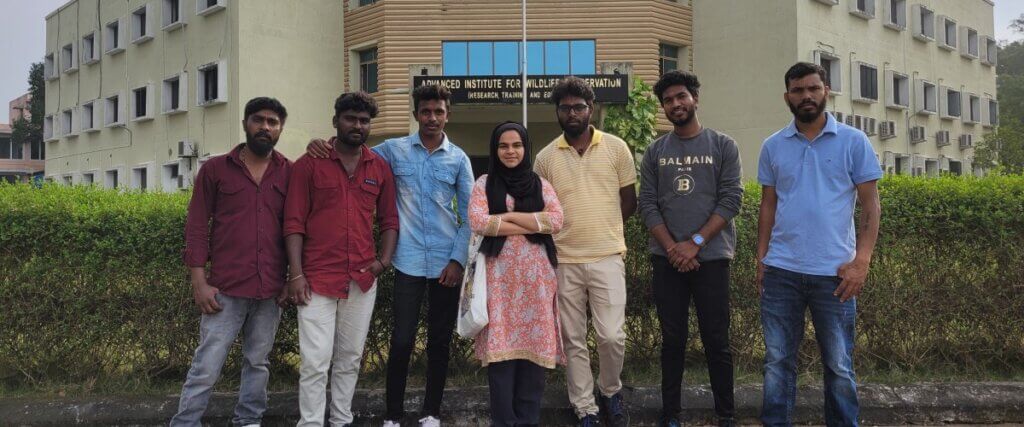
January 2, 2023 By Biodiversity Conservation team Towards the end of December 2022, four team members comprising our wildlife crew along with three volunteers went on a two-day field trip to visit three institutions in Chennai that are leading efforts in wildlife conservation through education, scientific research and advocacy. At Madras Crocodile Bank, we visited […]
Training the Trainers: Promoting Traditional Beekeeping in the Nilgiris
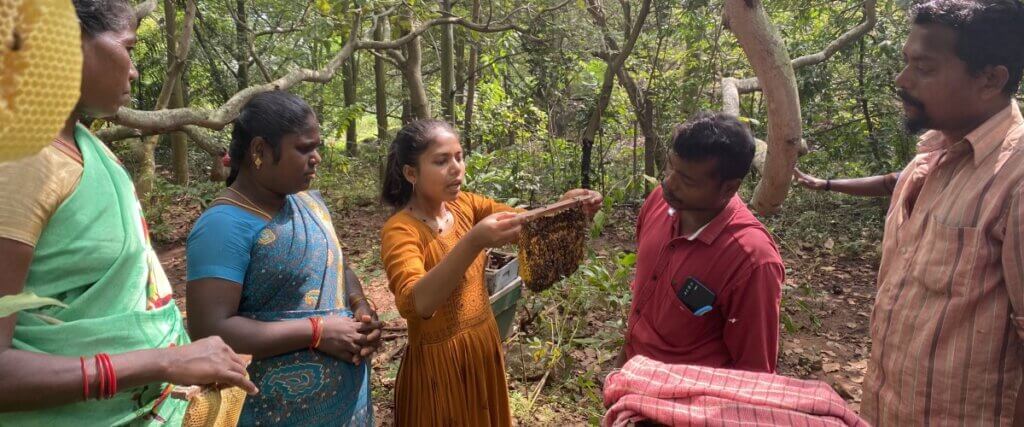
December 19, 2022 By Justin Raj & Nitya M (Biodiversity Conservation team) In June 2022, Keystone’s Biodiversity team organized a five-day beginner’s training programme for 35 people on traditional beekeeping methods in several of our working areas: Sigur, Aracode, Pillur, Arepalayam, Kotagiri and Wayanad. From the first four areas, participants were Irula and Soliga tribal […]
Tribal-Led Campaign for Traditional Foods in Central & Eastern India
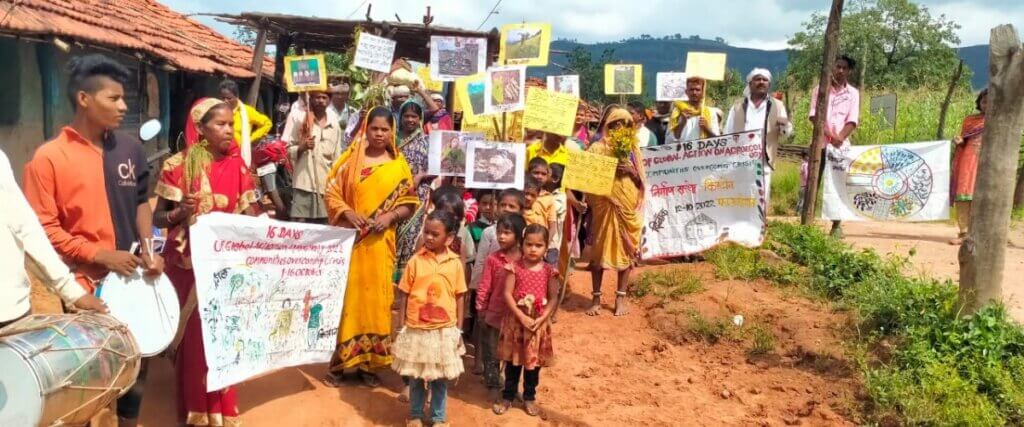
October 17, 2022 By Rohan MukerjeeProgramme Coordinator – Networks & Alliances The global food crisis is intrinsically tied to the climate crisis. Chemical-based agricultural methods that overpower gentler, smaller-scale methods of growing food that have persisted for centuries have warped our food systems, with the fatalities being nutrition, diversity and precious, healthy soil. And when […]
Wildlife Ecology 101: Deepening Community Knowledge in Sathyamangalam
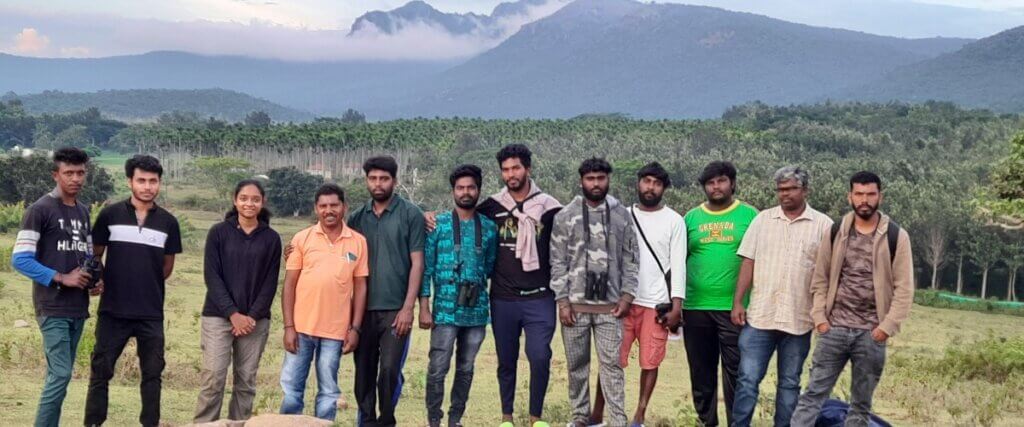
October 13, 2022 By Vandana KannanTechnical Coordinator – Wildlife Biology (Sathyamangalam) Conservation education in rural communities is no streamlined task – there is no ‘best’ way to raise awareness among the public. Keystone’s Biodiversity Conservation teams at our field centres across the Nilgiris are constantly looking for new ways to engage with the people, with […]
Foundation Segré and Keystone: A Partnership for the Nilgiris
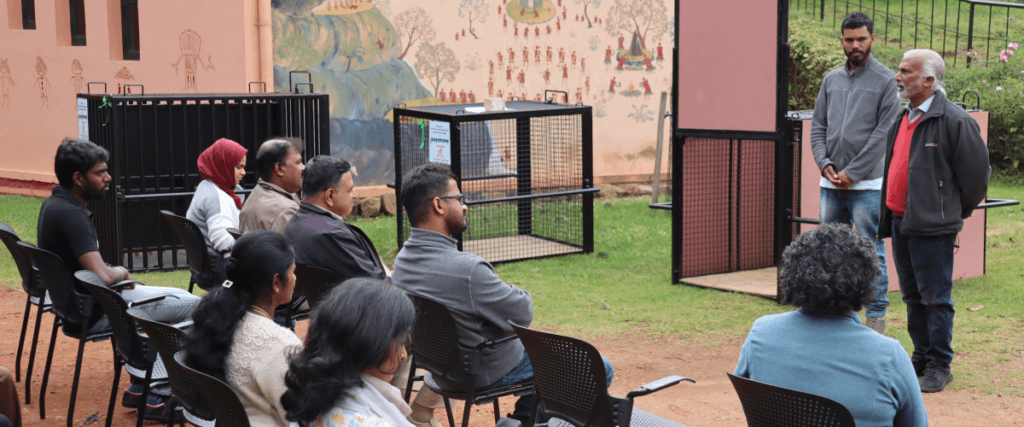
October 10, 2022 By Habeeba Fatima and Chandrasekar DasTechnical Coordinator & Additional Programme Coordinator – Biodiversity One of our committed donors, Foundation Segré has been supporting our Biodiversity Conservation team in several of its project activities. Segré is based in France and driven by the mission to build partnerships across the world for the protection […]
Steering the Shift to Organic Methods in Tea Farming Across the Nilgiris
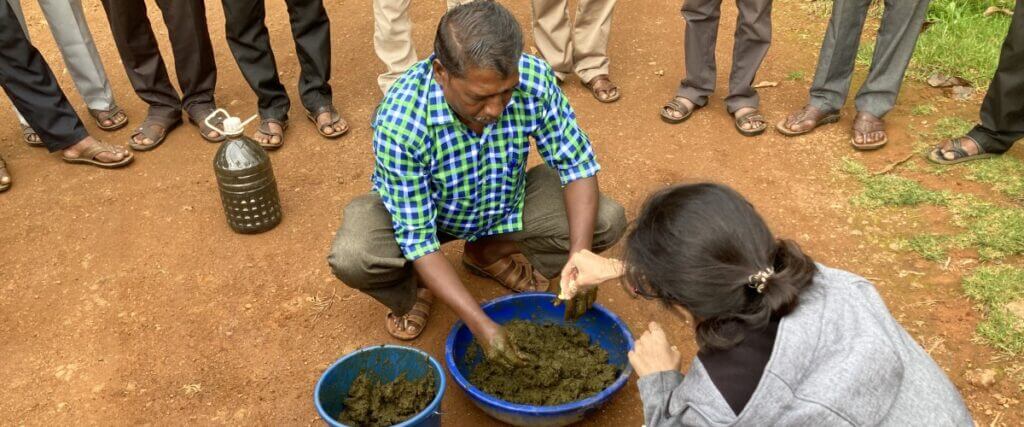
September 19, 2022 By Harshavardhini AngappanTechnical Coordinator – Ecological Restoration In May 2022, our Biodiversity Conservation team began a three-month training programme on traditional and organic farming methods for tea growers in the Nilgiris from INCDOSERVE. Also called Industrial Corporative Tea Factory, INDCOSERVE members constitute around 30,000 small tea farmers in the Nilgiris and is […]
Learning about Gardening an Ecosystem at Gurukula Botanical Sanctuary, Wayanad
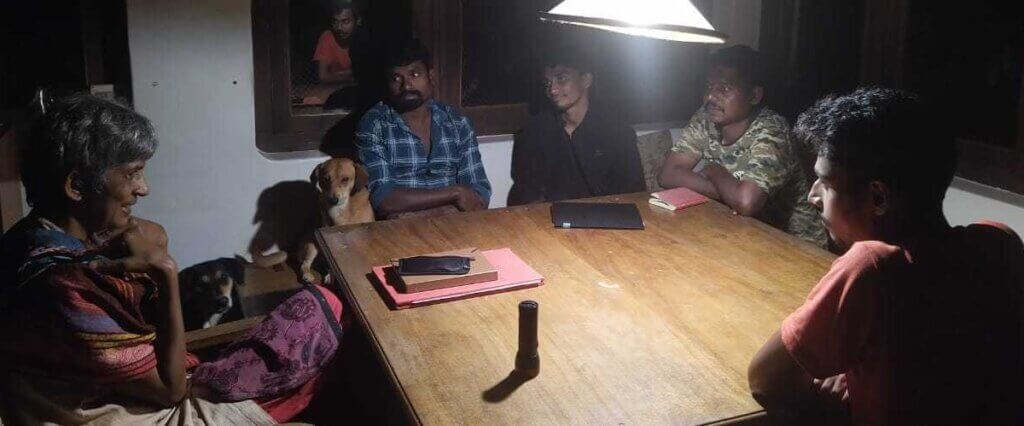
Asish M An ‘ecosystem gardening’ training we received during the monsoon from June 27th to 30th at Gurukula Botanical Sanctuary was inspiring. We learned some new gardening techniques and got new perspectives on gardening and restoration. Suppi chechi is a great teacher; often, our philosophical discussions lasted till late at night. For all of us, one […]
Sharing experiences and learnings nationally and internationally
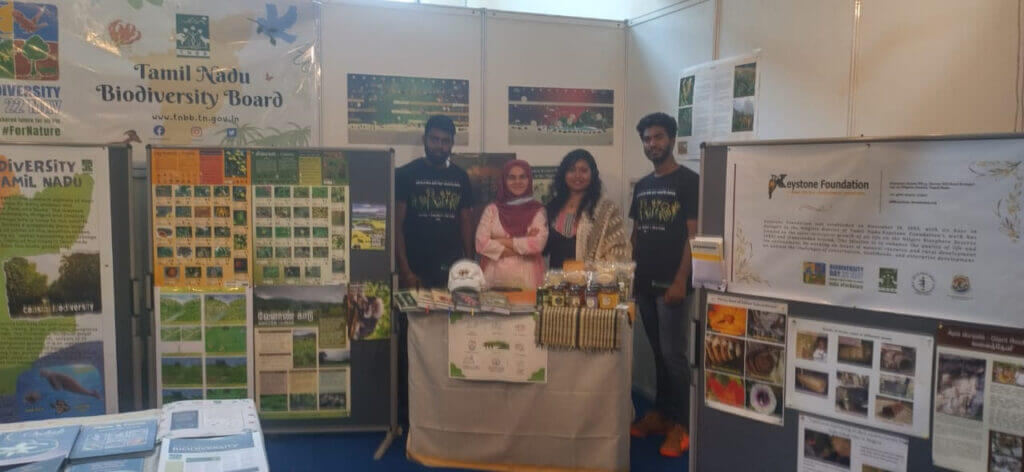
Keystone Foundation and Aadhimalai were invited by the Tamil Nadu State Biodiversity Board to represent the state at the celebration of International Biodiversity Day at Chennai organised by the National Biodiversity Board. Bhavya George, Habeeba Fatima, Ramajeyam and Silambarasan from Keystone set up the exhibition space and interacted with the visitors. Bhavya George and Habeeba […]
Keep Plastic Waste Away From Wildlife
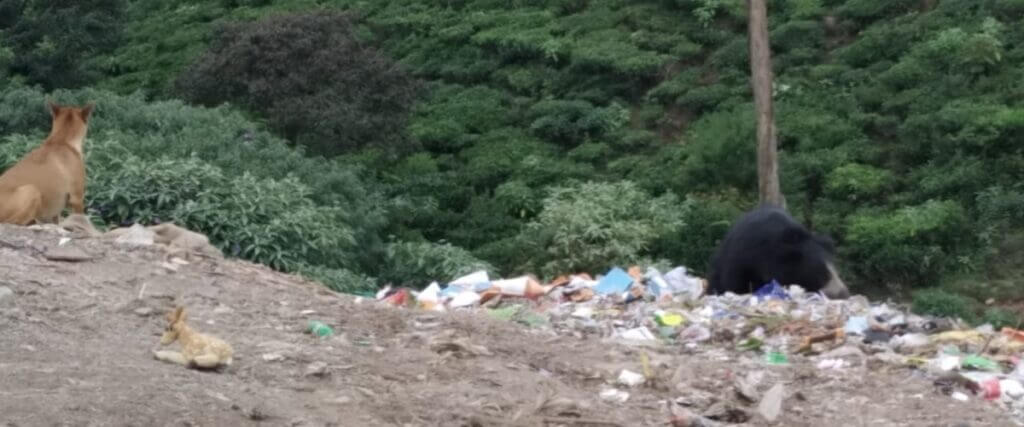
Recently, social media went abuzz when the dung of a wild elephant at Maruthamalai foothills near Coimbatore was found to carry plastic waste in it including plastic covers, milk packets, masks and sanitary napkins. Shrinking forest cover and easy availability of food in human habitations are some of the reasons why wildlife is moving away […]