Monisha Ravi, Community Wellbeing
A two-day (22-23 January) participatory workshop took place at Keystone’s Kotagiri campus, titled Our Bodies, Our Health, Our Land: Health Is in Our Hands brought together Community Health Workers (CHWs) and Climate Educators from Aracode, Konnavakkarai, Sigur, Coonoor, Pillur, urban Kotagiri, and Nilambur. Through the workshop, climate educators and CHWs were encouraged to collectively explore the deep connections between health, climate change, and gender. Conducted with the Community Well-being and Climate Change team, and facilitated by Ms. Anurima Kumar, the workshop created a space where frontline workers could reflect on their lived realities and recognize the often-invisible care work that sustains community health in the face of a changing climate.
Centering Women’s Lived Experiences and Invisible Labour:
Women and community-based workers are frequently the first to experience the impacts of climate change through food insecurity, water scarcity, increased disease burden, and intensified caregiving responsibilities. Despite this, their labour, knowledge, and everyday experiences are rarely acknowledged in formal health and climate responses. This workshop was designed to centre these lived experiences, validate traditional and community-based knowledge systems, and emphasise their critical role in building resilience and well-being.
About the Facilitator:
The workshop was facilitated by Ms. Anurima Kumar, an interdisciplinary artist and public health practitioner with a Master of Public Health from Columbia University and a Bachelor of Arts from the University of Michigan. Drawing from her background in community and global public health, art and design, and participatory research, she used creative and reflective methods to support dialogue, storytelling, and collective learning.
Building a Reflective and Inclusive Space:
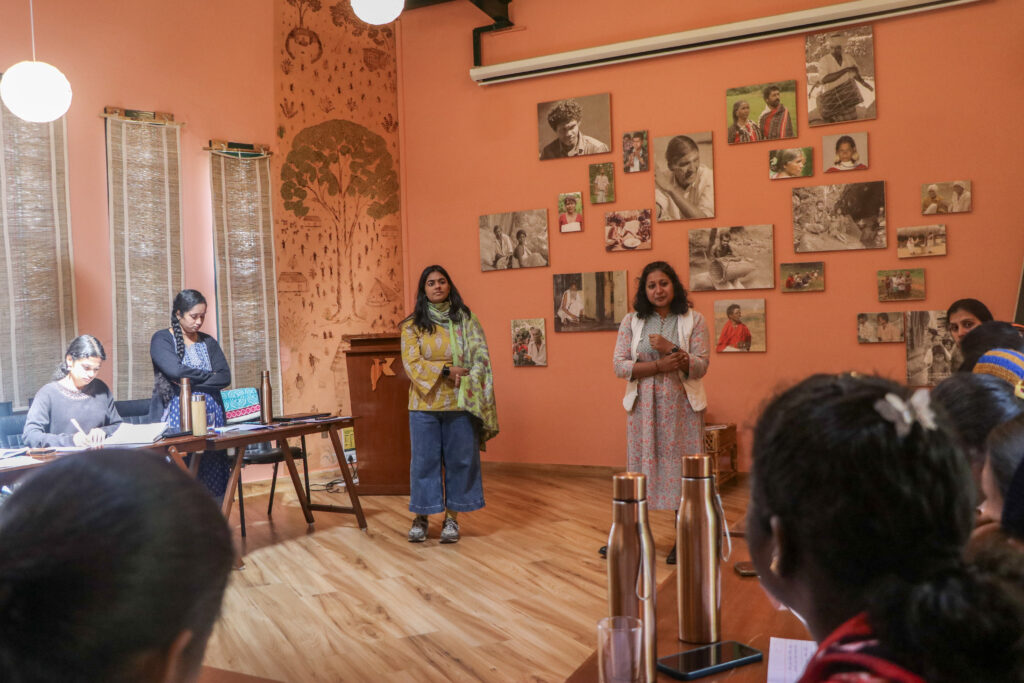
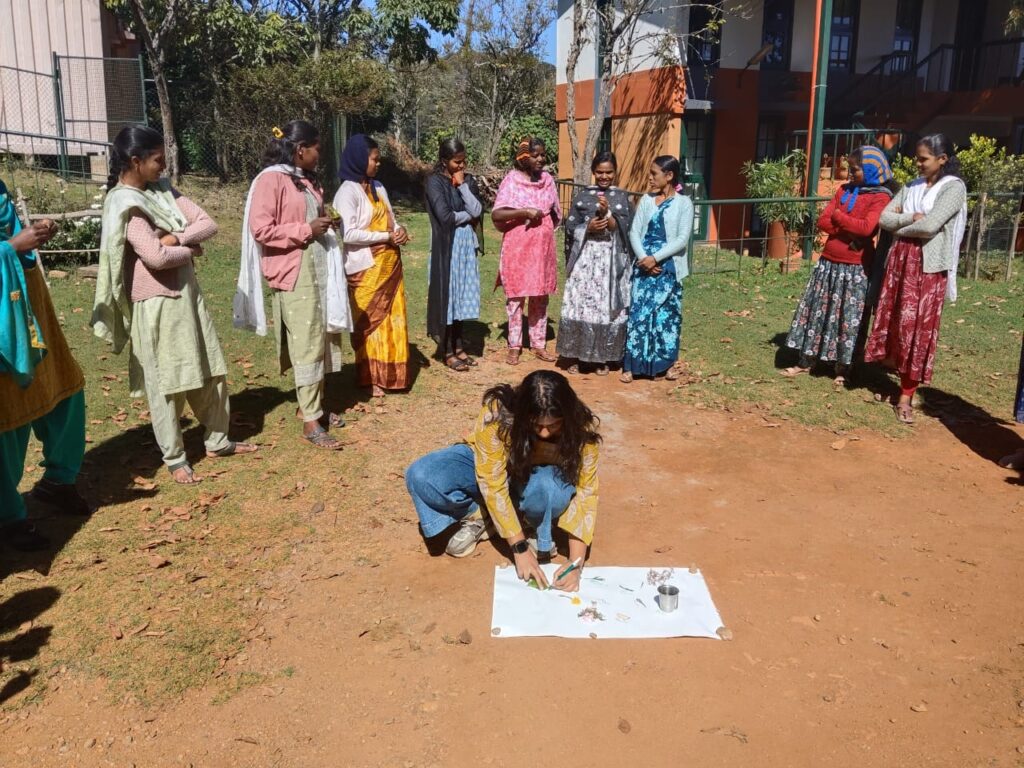
The workshop opened with an icebreaker activity that invited participants to express how they felt by choosing an object that symbolized their mood, helping set a reflective and inclusive tone for the workshop.
Understanding Health and Climate Through Everyday Realities:
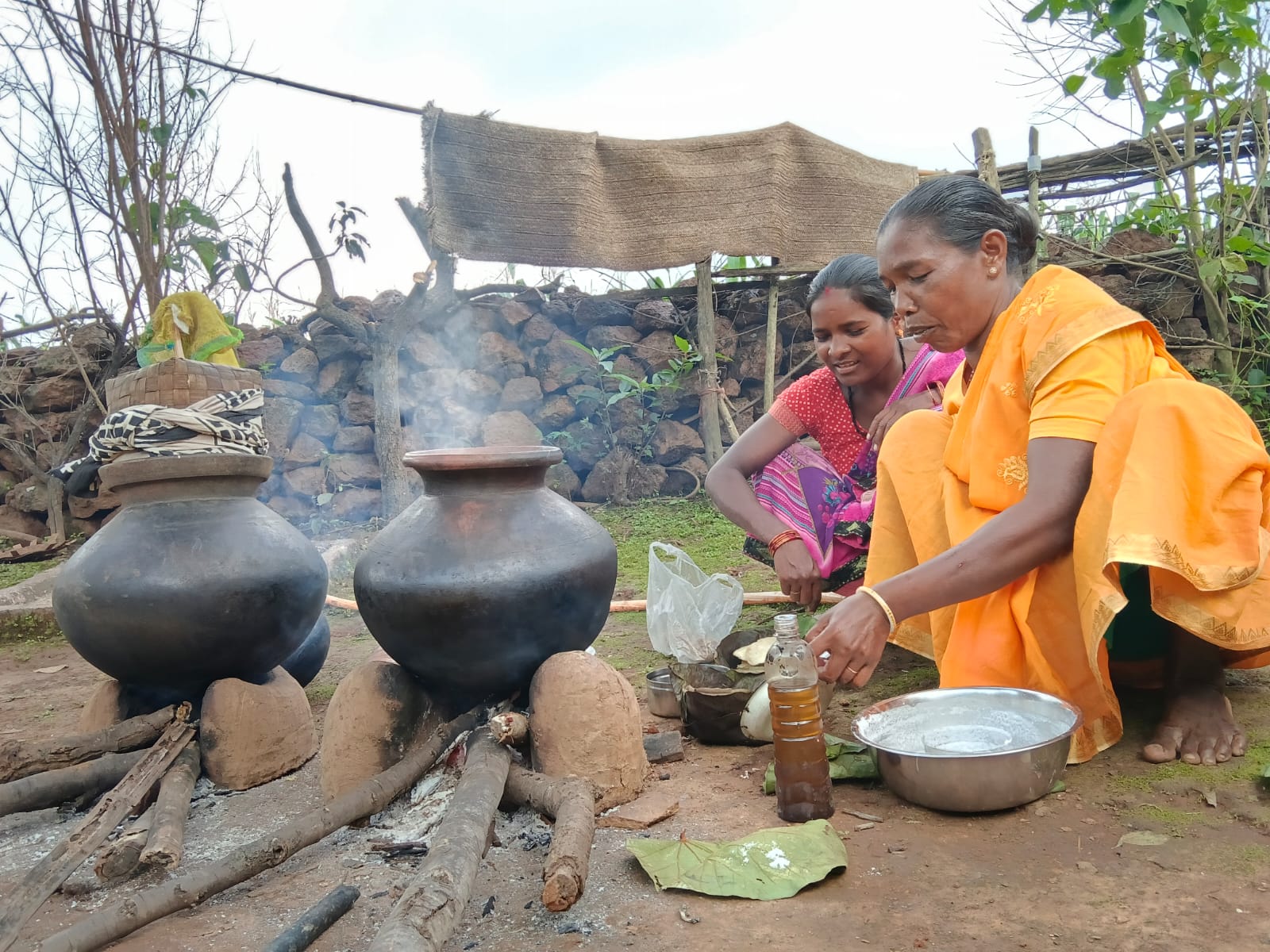
The grounding activity encouraged participants to reflect on what health and climate mean in their daily lives. Rather than biomedical or scientific definitions alone, health emerged as the ability to care for family members, access food and water, manage illness, and live with dignity. Climate was described not as an abstract phenomenon, but as a lived reality felt through irregular rainfall, rising temperatures, changing forests, and growing uncertainty around livelihoods and food systems. Discussions around care work revealed how responsibilities such as childbirth support, elder care, cooking, water collection, and emotional labour are deeply gendered and closely tied to land, seasons, and social expectations placed on women.
Traditional Knowledge, Food Systems, and Gendered Care:
Participants reflected on the role of traditional knowledge and intergenerational learning in shaping everyday health practices. Many shared a strong reliance on home remedies, family knowledge, and community-based care, particularly in contexts where formal healthcare services are difficult to access or delayed. Women also highlighted their central role in food-related decision-making—what food is grown, purchased, cooked, and shared within households—and how climate-related changes have increased both physical and emotional labour.
Visualizing Visible and Invisible Work Through Art:
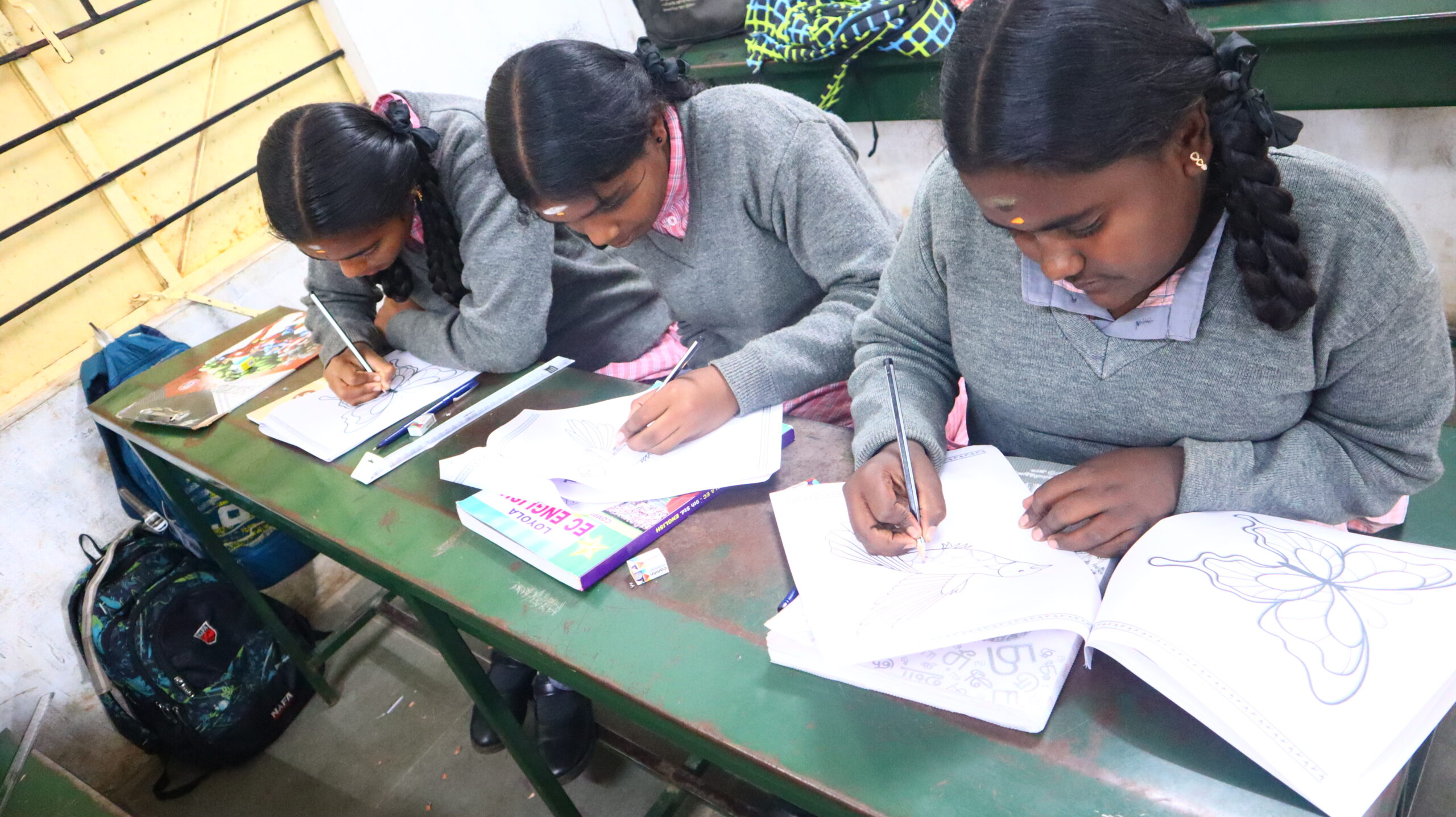
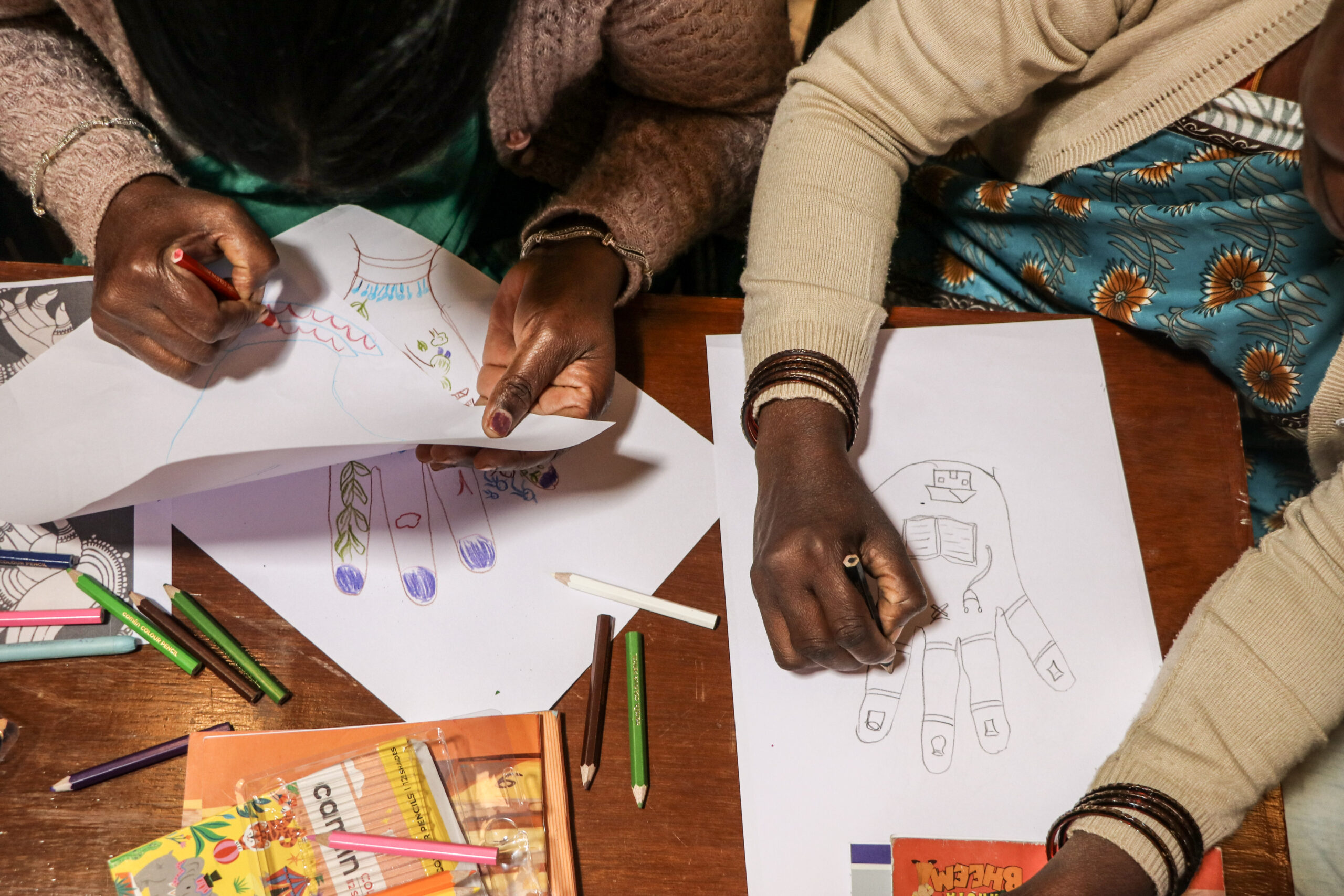
A key feature of the workshop was a hands-based participatory art activity, where participants drew pairs of hands to represent the visible and invisible labour that sustains their households and communities. Through colors, symbols, and words, the drawings depicted care practices related to food, water, healing, and emotional support, alongside challenges such as climate stress, rigid gender roles, and lack of infrastructure. Participants also illustrated hopeful visions of shared domestic responsibilities, improved access to clean water, safer transport, financial independence, and stronger decision-making power. These visual narratives provided a powerful medium to express complex experiences that are often difficult to capture through conventional discussions or data.
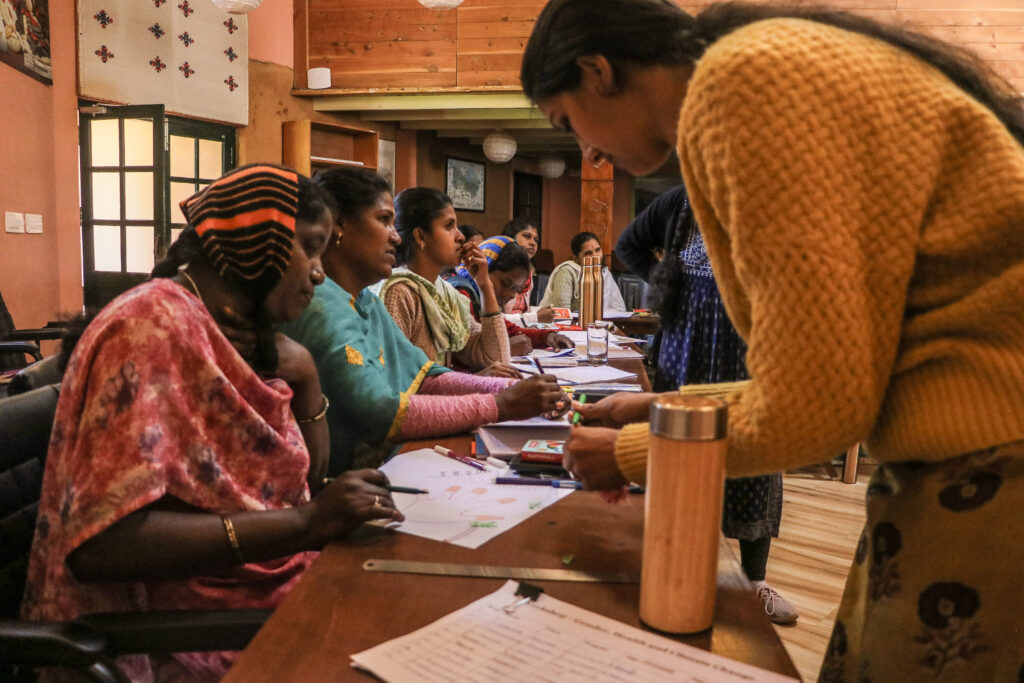
Photo credit: Anokha Venugopal
Mapping the Intersections of Health, Climate, and Gender:
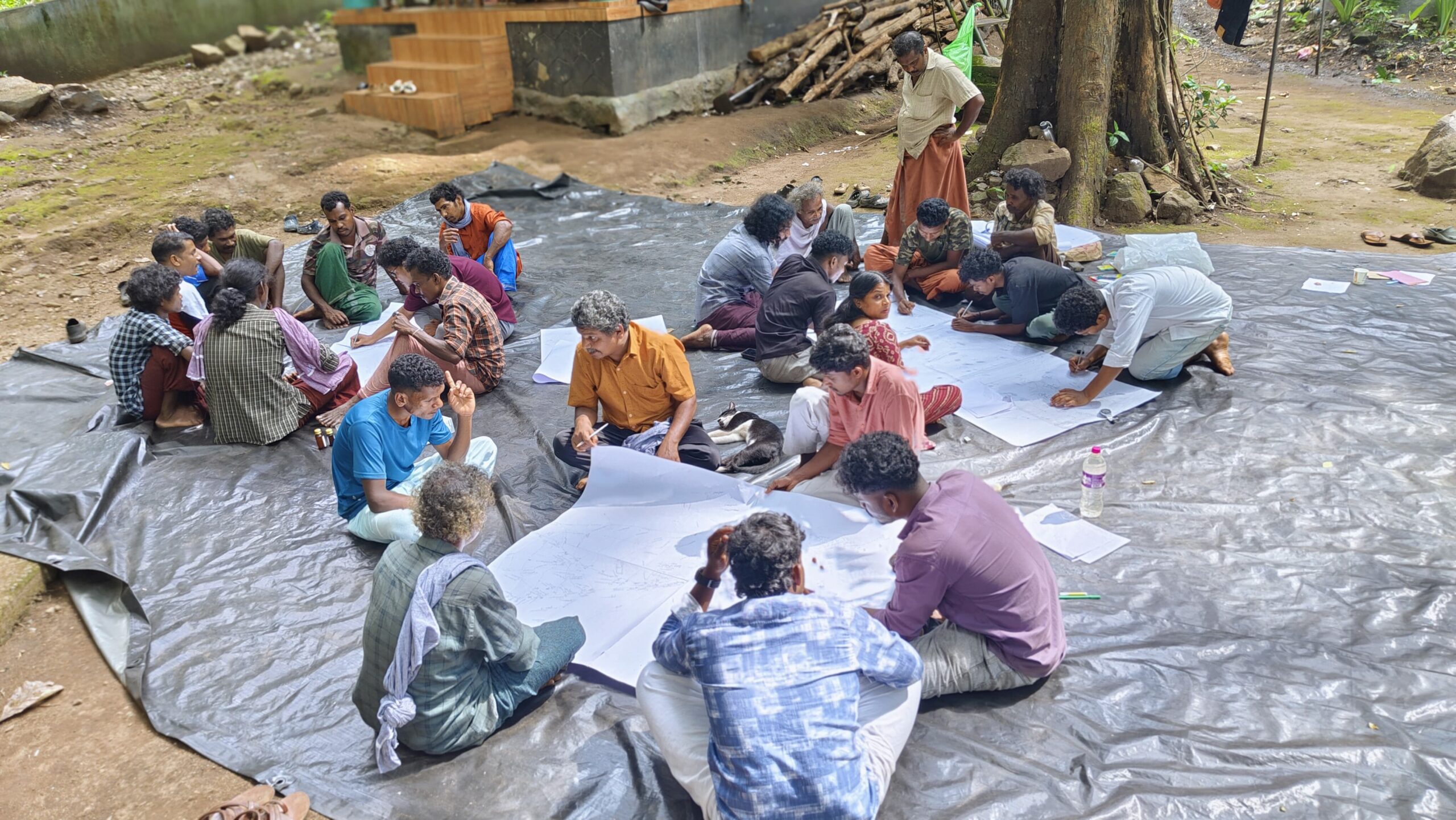
In another collaborative activity, participants mapped the intersections of health, climate change, and gender using a Venn diagram and storytelling. Health concerns such as infectious diseases, respiratory illnesses, and access to care were discussed alongside climate impacts, including altered rainfall patterns, forest degradation, crop loss, and water scarcity. Gendered burdens such as reproductive health responsibilities, caregiving, emotional labour, domestic violence, and the role of men in women’s health were identified as factors that intensify health inequities. Together, these discussions highlighted how climate stress and gender norms compound existing vulnerabilities and increase women’s unpaid care work.
The second day of the workshop focused on reflection, synthesis, and collective problem-solving. Participants revisited the drawings and stories shared on the first day, adding notes, responses, and possible solutions. Through guided reflection, they identified strong forms of care and knowledge rooted in lived experience, traditional practices, and mutual support within families and communities. At the same time, participants pointed to shared challenges across regions, including increasing care burdens, climate-related stress on health and livelihoods, and limited access to consistent and affordable healthcare.
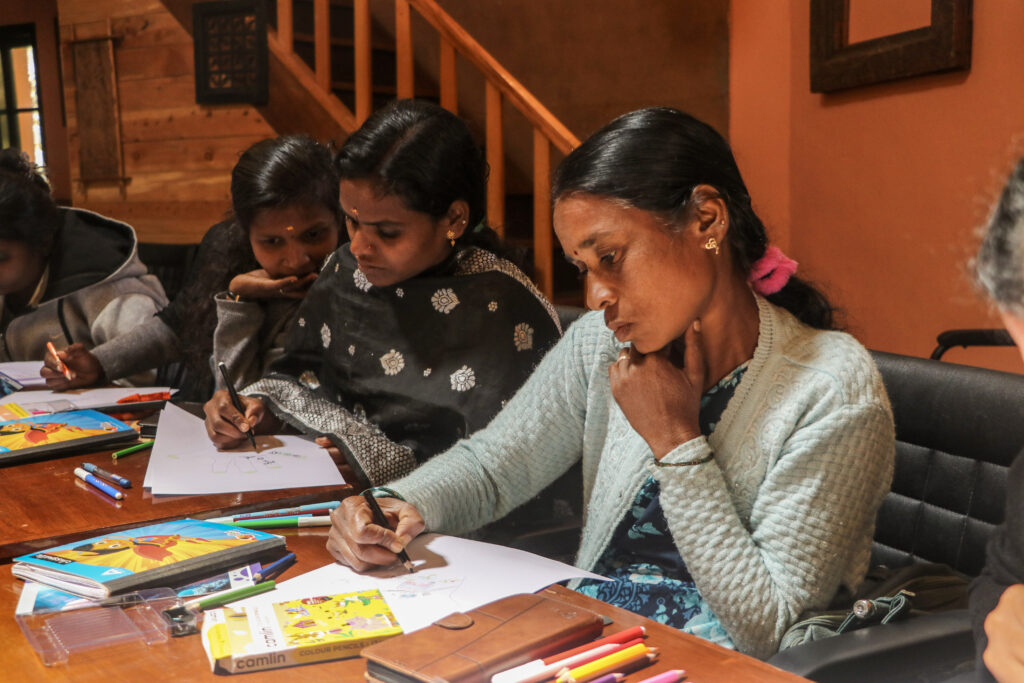
Photo credit: Anokha Venugopal
Strengths, Gaps, and Structural Challenges:
While informal support systems such as family networks, peer support, and community solidarity were recognized as vital strengths, participants also highlighted significant gaps in institutional support, climate-responsive infrastructure, and gender-sensitive health services. Expanded discussions touched on weather-related mortality, infectious disease risks, air quality concerns, forest changes, crop yields, water stress, and waste management, all of which have direct and indirect impacts on women’s health and workloads.
Key Reflections and the Way Forward:
Overall, the workshop demonstrated that women’s caregiving labour and traditional knowledge are central to community health and climate resilience, yet remain undervalued and under-supported. By using participatory and art-based methods, the workshop enabled frontline workers to articulate complex, interconnected experiences that are often overlooked in policy and research spaces. Most importantly, it reinforced the need for community-led, inclusive, and gender-responsive approaches to health and climate action—approaches that recognize that health is not only shaped by clinics and medicines, but by land, relationships, care, and collective knowledge.