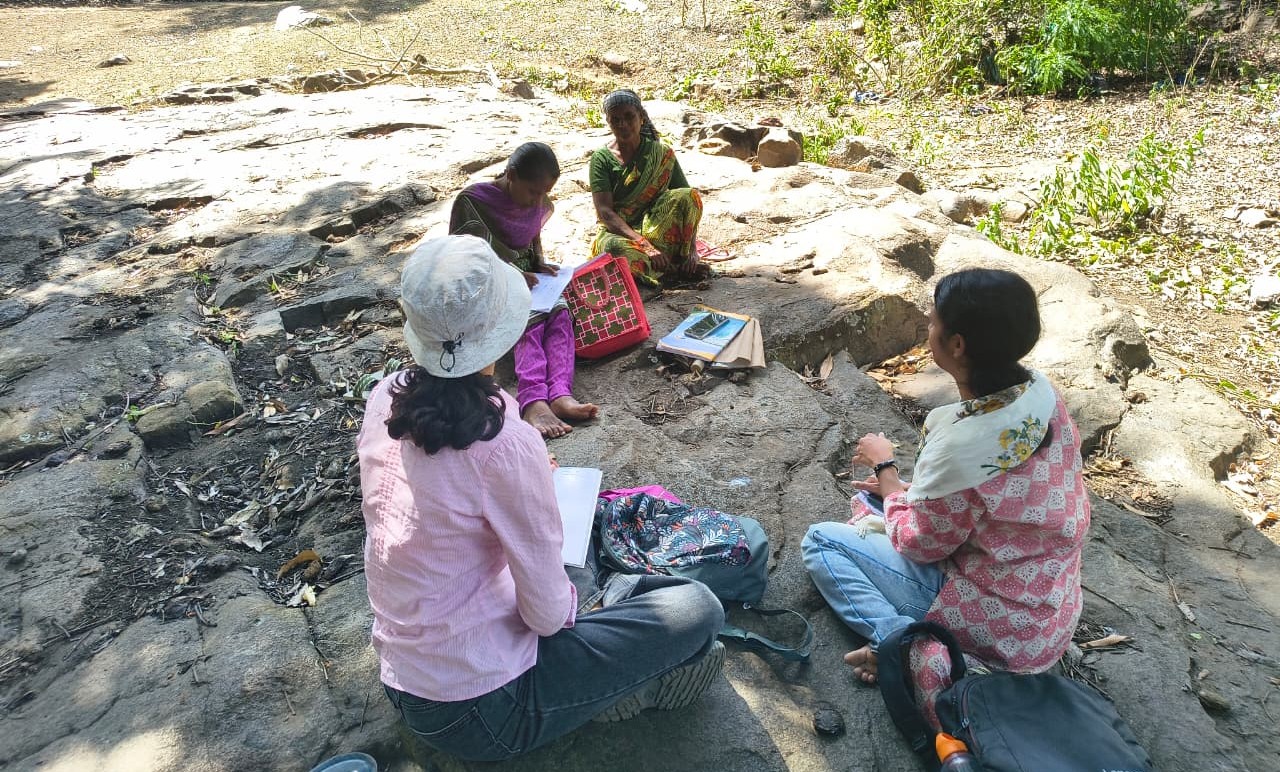
Reshma R, Climate Change, Ruchika & Rohit (Intern)- APU
Ruchika and Rohit, students from Azim Premji University, Bangalore, began their four-month internship with the Climate Change Programme on 9 July. Rohit is pursuing a B.Sc. (Honours) in Environmental Science & Sustainability, and Ruchika is pursuing a B.A. (Honours) in Economics. Eager to understand forests, biodiversity, socio-economic dynamics, and climate change beyond textbooks, this internship offered them their first opportunity to spend an extended period living and working in the field. Having now completed two months at the Sigur field centre, they have shared their insights and reflections on their work with the team.
“Our interest in field-based learning brought us to the Keystone Foundation in Kotagiri. Interning with the Climate Change team mentored by Bhavya George. We are learning directly from our field experiences with Indigenous communities(Irula) in the Mudumalai Tiger Reserve, Sigur region.
When we started our internship, our initial field visits filled us with excitement and overwhelming emotions. People were very happy whenever we tried to speak with them in Tamil. We then learned about various project approaches and methods, including Analog Forestry, Social and Resource Mapping, and Backyard Nurseries.Through field visits, discussions, and reading papers, we progressively learned why Keystone uses these methods and how it benefits grassroots Indigenous communities”.
Exploring Ecological Practices and Community Knowledge
Ruchika’s Insights:
“Analog Forestry was one of our most important learning’s. Before this internship, we mostly understood farming in terms of crops, soil, and productivity. Fieldwork and discussions taught us that we can structure an Analog Forestry system to function more like a natural forest.
It can use locally adapted vegetation and a high diversity of species. Its primary purpose is to replicate forest structure and function while establishing a productive farming system. It enhances biodiversity, soil health, food, nutrition, and livelihood opportunities. We began to understand how farm biodiversity improves soil health, ecological relationships, system resilience, and community well-being. Additionally, identifying plants and birds by their physical characteristics during field visits is improving our observation skills.
We were also introduced to the idea of backyard nurseries, learning that nursery activities go beyond just cultivating plants. With proper training and assistance, community members nurture saplings using locally available resources and methods. They learn to prepare soil, use organic inputs, collect seeds, and care for plants”.
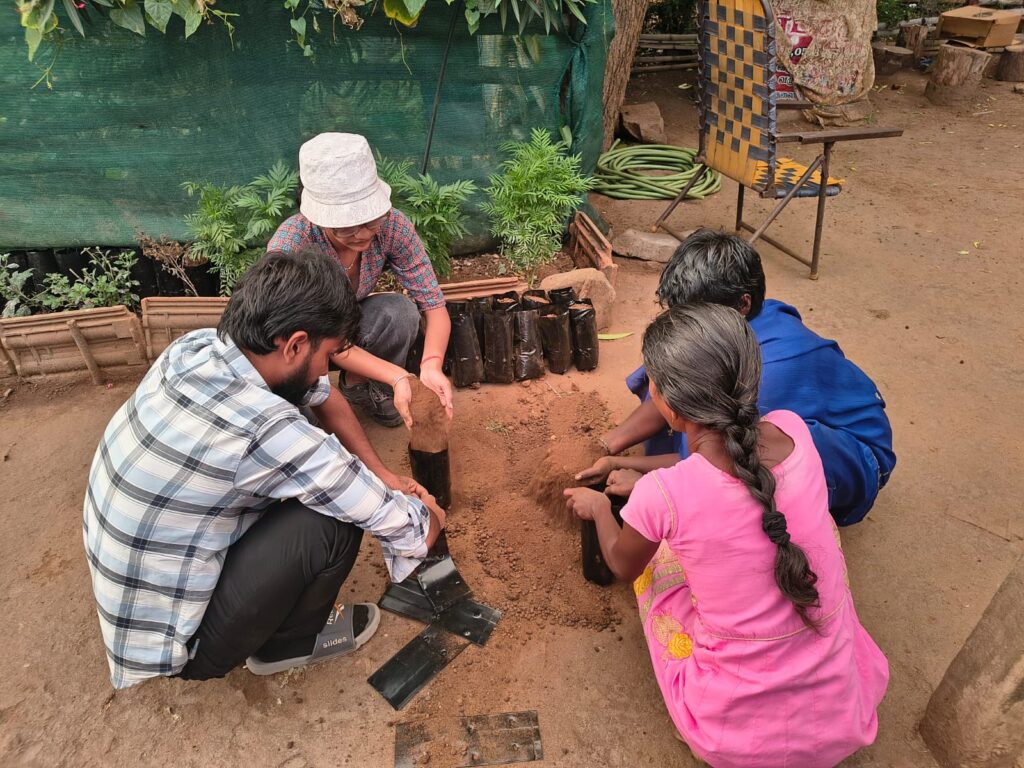
Rohit’s Insights:
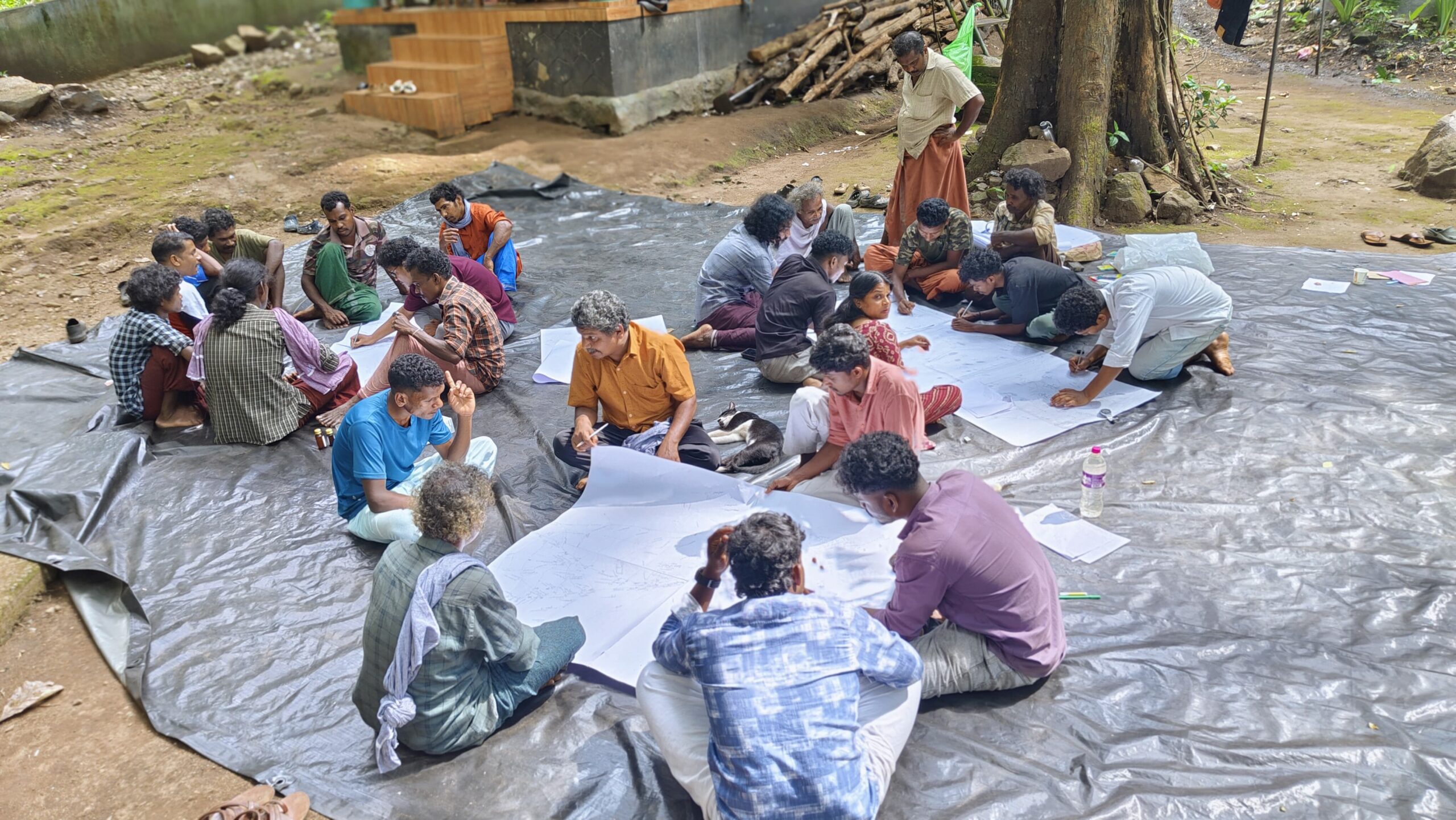
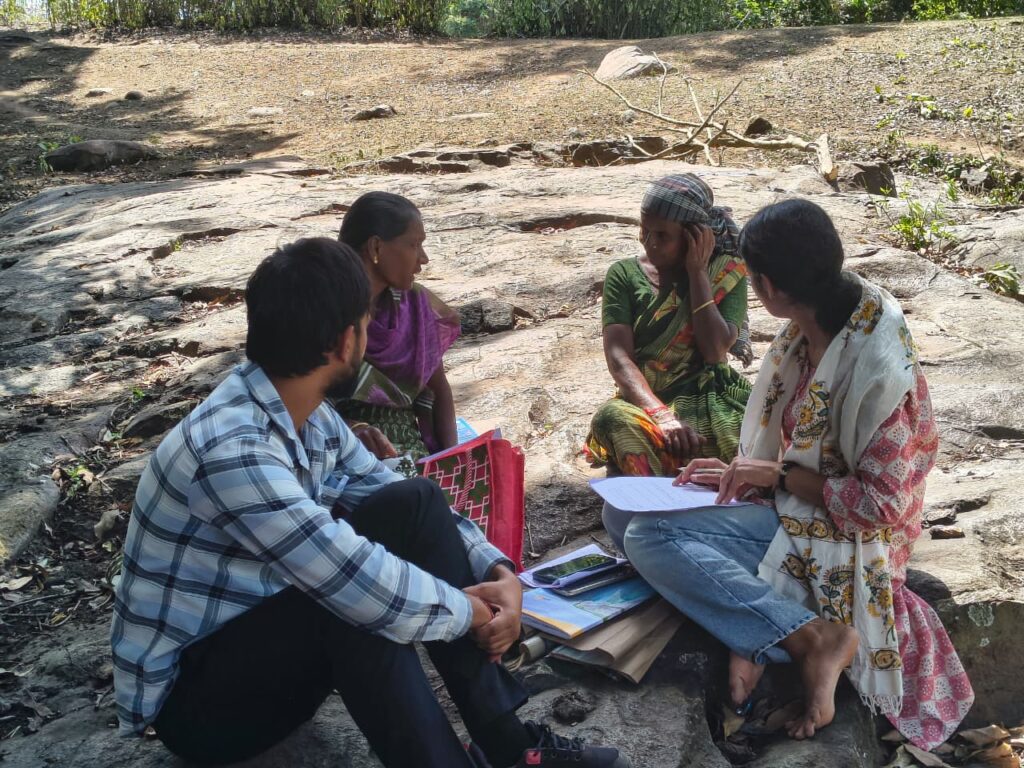
“Another key learning aspect was Social and Resource mapping. At first, we thought of maps primarily as a means of displaying places. Reading papers helped us understand that a Social Map displays households, roads, and community amenities.
A Resource Map depicts forests, agricultural land, and water sources. Locals possess deep knowledge of their land, water, forests, farming methods, and environmental changes. This knowledge may not be apparent from a distance and helps highlight concerns like water scarcity.. Interacting with them helped improve the accuracy of social and resource maps.
We learned how these concepts and discussions move from papers into practical work of some benefit to communities we work with. Our experience in the Sigur region taught us not only about studying farms and its components but also introduced us to a culture different from what we grew up with, featuring different languages, food, festivals, and community life. We are lucky to closely observe the local lifestyle in Vazhaithottam and surrounding villages in Sigur”.
During the initial phase of their internship, I was unsure how they would engage with the community without a background in Tamil. Yet, within a month, I was pleasantly surprised to see them confidently interacting with community members using simple English, gestures, and Google Translate.
They are now gradually finding their footing and feeling more comfortable in the field.. Similarly, during our early field visits, I doubted whether they would be able to grasp the full context. However, with support from Prema, one of our Community Resource persons and other field staff at Sigur, they quickly understood the local realities and have, in this short time, become part of the climate change programme and community in Sigur.