Syamjith PK, People and Nature Collectives
The Cholainacken tribe is one of the forest-dwelling and Particularly Vulnerable Tribal Groups in the Nilambur Valley of Malappuram District, Kerala. Like many communities across India, they are currently in the process of working towards Habitat Rights under the Forest Rights Act of 2006, which aims to redress historical injustices that have alienated forest-dwelling communities from their ancestral lands under colonial forest laws in India, which have been carried over since independence. The Forest Rights Act offers three main rights to communities.
a). Individual Forest Rights (IFR)
b). Community Forest Right (CFR)
c). Development Rights.
But in the case of PVTG communities, they are also entitled to Habitat Rights Habitat rights pertain to the “customary habitat” of pre-agricultural communities within reserved and protected forests, and seek to establish community domain over a larger set of clan territories. Thus, they not only recognize the need for individual claims to land, but also the need for community management to preserve practices that are culturally, sociologically, ecologically, and economically interlinked.
In Kerala, after passing this Act, only IFR is implemented for the communities with and without grievances. Other Rights are still pending. There is a gap where we find and conduct community mobilisation activities and capacity-building programmes for the communities.
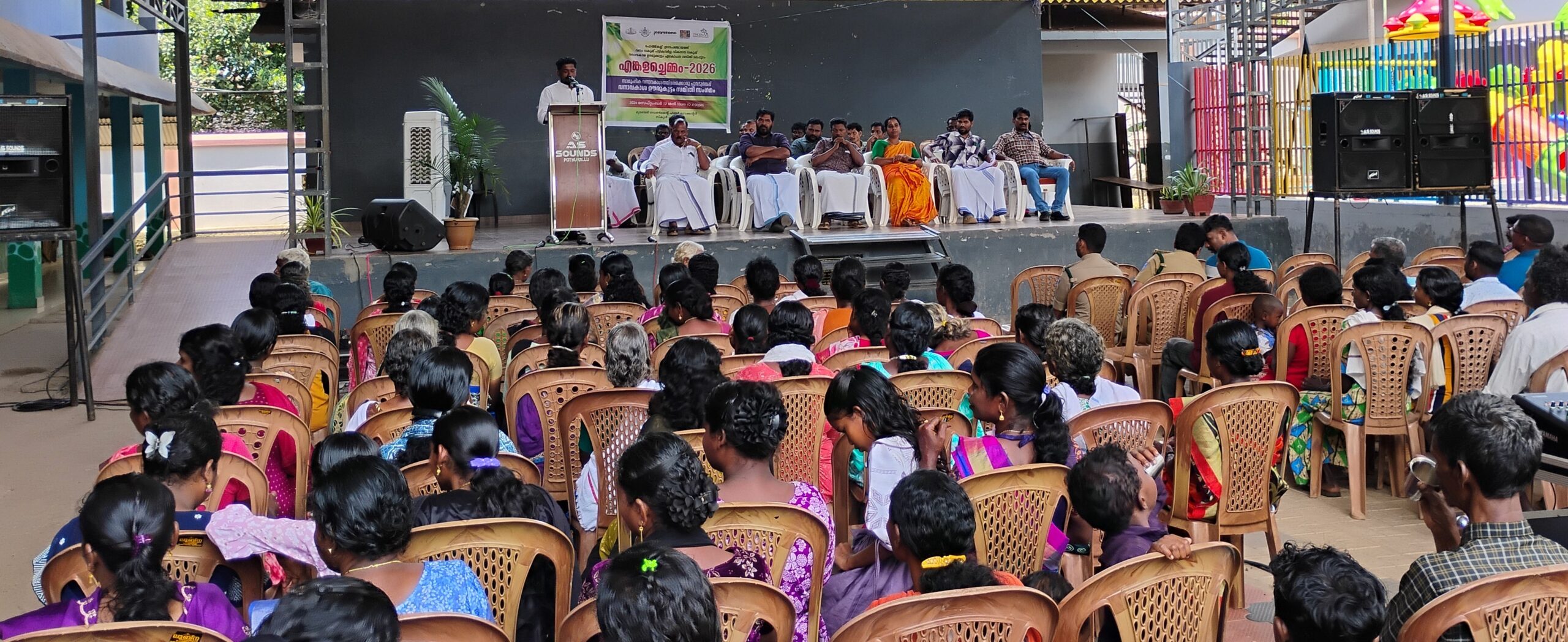
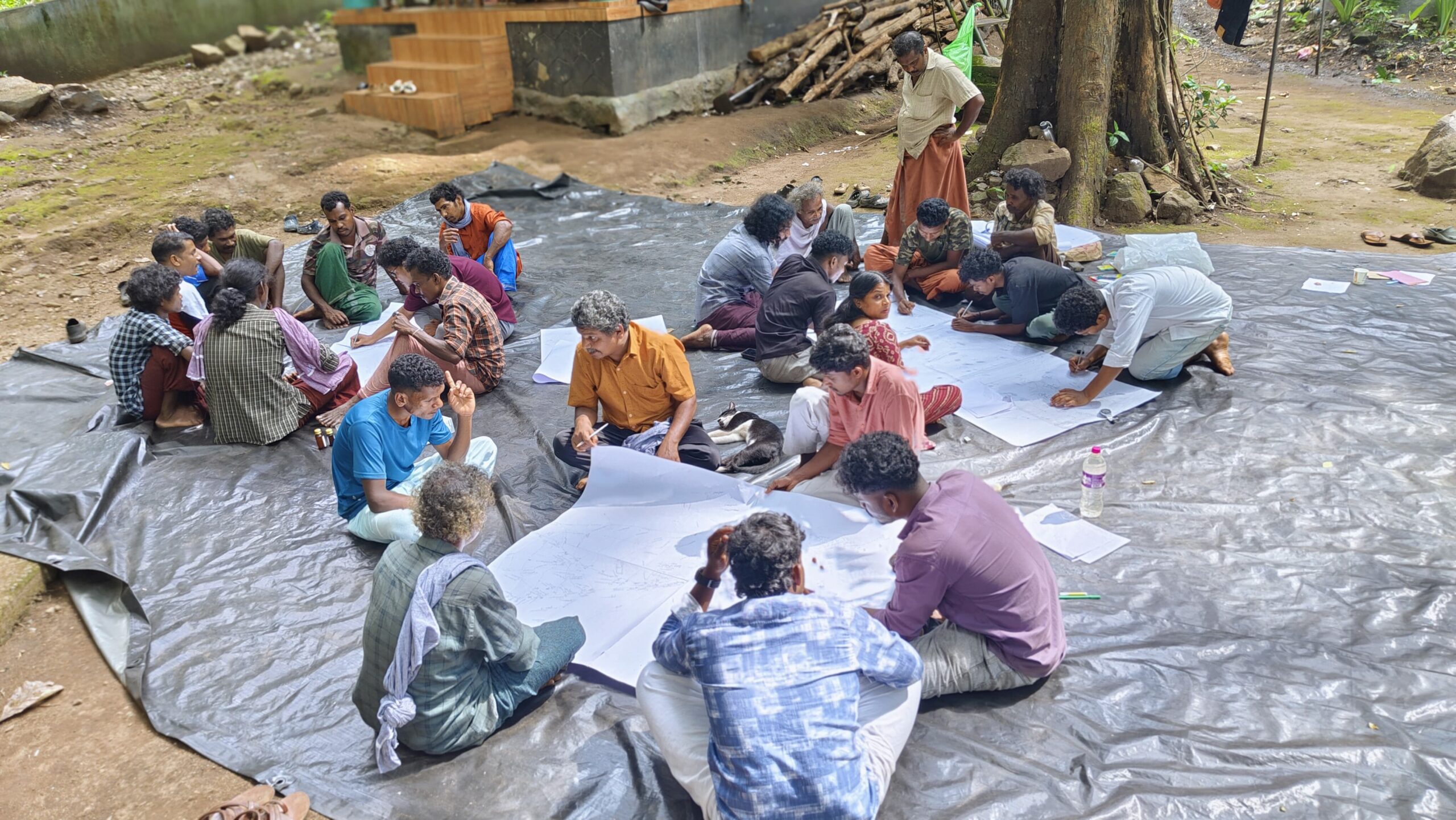
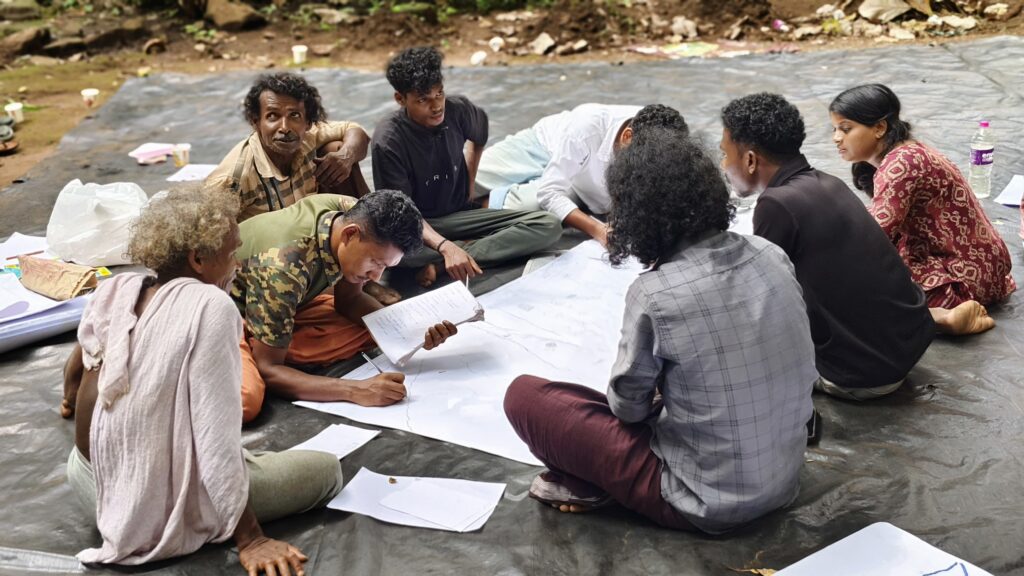
Now, in collaboration with KIRTADS and the ST department, we conducted a participatory rural appraisal (PRA) at the Kannikkai settlement of Cholanaickan tribes. More than 20 Cholanaickan community members actively participated and successfully completed the Participatory Rural Appraisal (PRA) for Habitat Rights.
PC:Syamjith PK
Mapping Traditional Territories Through Community Knowledge:
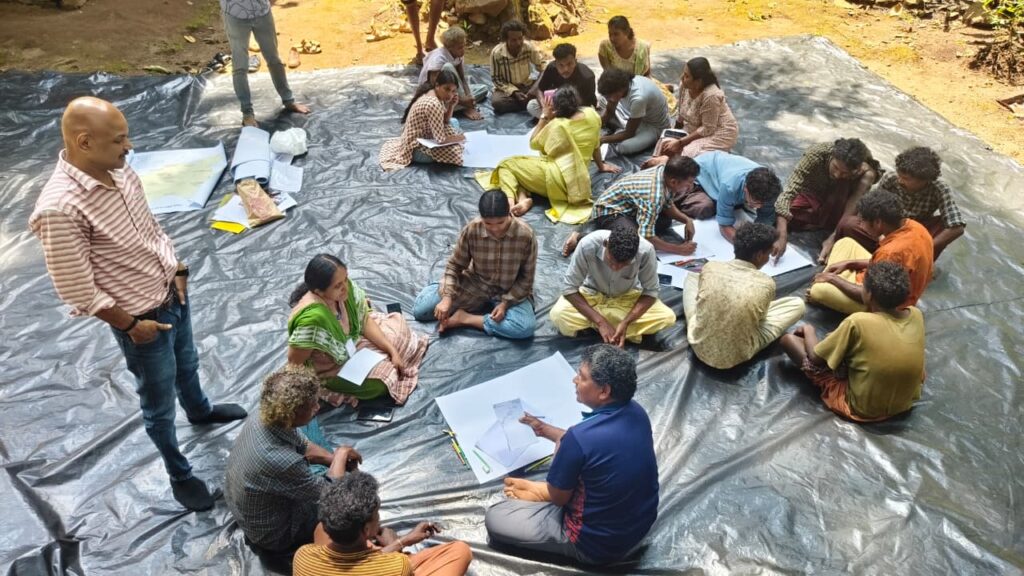
In this PRA program, members from Mailadipotty, Poochappara, Kannikkai, Meenmutti, and Panappuzha actively participated, and the Keystone Foundation staff and tribal youth leaders facilitated the program, and the Kirtads and ST department coordinated the program successfully.
It was a great work experience with the community because we realised that they have a well-established traditional knowledge system. Everyone is aware of their habitat area, and they collectively give their input into the habitat map.
The participants represented their chemmam, which is the traditional territory of the communities and made group-wise community maps, and they marked their traditional occupational areas, resources, burial areas, streams, honey trees, rock shelters, pathways, etc., in their maps.
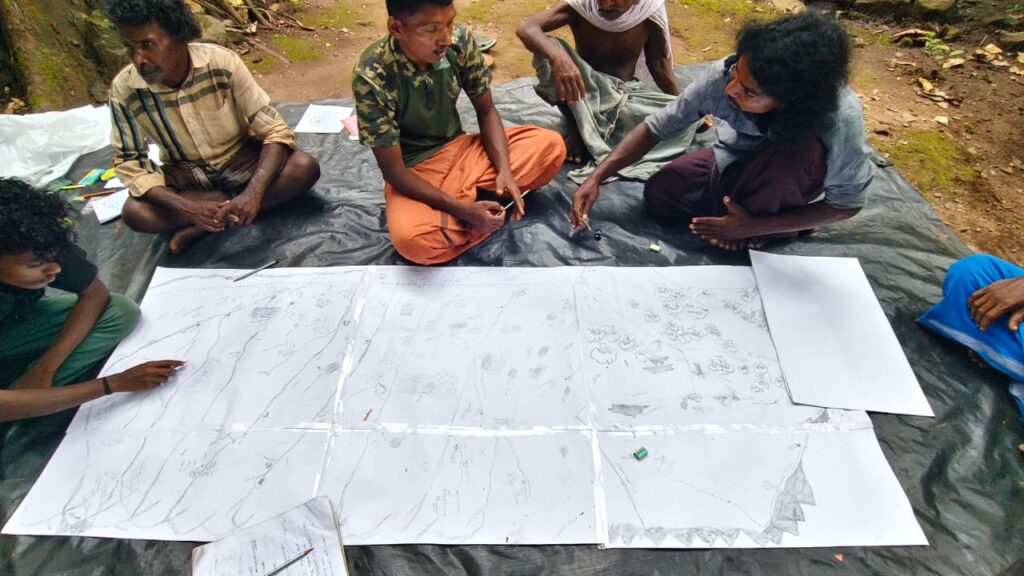
The main objective of the program is to help the community get their habitat right soon. We are expecting two or three community consultations in future for the corrections and finalisation of the map.