Ranjani Prasad, People and Nature Collectives & Merab Manu, knowledge Hub
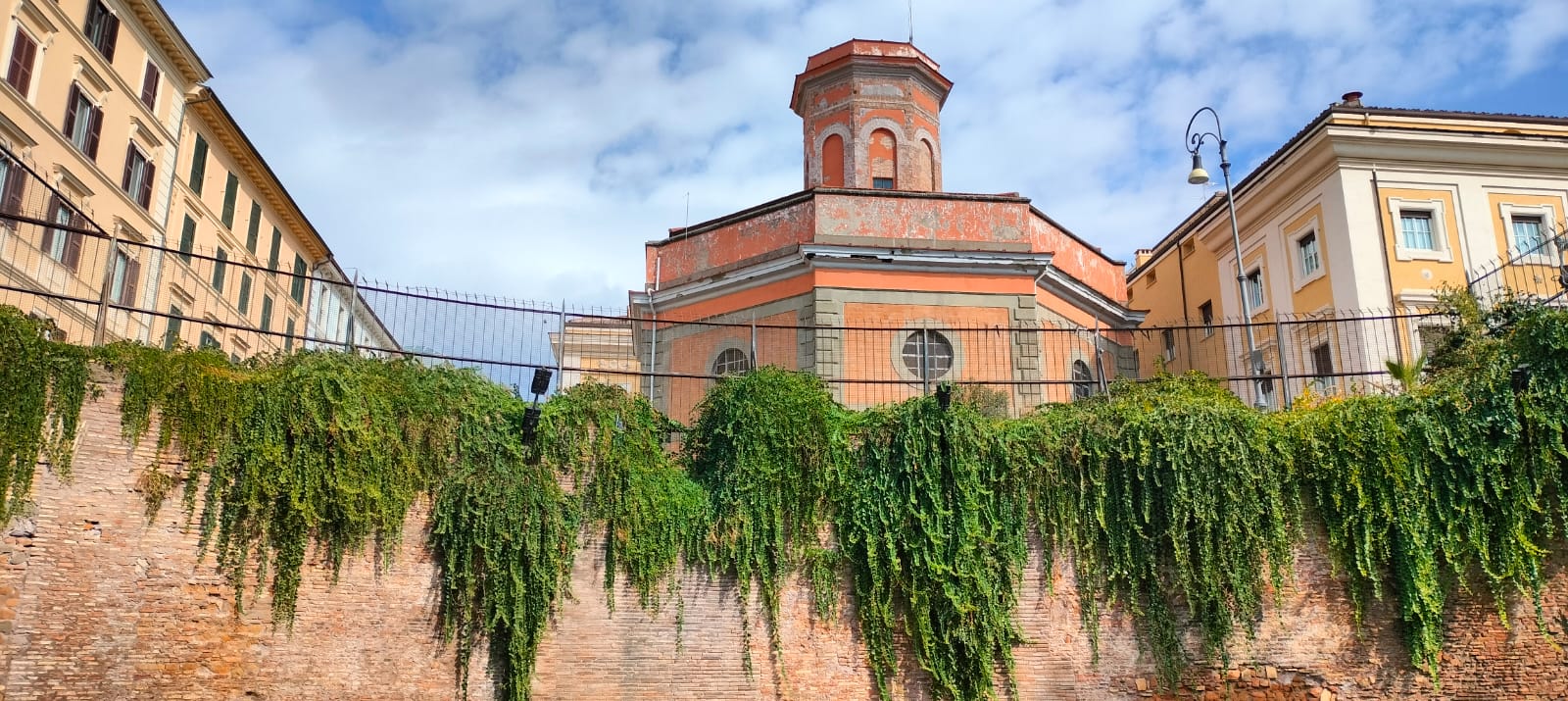
In October 2026, we travelled to Rome as representatives from India and members of the Indigenous Peoples Observatory Network (IPON), to participate in the fourth in-person meeting of the Global-Hub on Indigenous Peoples’ Food and Knowledge Systems. We were invited by Yon Fernández-de-Larrinoa, Head of the FAO Indigenous Peoples Unit. Pablo Innecken and Anne Brunel, Coordinator of the Global-Hub, were also central to organising the meeting, held at the Food and Agriculture Organization of the United Nations (FAO) alongside the World Food Forum.
IPON works at the intersections of food, health and climate, bringing together researchers, practitioners and Indigenous knowledge holders. Several members of the network participated in the meeting, including Francis Awaafo Akugre, Carol Zavaleta-Cortijo, Rosa Mercedes Silvera Callo, and Eranga Kokila Galappaththi. We also met other Indian representatives from other networks, including Ramesh Sharma of Ekta Parishad and Preety Sharma of GroundUp Conservation. Over five days, we joined Indigenous leaders, elders, researchers and young people from different parts of the world to exchange experiences and discuss the future of Indigenous food and knowledge systems.
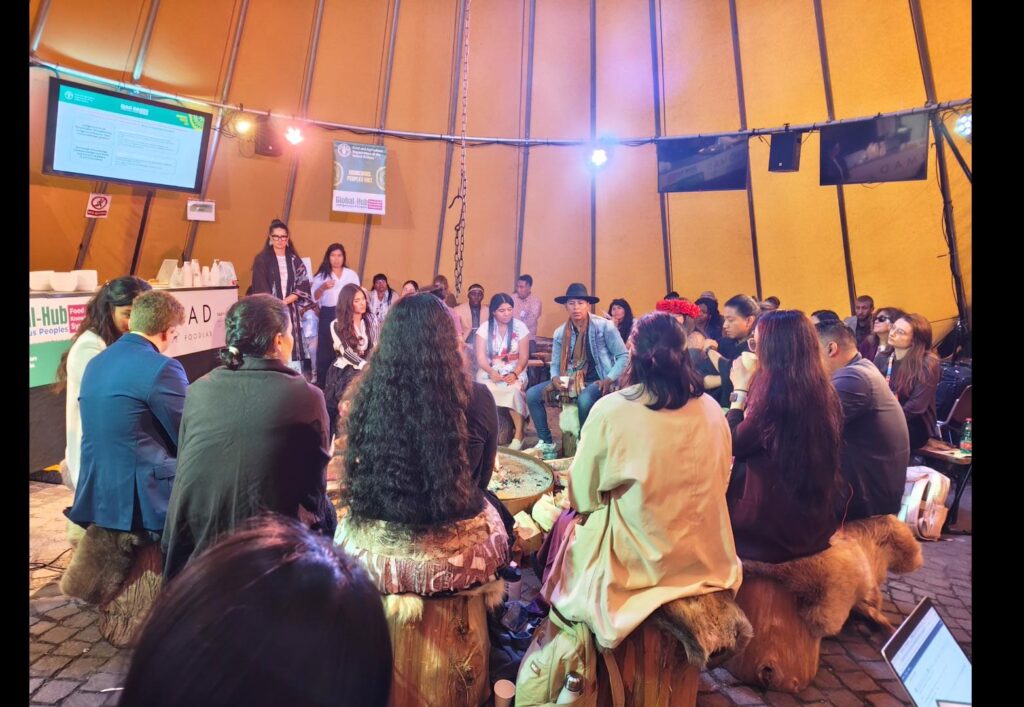
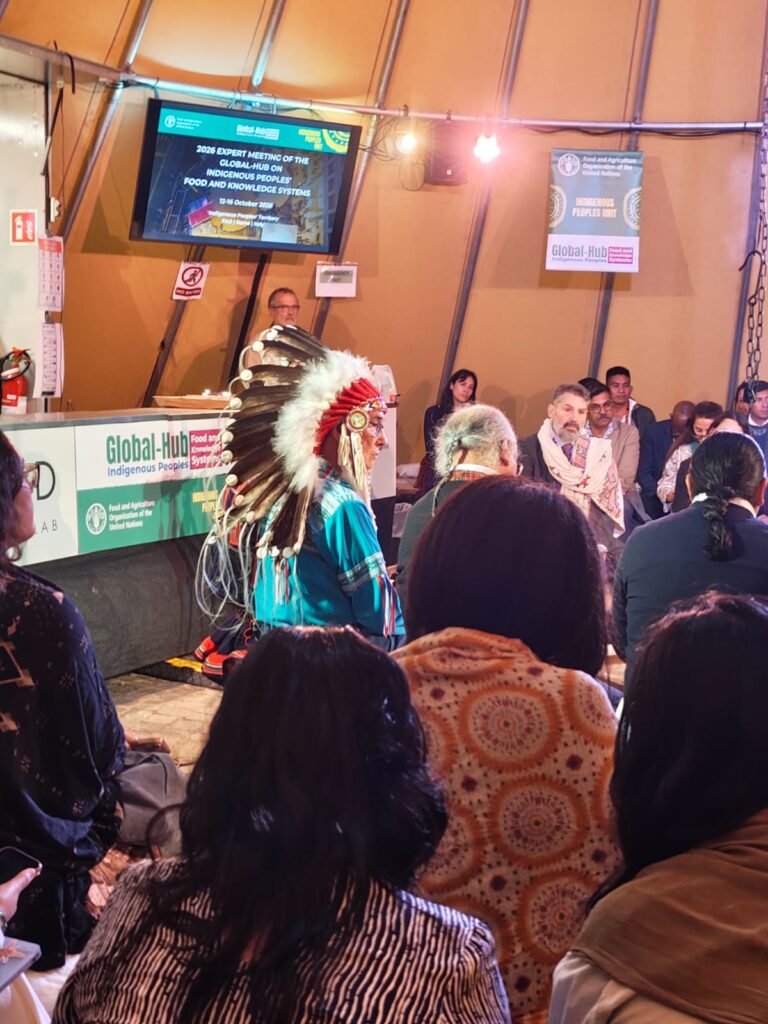
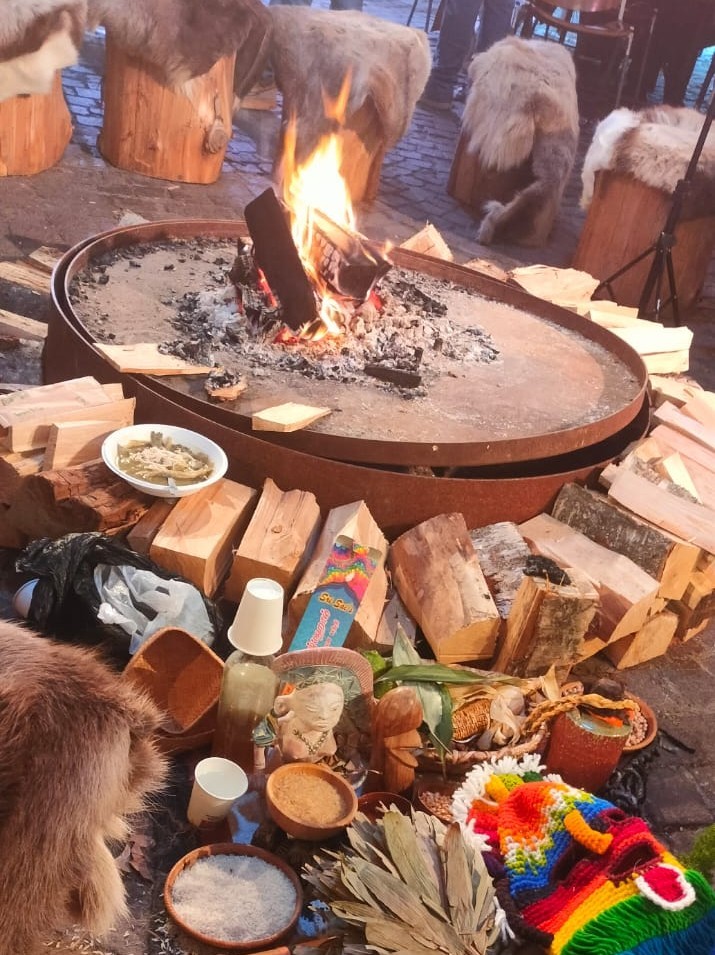
The meeting was held at the FAO headquarters, with the Indigenous Nomadic Tent and the fire at its centre serving as an important gathering space. The programme brought together leaders and knowledge holders from many regions, including Anders Oskal and Sara-Elvira Kuhmunen from the Sámi, Chief Deskaheh of the Haudenosaunee Confederacy, Chief Wilton Littlechild of the Cree Nation, Valmaine Toki of the Māori, Kenneth Atsenhaienton Deer of the Mohawk, Marcos Terena of the Xane’ people, Diego Tituaña and Patricia Gualinga of the Kichwa people, and Lea MacKenzie of the Wəlastəkwey Nation. We also had the opportunity to listen to and interact with Claudia Valeria Sánchez Flores, a Nahua representative from Mexico, and Francisco Cali, a Maya Kaqchikel leader from Guatemala.
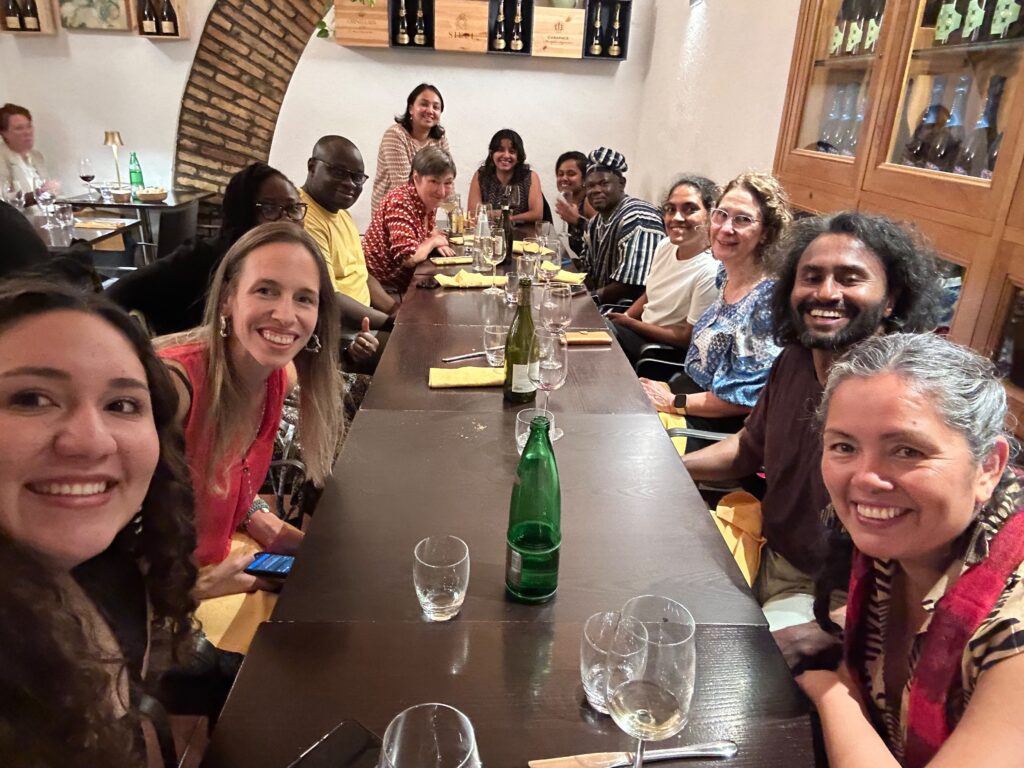
Coming from the Nilgiris, many of the conversations felt familiar, even when the landscapes and contexts were very different.
Food is much more than what we eat
A recurring thread through the discussions was that Indigenous food systems cannot be understood only through cultivation, production, markets or nutrition. They are connected to land, water, forests, customary practices, relationships between species and the transmission of knowledge across generations.
A conversation with a Fijian mangrove ecologist stayed with us. She spoke about practising science barefoot and shared a tradition in which the umbilical cord of every newborn child is planted in the mangroves. Wherever that child might travel, there remains a connection to home. It was a simple way of describing how an ecosystem can also hold memory, belonging, and continuity.
In another session, a Pacific Islander spoke about the realities of climate change for island communities. While Sámi participants described snow melting much faster than before, she spoke of islands already being submerged and the very real possibility of entire island nations disappearing. These exchanges brought home the different ways in which communities are experiencing environmental change.
“If I cannot have my land, what about my food system?”
One of the most memorable exchanges came from an Ogiek representative from Chepkitale, Kenya. The Ogiek are an Indigenous hunter-gatherer community living on Mount Elgon. He questioned conservation approaches that exclude local people from these landscapes. He also challenged newer carbon market initiatives that overlook their role in caring for these lands.
His words were difficult to forget: “Forest is my life. You can’t take me out of my forest.”
He also spoke about changes in the quality and quantity of honey collected by his community, and the introduction of chemicals into their land and food systems. These observations, made by people who know the landscape intimately, are often not taken seriously.
His ability to challenge familiar assumptions about modernity and primitiveness struck us most.There is often an assumption that Indigenous Peoples and their ways of living are somehow behind the times. His response challenged that assumption. Perhaps it is the rest of us who need to catch up. As he asked, “If I can’t have my land, what about my food system?”
Listening across generations
The Indigenous Youth Forum brought together young people from diverse communities and regions. They introduced themselves and shared their work and experiences. Their efforts ranged from language and cultural revitalisation to ecological research. They also worked in community organising and advocacy.
A dedicated dialogue between Indigenous youth and the Council of Elders created space for an exchange across generations. The elders included Chief Wilton Littlechild, Chief Deskaheh, Kenneth Atsenhaienton Deer, and Marcos Terena. Young representatives from the Global Indigenous Youth Caucus joined them. The discussion raised an important question.
How can younger generations carry forward knowledge while responding to their communities’ changing circumstances?This resonated with Keystone’s work around intergenerational learning, community-led research and Indigenous youth engagement.
Knowledge, rights and relationships
Several discussions had direct relevance to our work. A session on Biocultural Community Protocols explores how communities can articulate their customary practices, relationships with biodiversity and protocols for engaging with external institutions. There were also important conversations about the distinction between Indigenous Peoples and local communities. The conflation of these terms has implications for the recognition of Indigenous Peoples’ specific collective rights under international frameworks.
Although the planned session on Indigenous Peoples’ data sovereignty and intellectual property rights did not take place, we interacted with Rod McCormick, a Mohawk scholar from Thompson Rivers University in Canada. He also contributes to the Knowledge Makers initiative. The exchange connected with our ongoing work on youth education, community-led research, ethics, and Indigenous research and data protocols in the Nilgiri Biosphere Reserve.
Other sessions explored Indigenous-led approaches to ecological restoration, fire stewardship and biocentrism. Across these discussions, there was a consistent emphasis on recognising Indigenous Peoples as knowledge holders, decision-makers and rights holders, rather than simply as beneficiaries of conservation or development programmes.
Bringing the conversations home
The meeting gave us an opportunity to encounter experiences from places we may otherwise only read about. The landscapes and political contexts were distinct across regions. However, concerns about land access were similar. Other shared concerns included the erosion of customary food systems and biodiversity loss. Recognition of Indigenous knowledge and community decision-making were also common concerns.
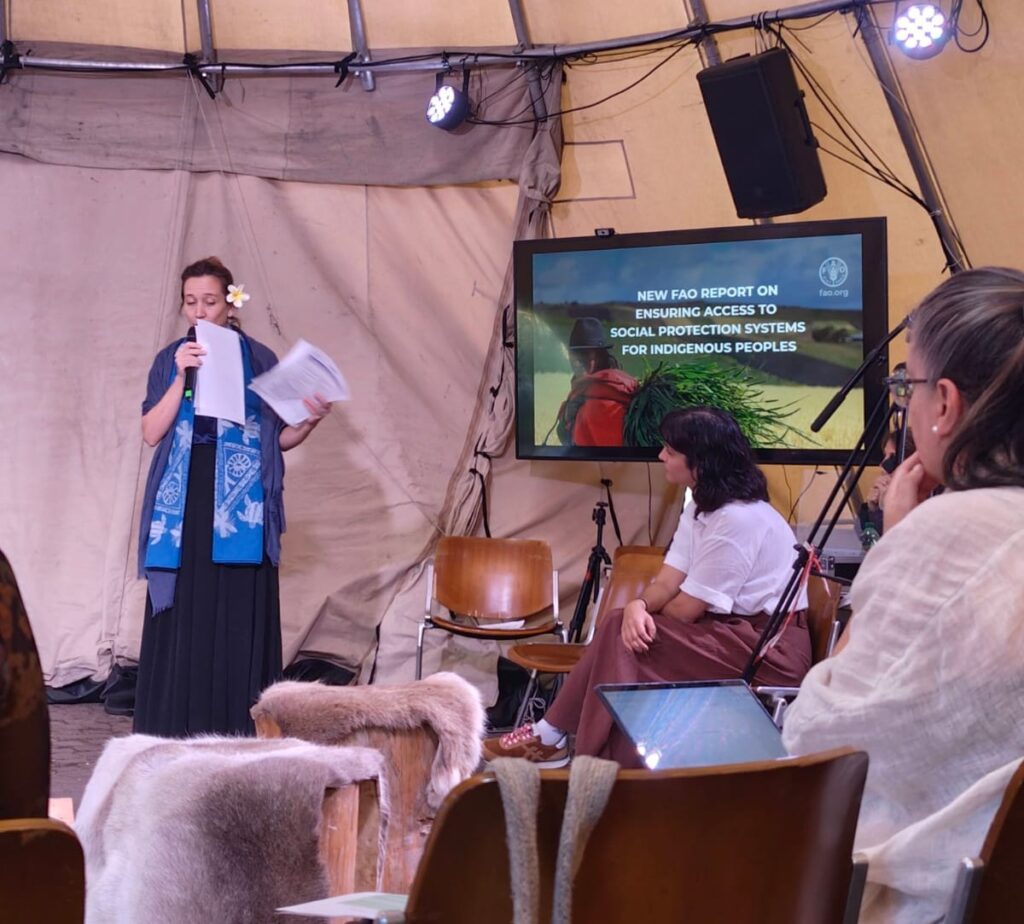
An important outcome of the meeting was the launch of the FAO White/Te Oranga Paper on Indigenous Peoples: Overcoming non-inclusive rural transformation, on 15 October 2026. Building on the 2021 White/Wiphala Paper, it makes the case that Indigenous Peoples’ poverty is not inevitable. Rather, historical and ongoing processes of dispossession, exclusion, discrimination, and the denial of collective rights shape it. Drawing on legal cases and policy examples, the paper argues that political barriers, not legal ones, hinder inclusion. This paper makes an important contribution to broader discussions on rural transformation. It also highlights the need for Indigenous Peoples to determine their own development priorities.
We returned to the Nilgiris with much to think about. The conversations brought us back to questions central to our work: how can communities ensure their knowledge shapes decisions about landscapes and food systems? How can younger generations carry this knowledge forward? And how can research and conservation initiatives strengthen community control rather than create new forms of extraction?
The meeting reinforced our understanding that Indigenous food and knowledge systems are living practices, not isolated remnants of the past.They are living systems, adapting and responding to change. Their continuity depends on whether the people who sustain them have the land, rights, recognition and decision-making space to continue doing so.