Ankit Dubey and Devender Verma, Climate Change
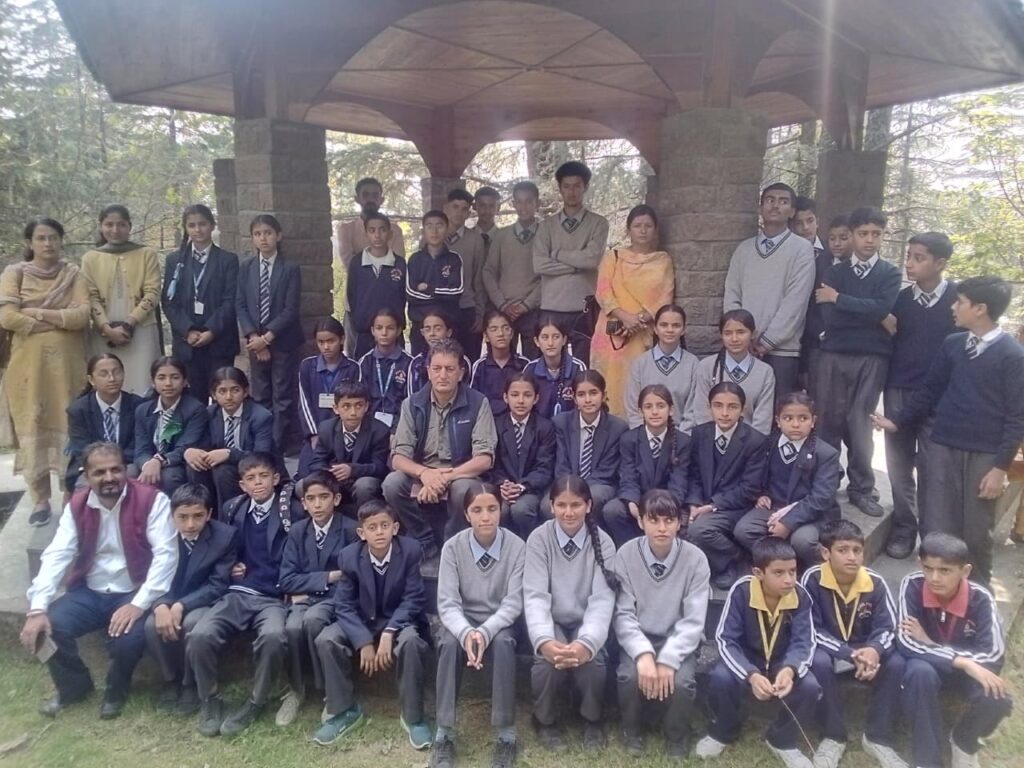
Wildlife Week is celebrated across India every year from 2nd to 8th October to promote wildlife conservation and create awareness about the importance of protecting biodiversity, particularly among young people. As part of the Climate Smart Schools programme, we organised a field visit to the Western Himalayan Temperate Arboretum, Potter Hill, Summerhill, Shimla, on 5 October 2026. A total of 40 students participated in the visit, with 10 students each from Government High School, Majhar; Government High School, Bathlawag; Government Model Senior Secondary School, Sainj; and Government Senior Secondary School, Bagain. Teachers from the respective schools also accompanied the students.
Exploring the Rich Biodiversity of the Western Himalayas
For many children, this was their first arboretum visit, offering a special opportunity to explore and learn about nature. The visit aimed to familiarise students with Western Himalayan wildlife and deepen their understanding of native species and their ecological importance.
That morning, we traveled to various locations to pick up the students and begin our journey. The children, filled with great excitement and enthusiasm about their destination, were eager to discover what awaited them there. Upon arrival, Dr. Vineet Jishtu welcomed us. He is a field botanist specialising in high-altitude Himalayan flora.
He has conducted extensive research at the Himalayan Forest Research Institute (HFRI). Also played a key role in establishing this arboretum, which showcases diverse Himalayan tree species.
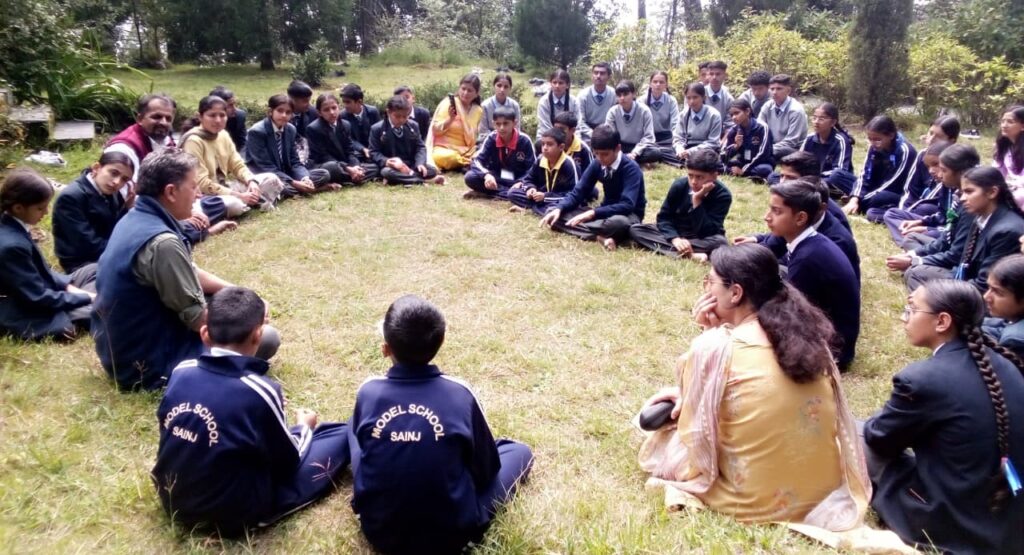
Following an introduction and shared lunch, Dr Jishtu led an interactive learning session with the students. Drawing on his extensive Himalayan knowledge, he introduced the children to the local environment, Shimla’s climate, changing weather patterns and native species. He explained the Western Himalayas’ ecological uniqueness and how temperate forests support diverse wildlife. He also highlighted the importance of conserving native plants and animals.
Discovering the Richness of Himalayan Flora
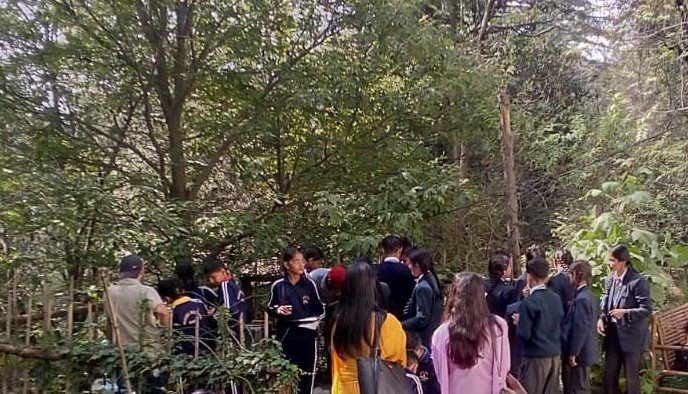
Following the session, students explored the arboretum and observed conserved native trees, including Pine, Oak and Cedar. Dr Jishtu introduced various species, explaining their local names, uses and ecological roles. The curious students noted species names and approached him individually with questions about Himalayan flora and fauna. One Class 8 student shared, “I never knew there were so many types of trees. It was surprising to see such diversity in such a small place.”
Moreover, experiencing the visit alongside the students offered a refreshing learning perspective, making it both enjoyable and enriching. Additionally, the visit provided an opportunity to discover regional biodiversity and learn from Dr. Jishtu’s insights and firsthand observations. We gained a deeper understanding of Western Himalayan flora and fauna, their ecological significance, and the importance of conservation.
The teachers emphasised the need for exposure visits that nurture curiosity, strengthen environmental awareness and inspire future forest and wildlife stewards. The visit reinforced that connecting children with nature helps nurture the next generation of conservation champions.