Ayoob A, Community Wellbeing
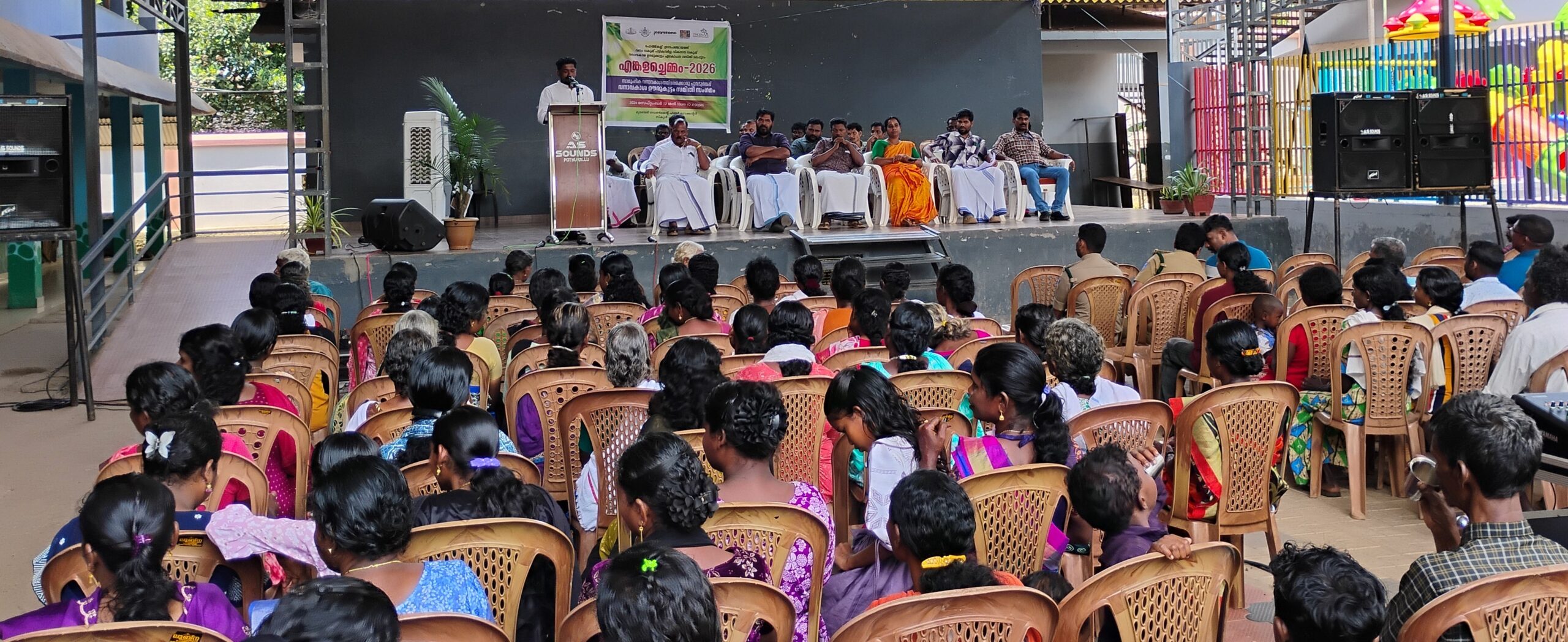
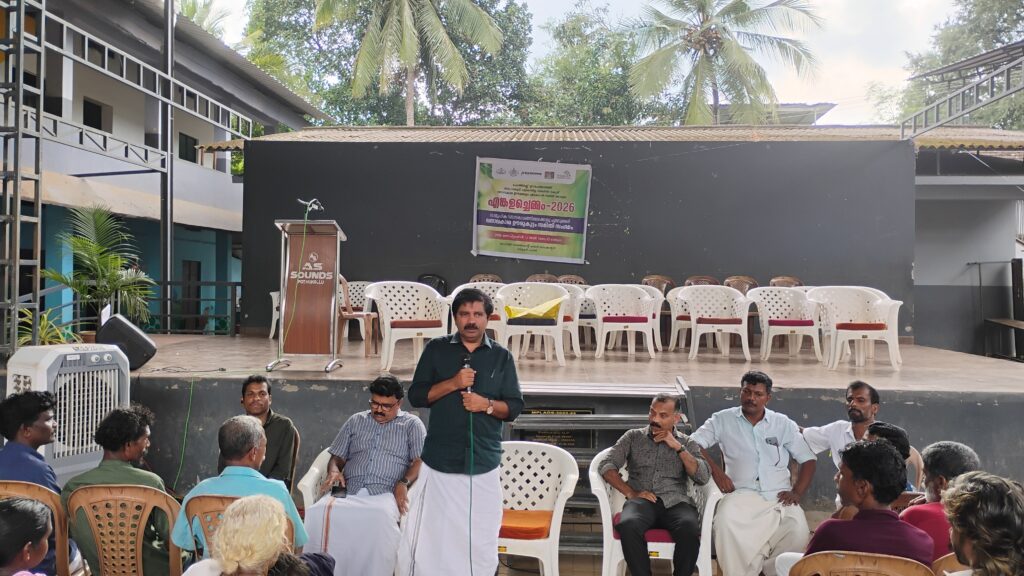
Engala Chemmam 2026 (“A Step towards Community Forest Rights”) was a one-day convening that brought together the Forest Rights Oorukoottam committees of the 12 forest-dependent tribal settlements of Pothukal Grama Panchayat. It was held on Saturday, 12 September 2026, from 10:00 AM to 4:00 PM, at Government High School, Mundery.
Pothukal Grama Panchayat organised the event in collaboration with Keystone Foundation. Thoduve Community Foundation, the Malappuram Forest Rights Oorukoottam Coordination Committee, the Scheduled Tribes Development Department and the Appankappu Vana Samrakshana Samithi extended their support.
Mr Shyamjith P.K., Subject Coordinator (PNC), Keystone Foundation, delivered the welcome address and greeted the invited officials, members of the Forest Rights Act Sub-Divisional Committee, ward members of Pothukal Grama Panchayat and members of the various Forest Rights Oorukoottam committees. Mr M.A. Jose, President of Pothukal Grama Panchayat, presided over the programme, and Mr Aryadan Shoukath, MLA, Nilambur Constituency, inaugurated it.
PC: Ayoob A
Sharing Community Experiences
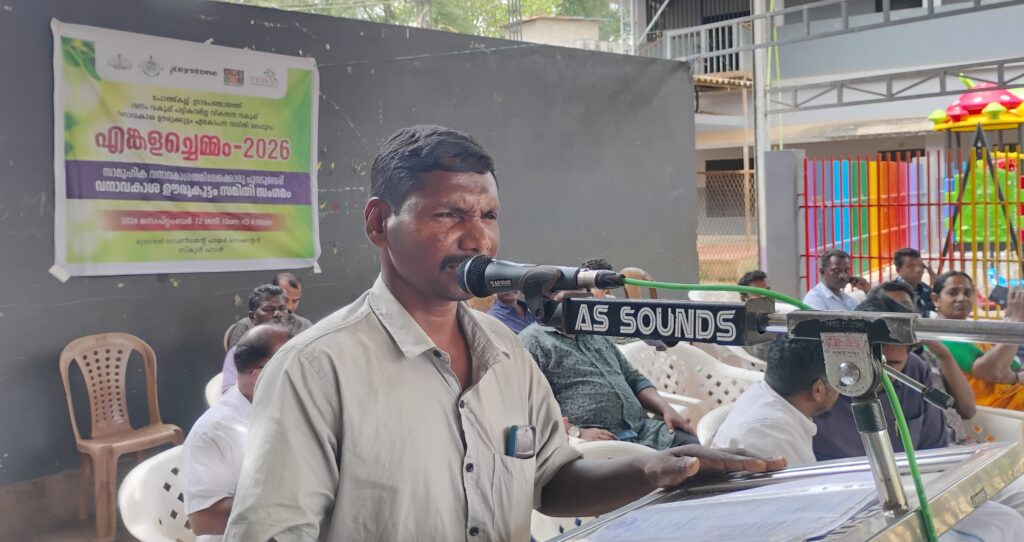
Mr Baburaj, Secretary of the Pulimunda Community Forest Resource Management Committee (CFRMC), shared his community’s experience in securing individual and community rights. Mr Rajagopalan, President of the NedungayamOorukoottam, likewise described his community’s experience in obtaining these rights.
The tribal headman (Moopan) of Thandankalluooru, whose community lost its homes and land in the 2018 floods, presented the community’s grievances on the stage. In response, the Panchayat President announced that six acres of land had been identified for their rehabilitation.
PC: Ayoob A
Historical Background of the Forest Rights Act:
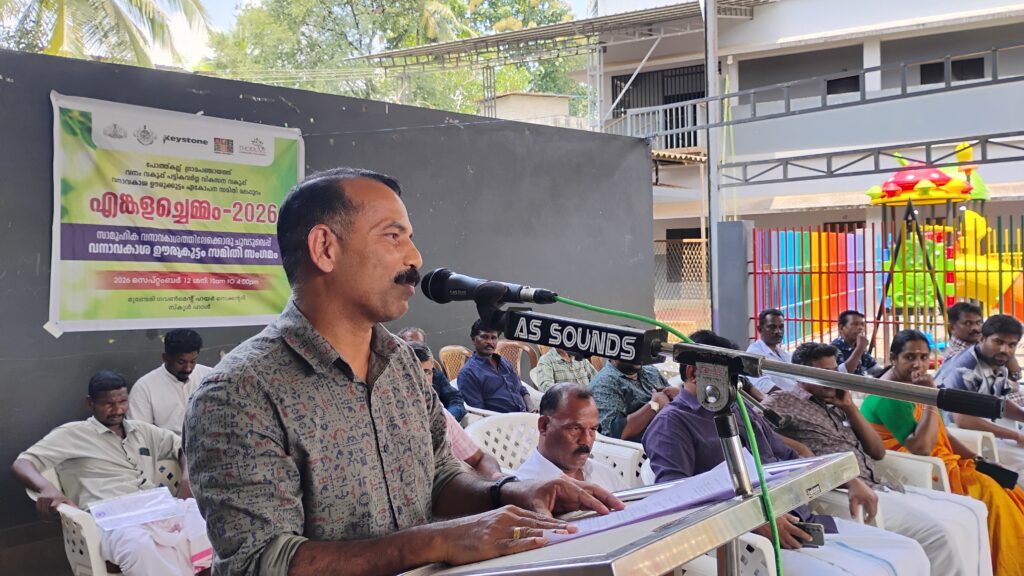
Mr. K.G. Ramachandran spoke mainly on the circumstances that led to the enactment of the Forest Rights Act (FRA). He argued that the FRA is, in a sense, a forest law in its own right. He noted that none of the earlier forest laws gave people a direct role in forest governance matters. In his account, the FRA’s history begins during colonial rule, when local administrations deprived people of forest rights.
The Indian Forest Acts of 1865, 1878, and 1927 brought all forest resources under State control.
They also enabled agriculture, dams, irrigation projects, and plantations that destroyed forests’ natural character.
These changes stripped tribal communities of authority over their land.
PC: Ayoob A
He also referred to later measures: the National Forest Policy of 1952, the Wildlife Protection Act of 1972 and the Forest Conservation Act of 1980. The 1980 Act moved the power to divert forest land for non-forest purposes from State governments to a system requiring the approval of the Central Government, thereby placing the subject on the Concurrent List, over which the States and the Centre share authority; it also restricted the felling of large trees and the establishment of plantations that would affect the natural state of the remaining undisturbed forests.
Initiatives such as Participatory Forest Management through Vana Samrakshana Samitis (VSS) and Eco-Development Committees (EDC) gave people some role in forest affairs. From the tribal communities’ perspective, however, these were not genuinely people-centred.
Recognising these problems and the long-standing insecurity of forest-dwelling tribal communities, Parliament, in the 57th year of the Republic of India, passed the Scheduled Tribes and Other Traditional Forest Dwellers (Recognition of Forest Rights) Act, 2006, commonly known as the Forest Rights Act.
Understanding the “Historical Injustice”:
Mr. Sunilkumar observed that presenters routinely describe the FRA as a law meant to correct a “historical injustice”, yet hardly anyone explains to the people what that injustice actually was. He outlined the key features and purposes of the Act as follows:
- It is a law for tribal communities who have lived on forest land for generations but have been unable to have their rights recorded.
- It recognises the forest rights and livelihoods of traditional forest dwellers and vests those rights in them.
- It gives communities both the responsibility and the authority for sustainable use, conservation of biodiversity and maintenance of ecological balance.
- It protects forests while securing the livelihoods and food security of forest dwellers.
It addresses the failure, during the colonial period and the consolidation of States in independent India, to adequately recognise forest rights over ancestral lands and natural habitats, although these rights are integral to the survival and sustainability of forest ecosystems.
Model Oorukoottams:
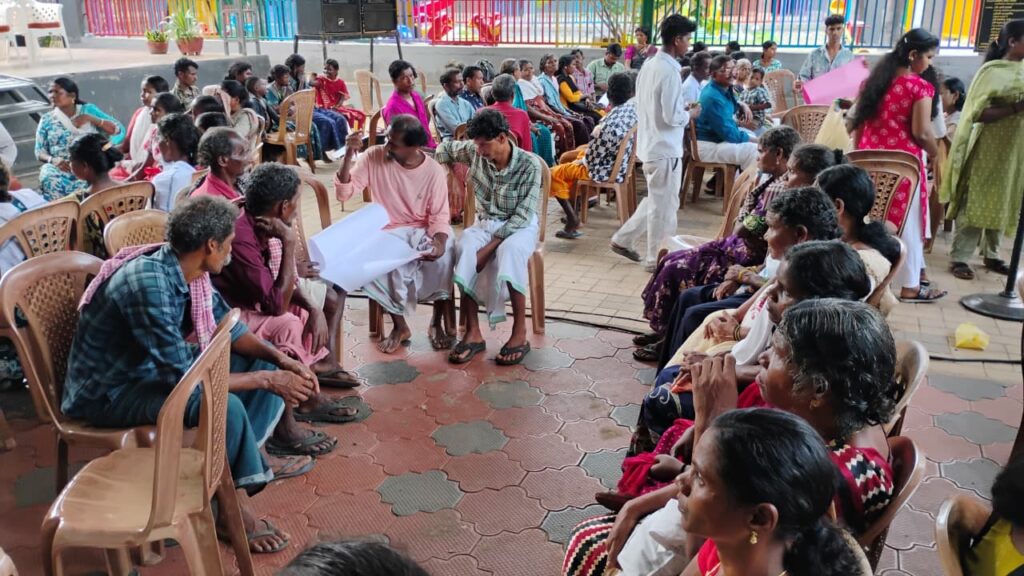
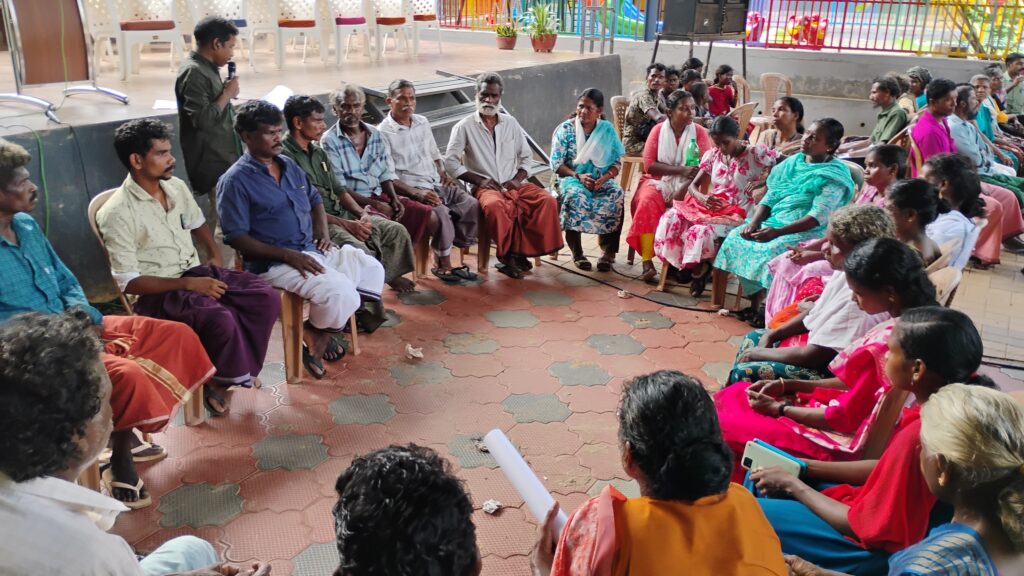
In the afternoon, Model Oorukoottams were held for all 12 tribal settlements under the leadership of Mr Sunilkumar. Participants identified problems affecting their settlements and presented them at the forum. Oorukoottam committee members presented the most urgent issues directly to the MLA.
It was announced that the problems identified would be compiled into a report and handed over to the participating officials, elected representatives, government departments and various organisations.
KEY DECISIONS AND DIRECTIVES.
The MLA directed Keystone Foundation, the Grama Panchayat and the Forest Rights Oorukoottam Coordination Committee to take urgent steps to form dedicated committees, with capable members, in all 12 tribal settlements implementing the Forest Rights Act, and then to form a Panchayat-level committee drawn from the members of these settlement-level committees. Keystone Foundation, the Coordination Committee and the Grama Panchayat agreed to implement these directions.
AGREED AND FOLLOW-UP ACTIONS:
- Form dedicated committees, with capable members, in each of the 12 tribal settlements implementing the Forest Rights Act.
- Form a Panchayat-level committee comprising members of the settlement-level committees.
- Compile the problems identified at the Model Oorukoottams into a report and submit it to officials, elected representatives, government departments and organisations.
- Reorganise the Oorukoottams in every settlement so that rights under the Forest Rights Act reach all eligible people.
- Provide the necessary support and training to the reorganised Oorukoottams.
- Follow up on the rehabilitation of the Thandankallu settlement, for which six acres of land have been identified.
The event engaged the community on 12th September 2026 in a combined session on historical education on the Forest Rights Act, first-hand community testimony, and practical planning at the settlement level. The session concluded with a vote of thanks by Mr Unni Naranapoyil, President of the Malappuram Forest Rights Oorukoottam Coordination Committee.